A statute of limitations is a legally enforced deadline to file a lawsuit, and once it expires, the claim is typically barred forever, even if your case is strong. In many injury cases, that deadline can be the difference between getting compensation and losing the right to sue at all.
You may be dealing with pain, appointments, missed work, and a pile of insurance letters while trying to figure out whether you still have time. That pressure is real, and it's why these deadlines matter so much. The law doesn't wait for life to feel calm again.
Why a Filing Deadline Can Make or Break Your Injury Case
A crash can leave you dealing with chaos first and legal questions later. You're focused on doctors, repairs, and whether you can get back to work, while the deadline keeps moving in the background.
A driver may have clearly caused the wreck. A trucking company may have broken safety rules. A physician may have missed a serious injury. None of that matters if the lawsuit is filed after the legal window closes.
Practical rule: a strong claim can still fail if the filing deadline expires before suit is brought.
That's the part many injured people don't expect. They assume the facts are what decide the case, and the facts do matter, but timing can control whether a court will even hear those facts.
If you're recovering from a serious injury, waiting can feel harmless at first. Then records get harder to gather, witnesses drift away, and the legal window starts looking much shorter than it did on day one.
The safest mindset is simple. Treat time as evidence, not just calendar space. The earlier the claim is reviewed, the more likely it is that the right deadline can be identified before it becomes a problem.
The Core Concept Behind Statutes of Limitations
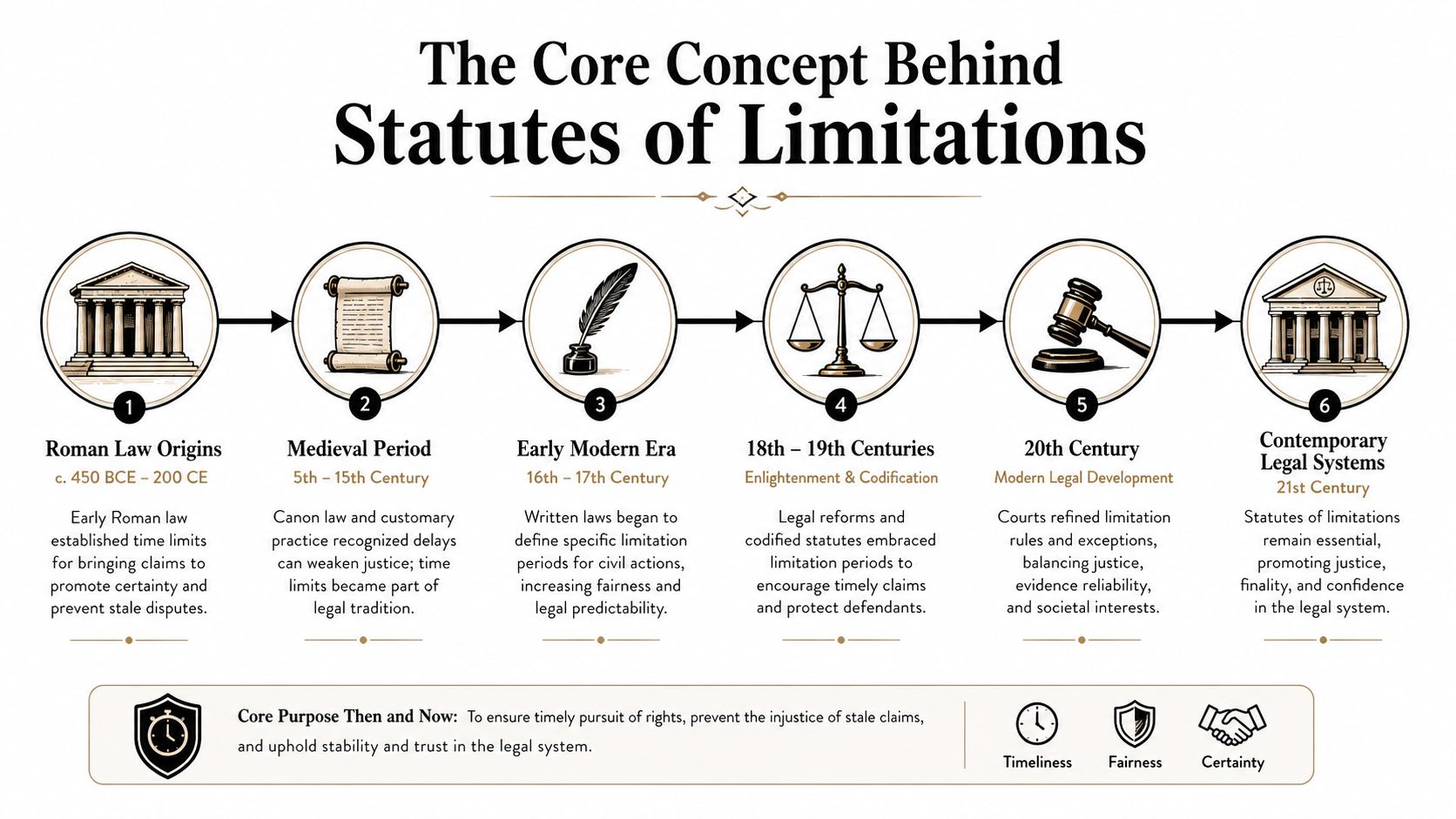
A statute of limitations is the rule that sets the time limit for bringing a legal claim. Courts enforce it because the law wants disputes resolved while evidence is still dependable, not after memories have faded or documents have disappeared.
A rule with deep roots
The idea is old. Roman law already used time limits in some actions, and later imperial reforms changed how long older claims could survive. In England, the modern legal version took shape with the Limitations Act of 1623 under King James I, which became the foundation for time limits in common-law systems. That statute set concrete deadlines that show the basic idea clearly, including 2 years for slander, 4 years for assault, and 6 years for trespass-related actions. Historical overview of early limitation rules
That history matters because it shows this is not some modern technical trap. Legal systems have long recognized that delayed claims are harder to judge fairly.
The policy reason is straightforward. Evidence degrades over time. Documents get lost. Witnesses move, forget, or die. A court that has to decide an old dispute may be forced to guess where a fresh case would rely on proof.
When the clock starts
The clock usually begins at accrual, meaning the point when the cause of action first exists. That start date is often where disputes happen, especially in injury cases where the harm isn't obvious right away.
The deadline is only half the story. The other half is figuring out when the clock legally started.
That's why injury cases often turn on timing details that seem small at first. If the injury was immediate, the deadline may start on the date of the crash. If the injury was hidden, the start date may be different. That difference can control the entire case.
Civil vs Criminal Deadlines and Why the Difference Matters
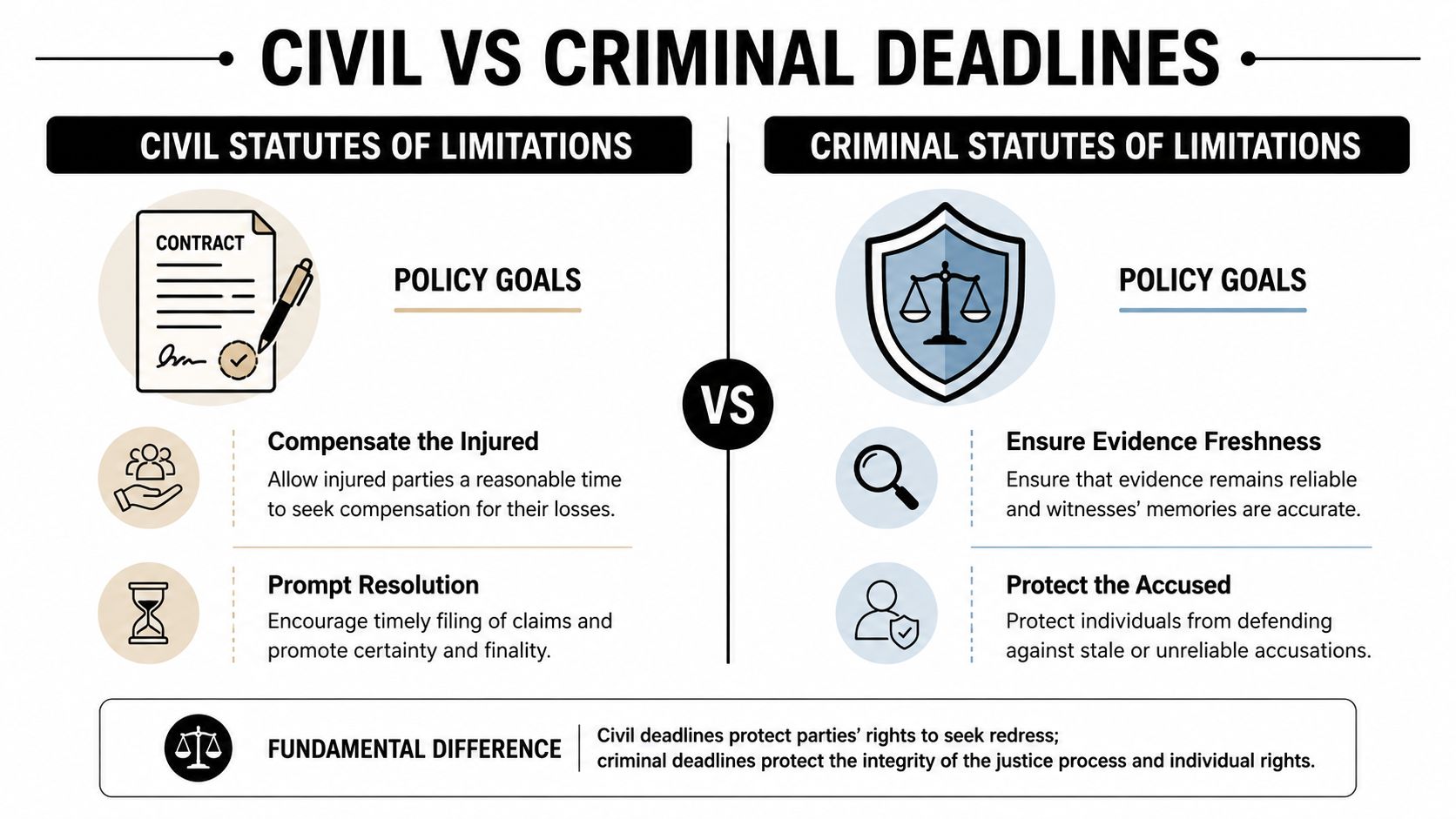
People hear “statute of limitations” in crime shows and assume it works the same way in every case. It doesn't. Civil and criminal deadlines share the same name, but they serve different goals and carry different consequences.
Civil law blocks compensation claims
In civil cases, the deadline limits when an injured person can sue for damages. Once it expires, the defendant can ask the court to dismiss the case, even if the underlying claim might otherwise be valid. That makes civil deadlines especially important in personal injury, wrongful death, and property-damage disputes.
Civil deadlines also vary by claim type and jurisdiction. The same event can lead to different filing windows depending on whether the claim involves negligence, wrongful death, a government defendant, or another legal theory. That's why a general internet answer rarely tells the whole story.
Criminal law limits prosecution
In criminal law, the deadline limits when the government can bring charges. The federal baseline is generally 5 years, and Congress adopted that current general five-year period in 1954 after earlier expansions from 2 years to 3 years in 1876. The first federal statute of limitations dates to 1790, when Congress applied time limits to crimes including treason, murder, and forgery of public securities. Federal criminal limitations history
That criminal rule exists for the same basic reason as civil deadlines, fresh evidence is more reliable. But the consequence is different. The state is barred from prosecuting after the deadline, unless an exception applies.
Some offenses, especially crimes against humanity, war crimes, and genocide, may have no statute of limitations at all under major legal systems and treaties. That exception shows the law is not rigid in every setting. It adjusts based on the seriousness of the offense.
Bottom line: civil deadlines can end a compensation claim, while criminal deadlines limit prosecution, and the two systems should never be treated as interchangeable.
Exceptions That Can Pause or Extend Your Filing Clock
Many people get tripped up. The most important question is often not, “How many years do I have?” It's, “What rule changes the date the clock started, or pauses it after it started?”
Discovery rule
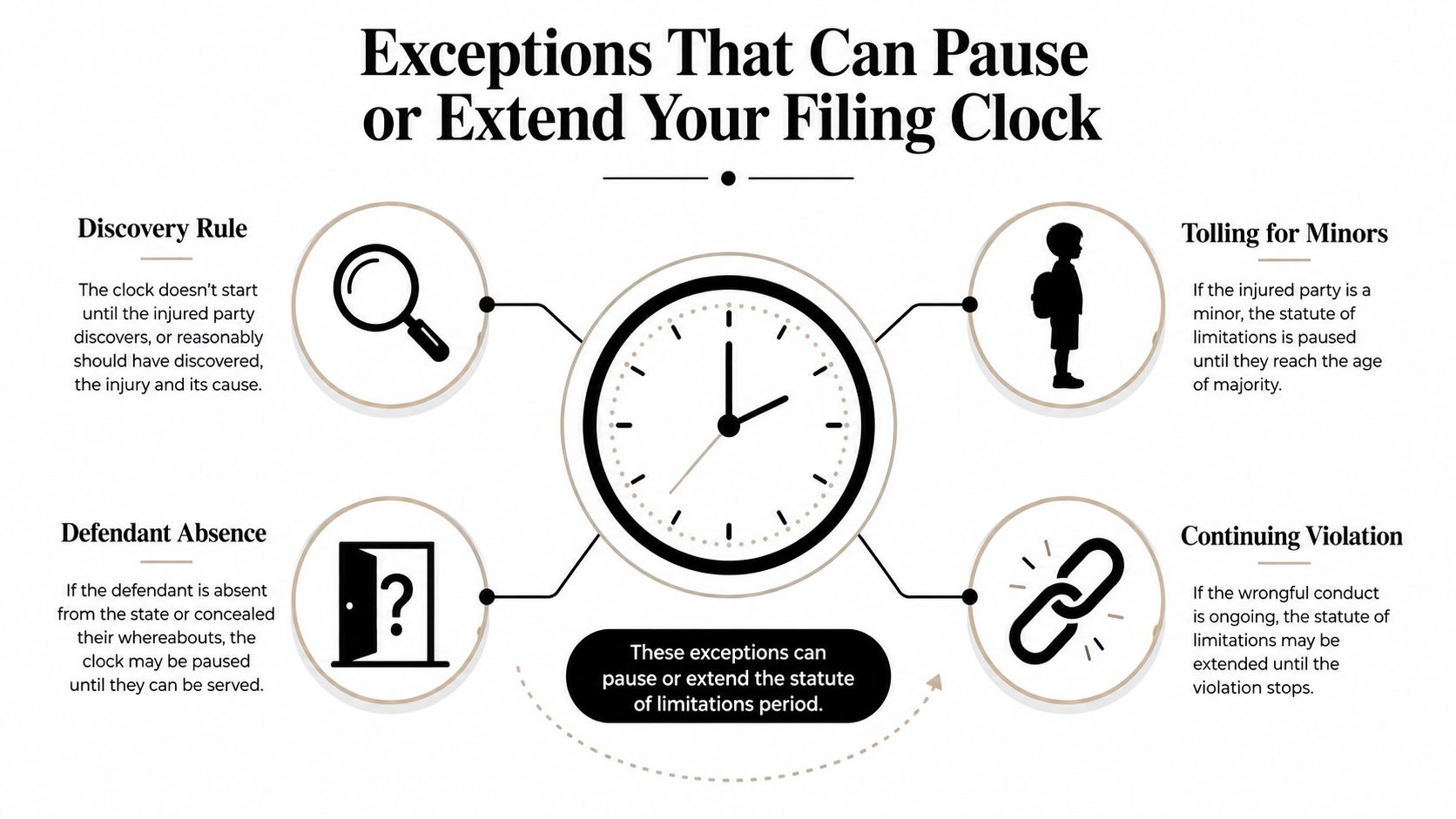
The discovery rule can move the start date from the event itself to the point when the injury was discovered, or reasonably should have been discovered. That matters in cases where harm develops slowly, such as some brain injuries or delayed-diagnosis claims. A crash might happen on Monday, but the legal clock may not start until the hidden injury becomes clear.
Tolling for minors or incapacity
Tolling pauses or extends the deadline when the injured person is a minor or legally incapacitated. The law recognizes that some people can't reasonably protect their own rights at the time the claim arises. Primary legal sources also show that tolling can apply in other situations, including fraudulent concealment and other delay doctrines. Virginia's tolling rules and exceptions
Hidden wrongdoing and delayed harm
Fraudulent concealment is especially important when the defendant actively hides what happened. If a company covers up a defect, or a defendant keeps the facts from surfacing, the clock may not run the same way it would in an ordinary case. That's one reason injury cases tied to trucking, product defects, or medical records often need early legal review.
If symptoms show up late, don't guess at the deadline. Get the facts reviewed against the event timeline, the medical timeline, and any concealment issues.
For a plain-language overview of timing issues in injury claims, you can also review this guide on how long after an injury you can sue.
What readers usually miss
People often focus on the accident date and stop there. That can be a mistake. The law may care just as much about when you learned the injury was real, whether you were legally able to act, and whether the other side hid key facts. In a delayed-onset injury, those details can be the difference between a viable claim and a barred one.
Colorado Timelines for Personal Injury and Wrongful Death Claims
Colorado readers usually need a deadline that fits their exact situation, not a broad rule. That's especially true in motor vehicle, trucking, and wrongful death cases, where different defendants can trigger different filing rules.
Common Colorado Claim Deadlines
| Claim Type | Typical Deadline | Clock Starts |
|---|---|---|
| Personal injury | Depends on the claim and defendant | Usually when the injury accrues, but discovery issues can matter |
| Wrongful death | Depends on the claim setup and parties involved | Usually tied to the date of death or the legally relevant event |
| Trucking accident injury | Depends on the facts and parties involved | Often tied to injury accrual, with possible discovery questions |
Colorado deadlines can change based on whether the claim involves a private party, a government entity, or another special defendant. That's why a crash involving an ordinary driver is not always treated the same way as a claim involving a public agency or a commercial carrier.
For Colorado readers who want a more detailed state-specific overview, this resource on Colorado personal injury statute of limitations rules can help frame the issue.
Why the same injury can trigger different timing questions
A rear-end crash may look simple at first. But if a passenger's neck pain turns into a diagnosed brain injury weeks later, the timing question gets more complicated. The same happens when a wrongful death claim or trucking claim involves multiple parties, layered insurance coverage, or delayed medical findings.
That is why Colorado deadlines should never be guessed from memory or from a general internet chart. The event date matters, but the legal trigger can depend on what the injury was, when it became knowable, and who may be responsible.
If you're sorting through a Colorado claim, the safest move is to pin down the defendant, the injury type, and the first date the claim could legally be said to exist. Those three facts usually drive the deadline analysis.
Steps to Protect Your Claim Before the Deadline Passes
Waiting until the last month is risky because evidence starts disappearing long before the legal deadline does. Cameras get overwritten. Vehicles get repaired. Witnesses forget details. Insurance companies move quickly, and injured people often don't.
What to do early
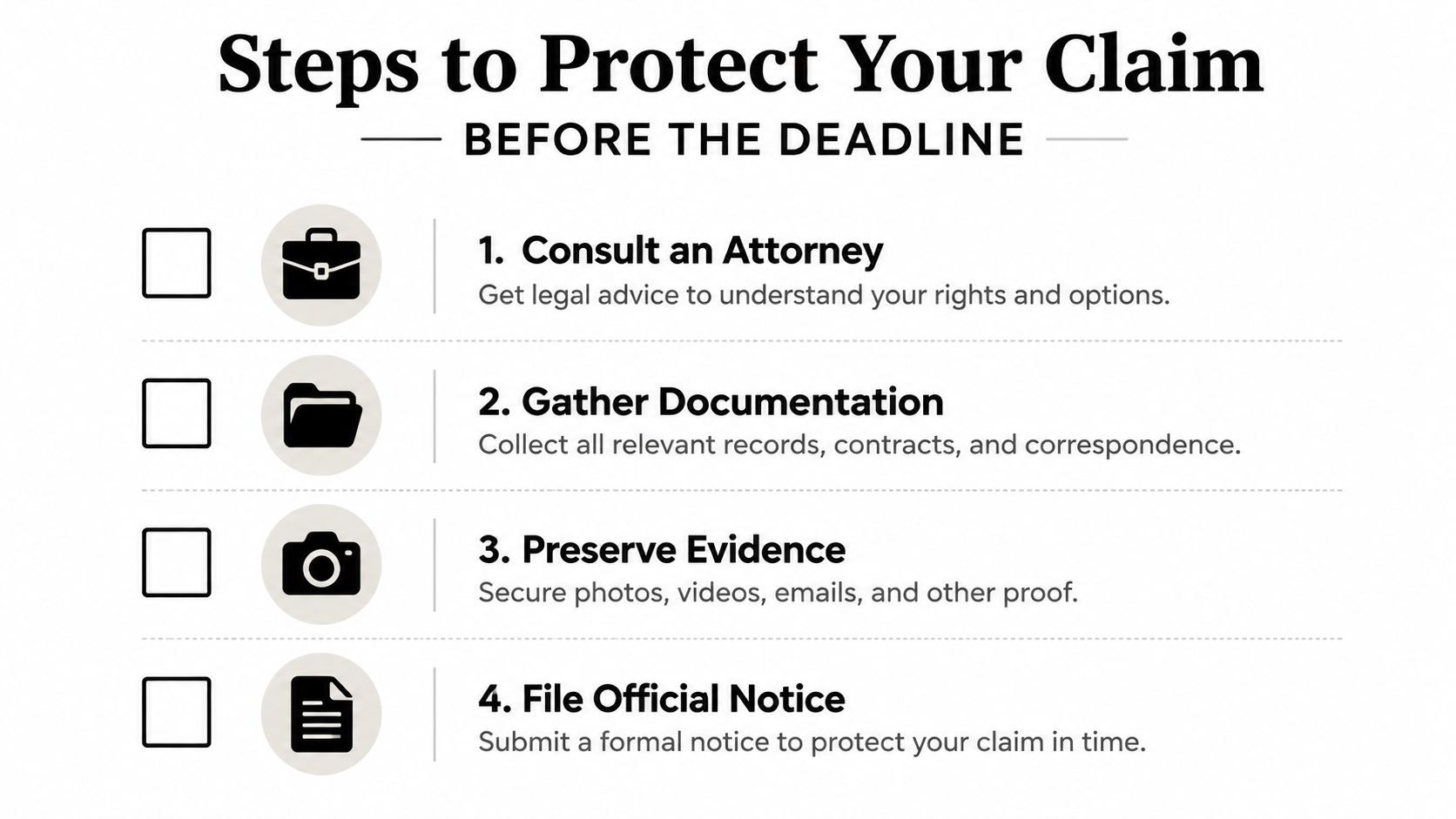
- Consult an attorney: a lawyer can identify the deadline, preserve records, and spot exceptions before they're missed. If you want a starting point, this guide on steps to take after a car accident walks through the immediate aftermath.
- Gather documentation: keep photos, medical records, discharge instructions, repair estimates, and any letters from insurers.
- Preserve evidence: save damaged clothing, take pictures of visible injuries, and note the names of anyone who saw the crash or the scene.
- File official notice if needed: some claims require notice to a public entity or another party before suit can move forward.
A few practical habits that help
Don't give a recorded statement to an insurer before you understand the legal stakes. Don't assume text messages or social media posts don't matter, because they often do. Don't wait for pain to “settle down” before seeking medical care, because gaps in treatment can complicate both the injury picture and the deadline analysis.
Good case work starts with preservation, not panic. The sooner the facts are locked down, the less room there is for disputes about what happened and when.
This is also where early legal help can make a real difference. A firm can review the accident timeline, collect records, issue preservation letters, and begin building the file before the evidence gets thin.
When to Reach Out to Nares Law Group for a Free Consultation
If you're unsure how the deadline applies to your injury, that uncertainty is exactly why a consultation matters. A lawyer can look at the date of the crash, when symptoms began, whether tolling or discovery rules may apply, and what proof still needs to be preserved.
Nares Law Group LLC handles motor vehicle crashes, truck wrecks, traumatic brain injuries, and wrongful death claims, and the firm's work often includes deadline analysis, investigation, treatment coordination, and negotiation. In a case with a close filing window, that kind of review can show whether time is still available or whether immediate action is needed.
If you've been putting this off because you think you still have plenty of time, don't assume the calendar is on your side. A short conversation now can protect the evidence, clarify the deadline, and give you a real answer instead of a guess.
If you're trying to figure out what is statute of limitations in your own injury case, Nares Law Group LLC can review the facts, identify the deadline, and help you understand whether any exceptions may protect your claim. Visit Nares Law Group LLC to request a free consultation and get a clear timeline before time runs out.