You leave the crash believing you got lucky. The bumper is damaged, your neck feels stiff, but you can walk, talk, and answer the officer's questions. Then, hours or days later, you can't find ordinary words, your head pounds, and the person who knows you best says your behavior has changed.
That pattern creates a difficult medical and legal decision problem. Delayed symptoms need prompt evaluation, but they also need a clear timeline. Insurance companies often focus on what you said at the scene, while doctors need to know what changed after you went home. The right response is neither panic nor dismissal. It's organized follow-up.
When a Crash Leaves No Marks but the Head Never Feels Right
A driver gets rear-ended at a stoplight. She walks to the shoulder, declines the ambulance, signs the release, and tells everyone she feels fine. She sleeps through the night. Three days later, she sits at breakfast and can't find the right word for a simple object. By afternoon, she's dizzy, irritable, and unable to follow a conversation.
I've watched this sequence play out for families after ordinary-looking crashes. The impact doesn't need to leave a dramatic wound or require an ambulance ride to cause a traumatic brain injury. A person may compensate at first, especially while adrenaline is high, then struggle once normal demands return.

What delayed onset really means
Traumatic brain injury delayed symptoms are problems that appear or become noticeably worse after the original impact instead of immediately at the scene. The CDC explains that concussion and mild traumatic brain injury symptoms may develop hours or days after an injury, and recommends medical evaluation when symptoms don't go away within 2 to 3 weeks. The CDC's signs and symptoms guidance identifies later problems such as headache, dizziness, concentration difficulty, memory problems, fatigue, anxiety, sleep disturbance, and uneven gait.
That timing matters. A person who initially says “I'm fine” may be describing the first few minutes, not the next several days. In a large NIH review of head trauma patients, delayed diagnosis of intracranial trauma occurred in 140 of 809 patients, or 17.3%. The NIH review on delayed diagnosis reinforces why an apparently normal first interaction doesn't close the medical question.
Practical rule: Feeling normal at the roadside is evidence about that moment. It isn't proof that the brain is uninjured.
The first 72 hours matter for both recovery and a claim. Seek medical advice when symptoms emerge, describe the crash accurately, and write down when each change began. Don't let an insurer turn a delayed symptom into a credibility attack because you made it home under your own power.
Why a Brain Injury Can Stay Silent for Hours or Days
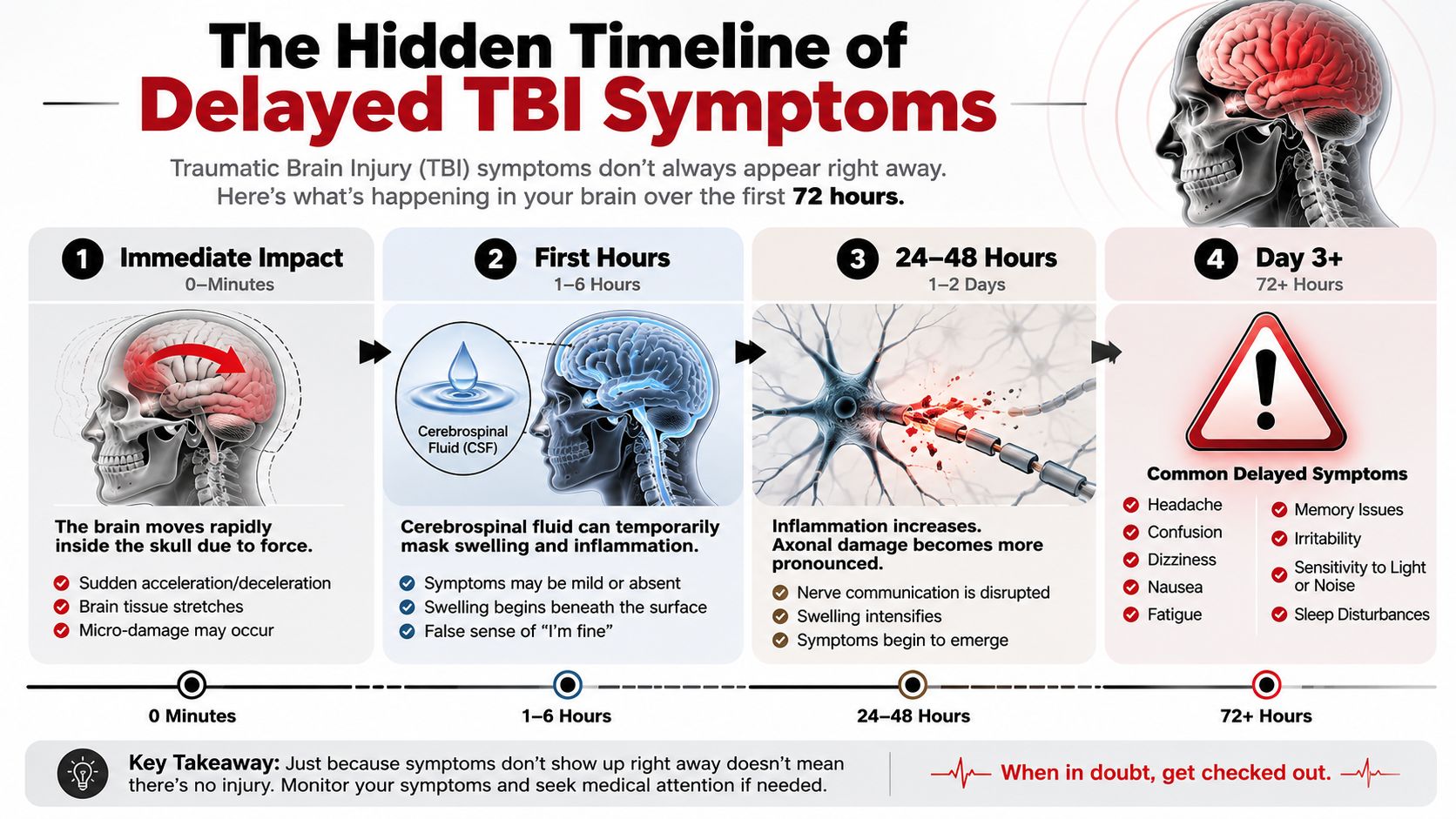
The brain sits inside a hard skull surrounded by cerebrospinal fluid. That structure protects it, but it can also make an injury difficult to recognize immediately. A person may have no visible wound while the brain has been forced to move, stretch, or strike the inside of the skull.
Think about a bruised apple. The skin can look intact for a while, then discoloration becomes visible underneath. The brain's response is more complicated, but the basic lesson is useful: what you see at the surface doesn't always show what happened inside.
Two processes can hide the problem
One process involves swelling, inflammation, altered blood flow, and other changes that develop after the impact. Those changes can increase the brain's workload and reduce the reserve a person needs for concentration, balance, and emotional control.
Another involves stretched nerve connections. Think of a house with rattled wiring. The wires haven't necessarily snapped, but the system may fail when someone runs several appliances at once. A person may manage a short conversation at the crash scene, then lose track of tasks at work, become overwhelmed by noise, or struggle to drive after fatigue exposes the problem.
The CDC describes symptoms that may appear within hours or days, while more serious injuries can continue to evolve and require urgent assessment. Delayed symptoms can involve cognition, mood, sleep, balance, and physical comfort, rather than only pain.
Why the first visit can miss it
A normal CT scan can be reassuring about certain dangerous findings, but it doesn't rule out every form of brain injury. Diffuse injury, subtle functional changes, and problems that become clear only during demanding tasks may require clinical observation, specialist assessment, or cognitive testing.
A delayed diagnosis can happen because symptoms weren't present yet, weren't documented, or were attributed to pain, stress, poor sleep, or medication. That's why the timing itself belongs in the medical record. Tell the clinician when the crash occurred, what you could do immediately afterward, and what you can no longer do now.
Watch the accompanying explanation only as general education. A video can't replace an emergency evaluation when symptoms are worsening.
The Delayed Symptoms That Most Often Get Missed
Families usually notice the practical failure before they know the medical label. Someone who managed payroll can't reconcile a basic account. Someone who drove daily becomes uneasy at an intersection. A parent loses the thread of a child's story, then feels ashamed because the change seems impossible to explain.
The CDC lists later-emerging concerns that include headache, irritability, concentration problems, dizziness, depression, memory problems, insomnia, anxiety, fatigue, sleep disturbance, and an uneven gait. The CDC symptom guidance is useful because it goes beyond loss of consciousness and identifies changes families can observe at home.
| Symptom Category | Common Delayed Signs | Daily Task It Tends to Break |
|---|---|---|
| Cognitive | Brain fog, slowed processing, word-finding trouble, losing the point mid-sentence | Work instructions, reading, finances, multitasking |
| Physical | Headache, dizziness, nausea, light or noise sensitivity, balance problems | Driving, shopping, stairs, screens, exercise |
| Emotional | Irritability, anxiety spikes, tearfulness, flat or unfamiliar affect | Parenting, relationships, conflict management |
| Sleep and alertness | Sleeping much more or less, fragmented sleep, nightmares, difficulty staying awake | Commuting, work attendance, safe decision-making |
Cognitive changes often look like carelessness
Word-finding problems and slowed thinking are easy to dismiss when a person is middle-aged or already under stress. The more reliable question is not whether the person has ever forgotten something. It's whether there has been a clear change from the person's pre-injury baseline.
Write down concrete examples. “Couldn't complete a report” is stronger than “seemed foggy.” “Asked the same question repeatedly during dinner” gives a doctor and an attorney something useful to evaluate.
Physical and sensory changes can control the day
A headache that becomes more intrusive, dizziness that appears when turning the head, or sensitivity to light can make ordinary tasks unsafe. Balance problems may show up as grabbing furniture, misjudging a step, or avoiding stairs.
Emotional symptoms deserve the same attention. Anxiety, irritability, depression, and unexpected crying aren't proof of a brain injury by themselves, but after a crash they should be reported alongside physical and cognitive changes. Late-emerging symptoms are not minor merely because they waited to appear.
How Doctors Actually Evaluate a Late-Presenting Brain Injury
A late presentation should be treated as information, not an inconvenience. The clinician needs the injury mechanism, symptom timeline, medication list, prior conditions, and a comparison with how you functioned before the crash.
The first evaluation
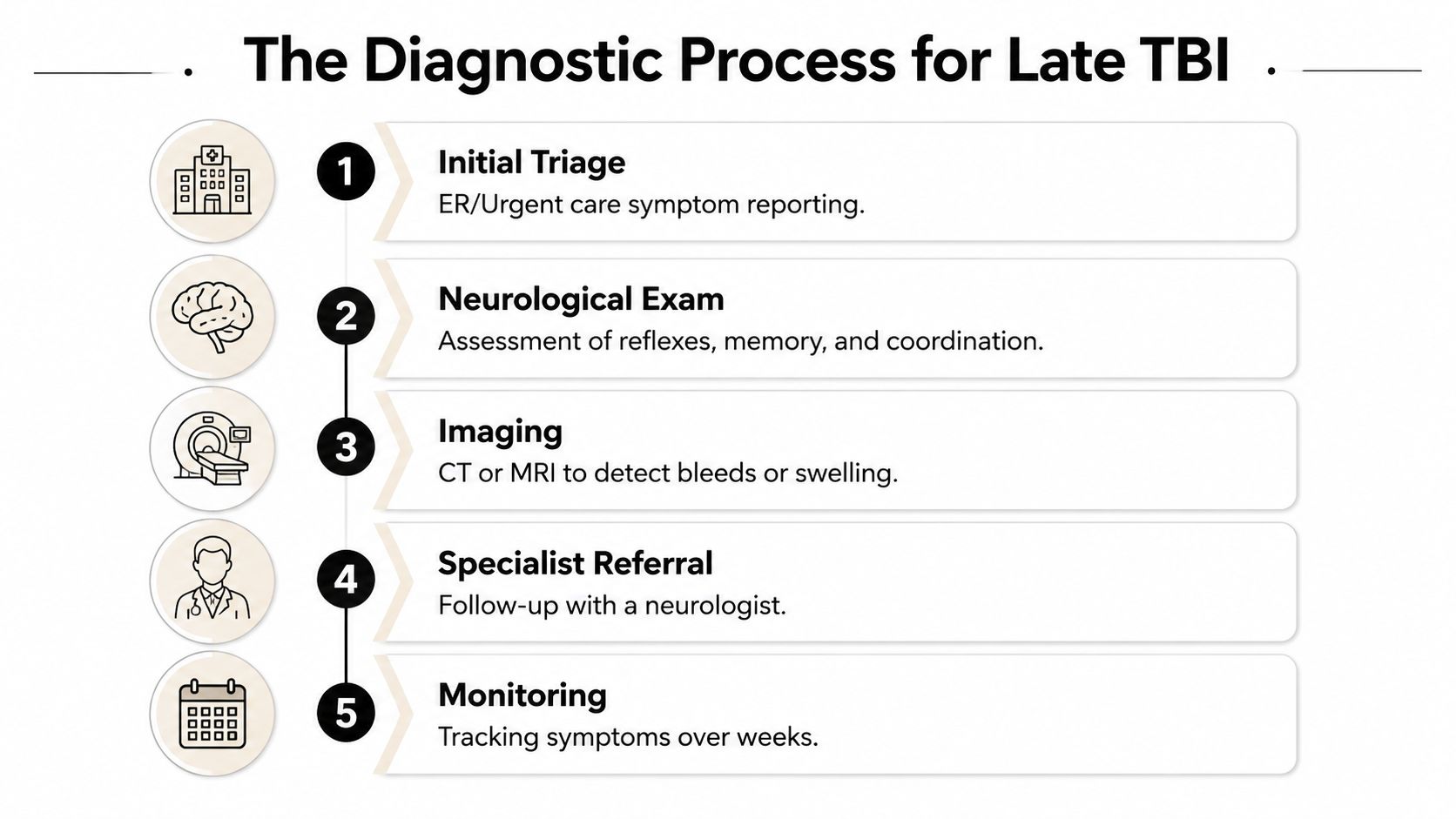
An emergency department or urgent care team will triage immediate danger, ask about the impact, check neurological function, and decide whether urgent imaging is appropriate. If you have worsening symptoms, don't wait for a routine appointment.
Ask directly:
- What symptoms require emergency return?
- Does the exam support a concussion or another brain injury?
- Do I need CT, MRI, or specialist follow-up?
- What activities, driving, work, or screen use should I avoid?
A primary care clinician can coordinate referrals and track progress. A neurologist may assess reflexes, coordination, balance, memory, headaches, and other neurological concerns. CT is often used to look for urgent bleeding or fractures. MRI may identify findings that a CT doesn't show, but imaging alone cannot measure every functional consequence.
Testing what scans can't show
Neuropsychological evaluation uses formal tasks to examine attention, memory, processing speed, language, and executive function. Vestibular testing can help evaluate dizziness and balance. Advanced imaging, including DTI, may be considered in selected cases, but a patient's symptoms, examination, and functional history remain central.
Keep a dated symptom log. Record sleep, headaches, dizziness, confusion, missed work, driving difficulty, and help required with household tasks. A resource describing post-concussion syndrome symptoms can help families identify topics to raise with a provider, but it isn't a substitute for care.
For more context on neurological responsiveness after trauma, review the modified GCS score. Bring prior medical records when possible, especially records showing your baseline cognitive or occupational function. A “normal” early scan doesn't erase a documented change in what you can do.
Treatment and Rehabilitation Paths After Delayed Symptoms Appear
Treatment should match the problem, not the label alone. A person with dizziness needs a different plan from someone whose primary difficulty is memory, sleep, or emotional regulation. The most useful rehabilitation goal is functional, such as returning safely to work, managing a household task, or driving without symptoms.
| Treatment Modality | Typical Duration | Best For | Realistic Goal |
|---|---|---|---|
| Graduated rest and activity | Individualized and adjusted through follow-up | Mild symptoms worsened by exertion or screens | Build tolerance without triggering a major flare |
| Vestibular or vision therapy | Based on examination and response | Dizziness, balance problems, visual tracking difficulty | Improve stability, movement tolerance, and visual function |
| Cognitive rehabilitation | Structured sessions with reassessment | Memory, attention, processing, and planning deficits | Develop strategies that improve daily performance |
| Occupational or speech therapy | Individualized | Higher-order communication, work, and task problems | Restore practical independence and support accommodations |
| Medication management | Reviewed over time | Headache, sleep, mood, or related symptoms | Reduce barriers to participation in rehabilitation |
| Interdisciplinary TBI care | Ongoing coordination when needs are complex | Moderate or severe injury, persistent symptoms, multiple providers | Align medical treatment, therapy, work planning, and family support |
Choosing the right level of care
Milder cases may improve with a carefully paced return to activity and targeted therapy. Persistent symptoms can require coordinated care from neurology, psychology, physical therapy, occupational therapy, speech therapy, or a specialized concussion clinic. More serious injuries may require structured rehabilitation, workplace accommodations, and continuing case management.
Don't treat exercise as a self-prescribed cure. Activity should be medically appropriate and progressed according to symptoms. For general background on metabolic exercise for brain health, use a credible clinician to determine whether and how any exercise approach fits your injury.
Cognitive testing can document deficits and guide therapy. The cognitive testing for TBI resource offers additional context for families considering that evaluation. In Colorado injury cases, Nares Law Group LLC can also help coordinate the legal side while treatment records develop, but medical decisions belong with qualified providers.
Red Flag Symptoms That Demand an ER, Not a Wait-and-See
A worsening symptom isn't automatically a sign that the brain is healing. Some changes indicate a potentially dangerous complication and require immediate emergency evaluation.
Call 911 or go to the nearest emergency department for:
- Worsening headache: Especially when rest doesn't help or the pain escalates.
- Repeated vomiting: Don't wait for dehydration or further decline.
- New weakness or numbness: One-sided symptoms are particularly urgent.
- Slurred speech or increasing confusion: Difficulty speaking or staying oriented needs immediate attention.
- Seizure or loss of consciousness: Even a brief loss of consciousness should be reported urgently.
- Sudden personality change: A dramatic, unfamiliar behavioral shift can signal neurological deterioration.
- Unequal pupils: This requires emergency assessment.
- Clear fluid from the nose or ears: Report this immediately after head trauma.
- Hour-to-hour escalation: A rapidly changing condition is not appropriate for home observation.
Tell emergency staff exactly how the injury happened, including whether the head moved forcefully, struck an object, or was involved in a vehicle collision. Bring the medication list and identify when the worsening began. Don't drive yourself if you're confused, faint, impaired, or having trouble seeing.
What to Do in the First 30 Days After a Suspected TBI
The first month creates two records at once, the medical record and the claim record. Handle both carefully without allowing paperwork to delay emergency care.
Start with health and a timeline
Arrange follow-up promptly when symptoms appear, even if an initial scan was normal. Ask one provider to coordinate referrals where possible, and use a daily log with dates and times. Record what changed, how long it lasted, what activity triggered it, and what help you needed.
A practical sequence looks like this:
- Immediately: Seek emergency care for red flags. Otherwise, notify your treating provider about delayed symptoms and request clear activity and work guidance.
- During the first week: Preserve crash photographs, vehicle damage, dashcam footage, witness details, and the incident report. Report the claim within the applicable insurance deadline, but don't guess about medical causation.
- During the following weeks: Attend recommended follow-ups, track missed work and out-of-pocket expenses, and document changes in driving, parenting, household tasks, and concentration.
- Before giving a recorded statement: Speak with counsel. Insurers may ask questions that appear routine but can later be used to argue that symptoms were absent or unrelated.
Colorado issues require early attention
Colorado claims may involve coordination with available PIP or MedPay benefits, disputes about comparative fault, and questions about the deadline for a negligence action. The applicable limitation period for many Colorado negligence claims is two years, but exceptions and claim types matter, so don't rely on a general deadline without legal advice.
Use the traumatic brain injury screening resource to identify questions for a provider or attorney. Retain a personal injury lawyer when delayed symptoms appear, the insurer disputes causation, treatment continues beyond a few weeks, or a settlement offer arrives. Truck cases can add evidence issues involving the driver, carrier, vehicle, and crash investigation, so preserving information early matters.
A Practical Checklist for Families and Injured Victims
Screenshot this list and share it with the person helping you.
Medical action
- Schedule follow-up: Arrange evaluation promptly after delayed symptoms appear.
- Keep a symptom log: Record headaches, dizziness, sleep, mood, memory, concentration, and functional changes.
- Ask about restrictions: Don't return to driving, work, school, or strenuous activity without appropriate guidance.
- Discuss testing: Ask whether imaging, neurology, vestibular assessment, or neuropsychological testing fits the symptoms.
Documentation action
- Preserve the incident file: Keep the accident report, photographs, videos, witness contacts, and vehicle records.
- Notify insurers: Report the crash within the applicable policy requirements.
- Track losses: Save medical bills, receipts, mileage records, missed-work information, and notes about household assistance.
- Describe function: Document what the injured person could do before the crash and what changed afterward.
Legal readiness action
- Avoid recorded statements: Get advice before answering detailed insurer questions.
- Request records: Maintain copies of medical records, work records, and correspondence.
- Identify coverage: Determine the at-fault driver's insurer and any applicable benefits.
- Schedule a consultation: Speak with a TBI-experienced attorney before accepting a settlement offer.
Delayed symptoms don't weaken a case, but they raise the documentation bar. Families who do best treat the medical file and claim file as one coordinated project.
If delayed symptoms have appeared after a Colorado crash, Nares Law Group LLC can help you understand the evidence, coordinate the legal process, and address insurer disputes while your medical evaluation continues. Contact the firm for a consultation before giving a recorded statement or accepting an insurance offer.