You're standing in the shoulder lane or the parking lot, hands shaking, trying to remember who said what, what the police officer asked, and whether the other driver's insurance card is still in your wallet. That's the moment people think the claim starts. It doesn't. The claim starts the second the crash happens, because the insurer will later judge your file on what you preserved, what you reported, and how fast you did it.
That's the part missed when they search for how to file insurance claims after a car or truck accident. It's not a simple call and wait process. It's a deadline-driven documentation exercise, and insurers are built to sort high-volume claims through standardized triage, not to rescue incomplete files. ConsumerAffairs reports 4.2 private passenger auto collision insurance claims for every 100 drivers in 2021 and notes that delays in documents can slow or jeopardize payout processing, which makes sense in a market with 282,174,766 motor vehicles in 2022 and a heavy push toward digital claim portals and app-based tracking (ConsumerAffairs).
The Reality of Filing a Claim After a Crash
A rear-end crash on Colfax, a sideswipe on I-25, or a truck collision near a warehouse dock can feel chaotic for ten minutes and bureaucratic for months. The insurer does not care about the adrenaline spike. It cares about whether your file proves coverage, liability, and loss amount fast enough to move through the system.
Your claim is really a proof package
The first mistake is treating the claim like a simple report. It is not. The task is to build a file that survives triage, because insurers usually sort claims into clean files that can move through standard handling and messy files that get pushed to manual review.
That distinction matters. U.S. claim processing now averages about 14 days, down from 18 days in 2020, and one source says simple auto claims fell from 7.2 days in 2021 to 4.1 days in 2023 as digital tools took over, while another says 61% of customers now use digital self-service claim portals (worldmetrics.org). Speed helps only when your submission is complete. If the file is thin, the same systems that move strong claims quickly will slow yours down.
The practical rule is simple. File fast, file once, and file with proof. A complete claim gets less pushback than a claim that arrives in fragments.
ConsumerAffairs says a proof of claim form and, when available, a police report are standard documents used to resolve an auto claim, and it warns that time limits for filing claims and submitting bills can affect eligibility. That is why a crash is never just a reporting event. It is a short window to lock in the facts before repairs, memory gaps, and missing receipts start working against you.
Immediate Actions at the Scene and First Notice of Loss
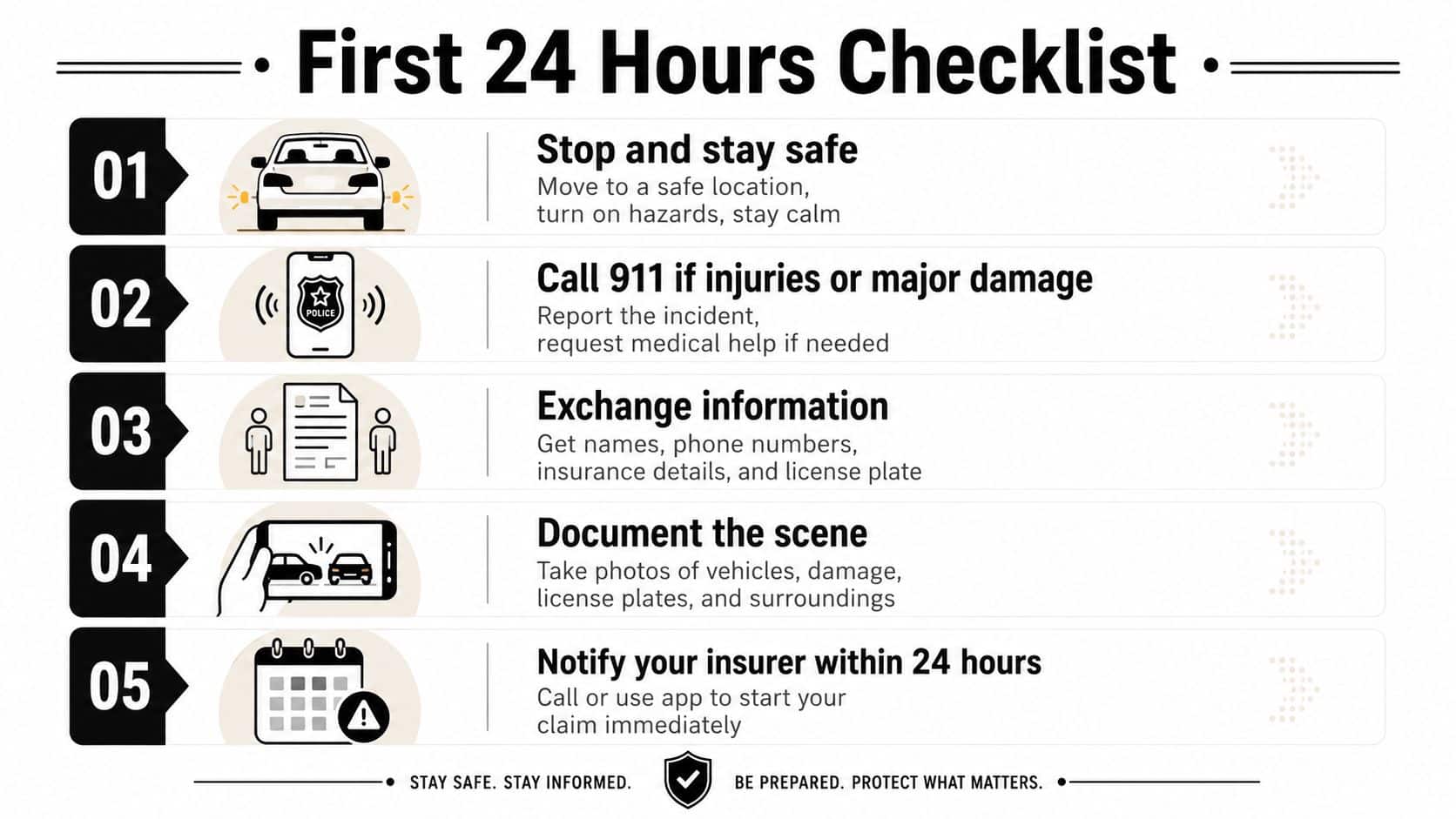
A claim goes sideways fast when the scene is handled carelessly. Safety comes first, then proof. Move to a secure spot if you can, check for injuries, call 911 when the crash is serious or anyone may be hurt, and keep people out of traffic. If the vehicles are blocking lanes or the damage is significant, the police report becomes part of the claim's backbone because it gives the insurer an outside record to work from.
What to capture before anything moves
Photograph the scene before tow trucks, body shops, or roadside cleanup change it. Get the front, back, both sides, license plates, the point of impact, skid marks, broken glass, road conditions, traffic signs, and anything else that shows how the crash happened. In a truck crash, interior damage can matter too, because it can show force, movement, and impact patterns.
Then collect the other driver's name, phone number, insurance company, policy number, license plate, and driver's license if you can do that safely. Get witness names and contact details before they leave. Write down the time, location, weather, and the direction each vehicle was traveling. Memory gets sloppy fast after impact, and insurers know it.
The first notice of loss should go through the fastest channel available, phone, app, or web portal. Use the carrier's intake system immediately and keep the claim number where you can find it. Save it in your phone and write it down on paper.
If the carrier gives you an online filing path, use it. That creates a timestamped record, which matters when an adjuster later claims the report came in late or incomplete. The submission log is part of your proof trail. For trucking losses, that same discipline applies to items like cargo coverage for trucking companies, because the carrier will look for a clean record from the start.
Don't repair the wrong thing too early
Temporary mitigation is fine. Permanent repairs are a mistake before inspection. Photograph or videotape the damaged vehicle before anything is fixed, and keep a written inventory of what was damaged and what it is worth. That record matters because repairs done too early can erase the evidence the insurer needs to verify causation and the full extent of loss.
If the car is unsafe to drive, tow it. If a window is broken, cover it. Do not authorize irreversible work until the insurer has had a fair chance to inspect. If an adjuster later questions the damage, your photos, inventory, and repair hold order are what keep the claim grounded.
When injuries are involved, keep the treatment records organized from the start. Emergency room notes, urgent care follow-up, diagnostic imaging, physical therapy notes, and billing statements all need to stay together so the insurer cannot break the treatment chain apart. If you are dealing with multiple providers, use a system like the one outlined in medical record organization, because scattered records slow the file down and give the carrier room to argue that the claim is incomplete.
Building a Complete Documentation Package
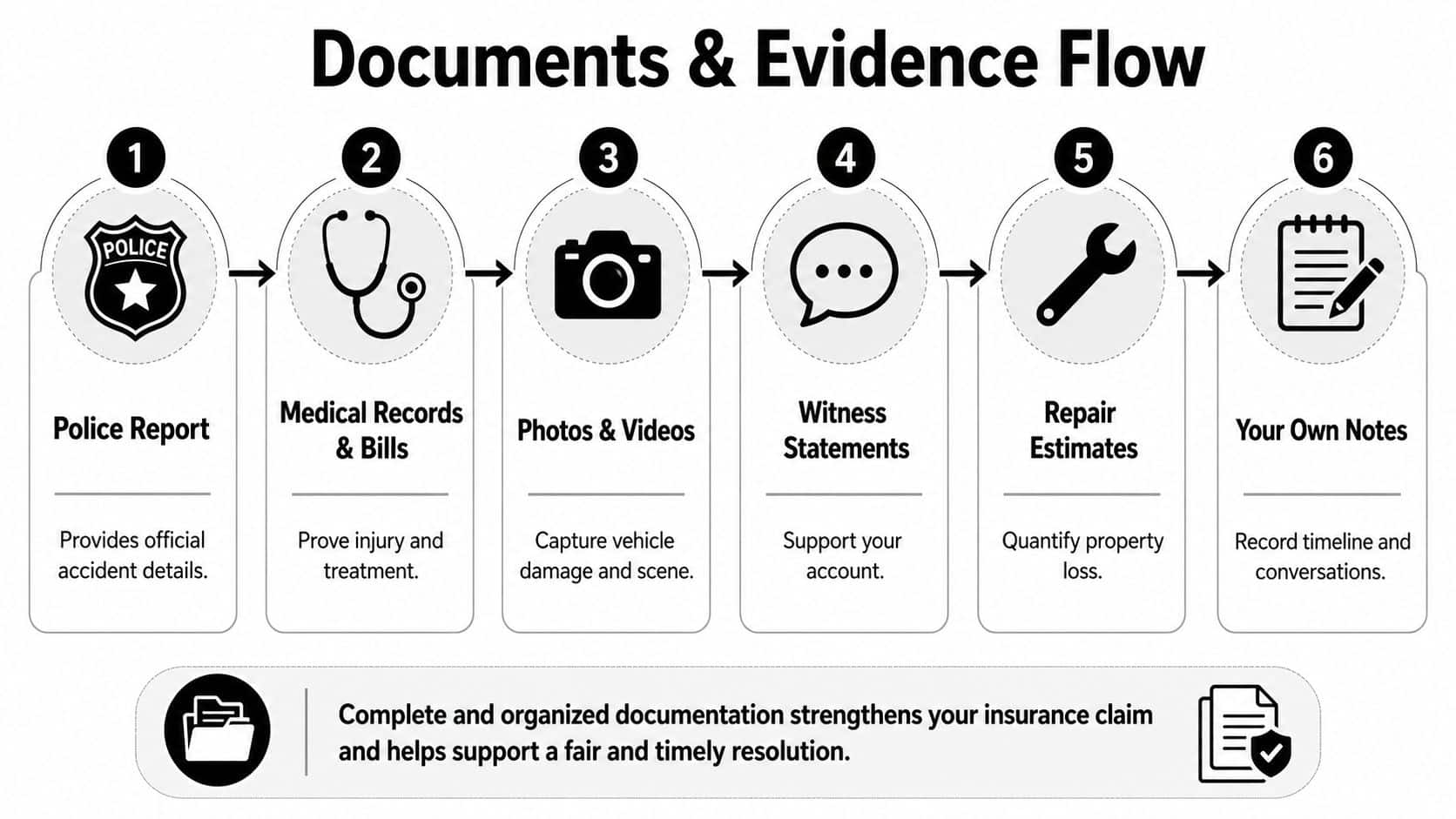
A strong claim file is not a pile of random screenshots. It is an organized packet that shows what happened, what was damaged, who saw it, and what it cost. Insurers slow claims down when the file is thin, unclear, or missing a clean paper trail, because every gap gives the adjuster room to ask for more review. The claims workflow at EIS Group, FNOL, triage, investigation, decision, payment, and closure, reflects that reality.
Build the file like an adjuster will challenge it
Start with the basics, policy details, incident narrative, photos, witness information, repair estimates, and every form the carrier asks for. Then add medical records if anyone was hurt. The strongest claim files tell the same story from every angle, so the insurer cannot isolate one missing piece and use it to cast doubt on the rest.
For injury claims, keep the treatment chain intact from the first visit through follow-up care. Emergency room notes, urgent care records, diagnostic imaging, physical therapy notes, and billing statements help show that the injuries were documented as they were treated, not assembled later for the claim. If you are dealing with multiple providers, use a system like the one outlined in medical record organization, because scattered records slow the file down and give the carrier room to argue that the injury proof is incomplete.
Keep a communication log from day one
Every call, portal message, and email should be logged with the date, time, the adjuster's name, and a short summary. If someone asks for more documents, write down exactly what was requested. If you upload something, keep the confirmation.
That same discipline matters in trucking cases. Cargo losses can involve separate insurance layers and different categories of damage, so you need to understand how coverage is structured before you start making assumptions. A good background resource on that issue is cargo coverage for trucking companies, especially if the crash involved freight, commercial loading, or delayed delivery losses.
Keep the file boring and complete. Insurers like neat chronology, not emotional summaries.
Lost wages belong in the packet too. Ask your employer for a wage verification letter, and save pay stubs or direct-deposit records that show the income interruption. If you are self-employed, your own invoices and payment history are better than vague estimates. Submit the full evidence set in one pass when possible, because partial uploads invite more questions.
Communicating with Adjusters Without Undermining Your Claim
Adjusters are trained to close files quickly. That is their job. Your job is to give them only what supports the claim, because stray comments, half-answers, and casual speculation can turn into a liability argument or a low offer. Keep every exchange polite, brief, and documented.

What to say and what not to say
If the insurer asks for a recorded statement, treat it like formal evidence. Do not treat it like a friendly call. Stick to facts you know, not guesses. Do not speculate about speed, fault, or injury severity before the medical picture is clear.
Use plain language that keeps the file moving without giving the carrier extra material to use against you. Say, “I'm still gathering documents.” Say, “I'll send the records through the portal.” Say, “Please confirm that request in writing.” Those responses show cooperation without volunteering more than the claim requires. If you are dealing with the at-fault driver's insurer, remember that their adjuster works for their side, not yours.
The paper trail falls apart when communication gets scattered across texts, voicemails, and missed portal messages. Insurers that process claims through apps and digital uploads still rely on the claimant to preserve the record. Save screenshots, upload receipts, and send an email summary after important calls. If a request affects payment, put it in writing and keep proof that you responded.
Watch the usual pressure points
A fast settlement offer before treatment is complete is a warning sign. Broad medical authorizations are another. So are blame-shifting comments designed to make you question your own memory. Read those moves as claim tactics, not conversation.
That is also where how insurance companies investigate claims matters. Adjusters look for gaps, delays, inconsistent statements, and loose proof trails. If they can say the file is incomplete, they will use that opening to slow payment or narrow the loss.
For a practical contrast, good customer service for insurance agents is responsive, clear, and organized. Claim communication works the same way. Every request should be specific, and every response should be easy to trace.
If the adjuster wants the conversation to stay informal, make it formal yourself. Summarize the exchange in writing before the day ends.
One more point. If the insurer keeps asking for documents you already sent, do not brush it off. Repeated requests can mean the file is stalled or someone is building a record for delay. Reply with the date you sent the material, attach the prior confirmation, and ask exactly what gap still exists.
Handling Denials and Low Settlement Offers
A crash claim goes wrong in ordinary, technical ways. The insurer gets the filing through the wrong channel. A required field is missing. Nobody saves proof that the carrier received the packet. Repairs start before the damage is documented. Those are the mistakes that turn a valid claim into a fight.
Denials usually need specifics, not panic
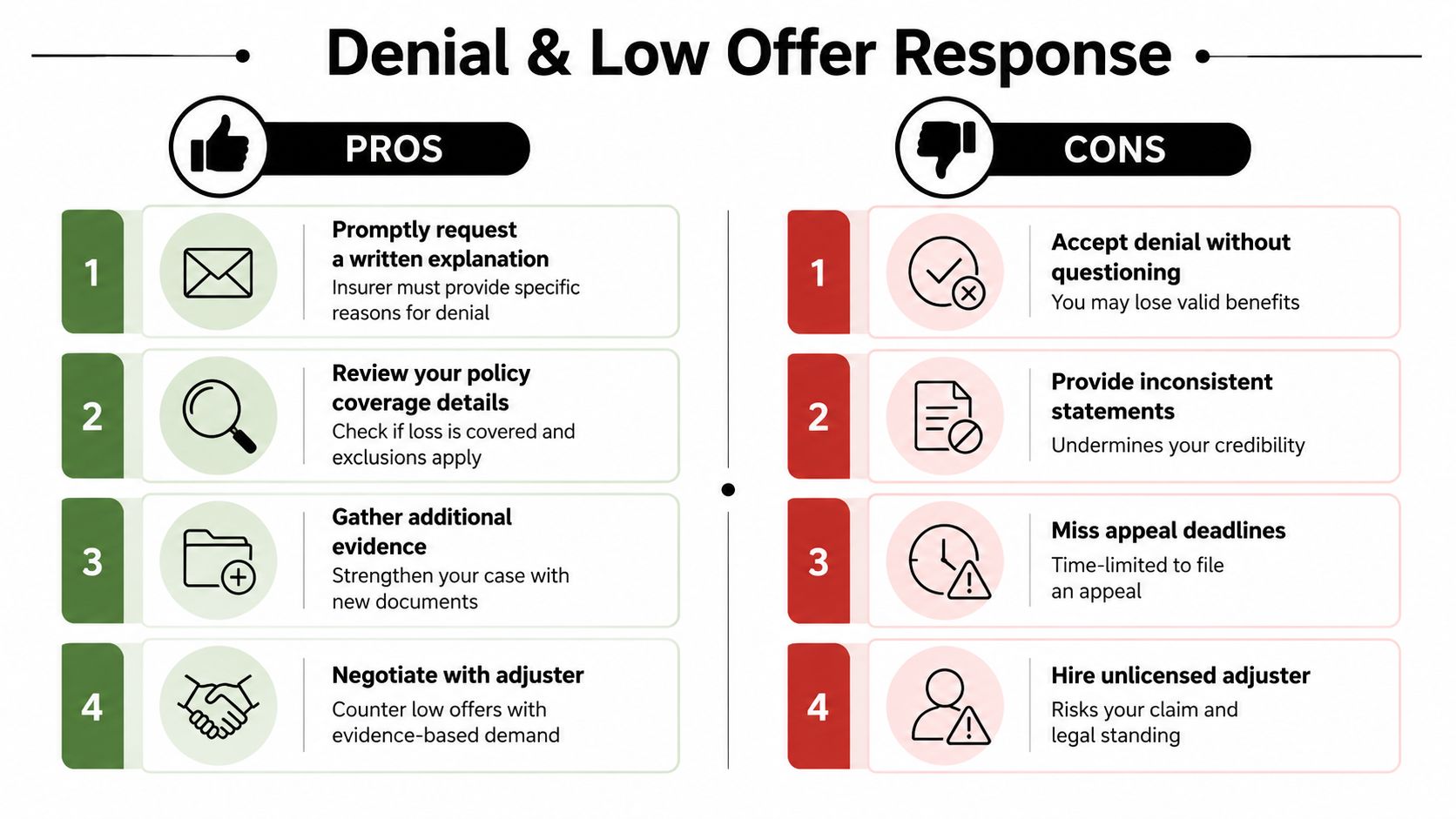
A denial letter rarely tells the whole story. Demand the exact policy language the carrier is relying on, and get the decision in writing. Then compare that reason against the documents you already sent. If the insurer says something is missing, send the item right away and keep proof that you corrected the file.
Carrier guidance from state regulators points to the same practical rule. Use the correct mailing or claim channel, submit the claim in a way that shows receipt, and correct defects immediately if the filing is kicked back. Electronic systems can also reject claims when member information is incomplete or invalid, which means a claim can fail for a technical reason even when the loss itself is real (Oklahoma Insurance Department). Consumers get trapped by the same problem. The insurer treats a paperwork defect like a coverage problem, and that distinction matters.
Canadian federal consumer guidance is blunt about deadlines and documents. Policies can require claim notices and supporting records within specific time frames, and missed deadlines can cut off the claim before anyone reviews the merits (Canada FCA). Keep that in mind if the carrier is slow to respond. A delay on your side gives the insurer room to say the claim was mishandled.
A low offer is a negotiation, not a verdict
A quick payout that ignores treatment, pain, lost income, or repair realities is still an underpayment. Push back with a written counter-demand that matches the actual loss. Attach the medical records, wage proof, repair estimates, or other documents that support the number you want, and spell out the gap in plain terms.
If the insurer has already denied part of the claim or taken an unreasonably low position, the next step is often a formal appeal. A practical overview of how to appeal an insurance claim denial helps explain why written review matters. Denials and low offers usually change only when the claimant forces the carrier to defend its position against a better record.
Bottom line: keep the claim file in shape for a complaint, appeal, or lawsuit, because insurers test for weak records at every stage.
If the carrier keeps stalling, changes its story, or refuses to identify the policy language at issue, document every delay and consider a regulator complaint. A claimant who gives up too early hands the insurer the outcome it wants. A complete file and a pinned-down coverage position shift the pressure back where it belongs.
If you're deciding whether to handle a claim alone, find a lawyer in 2026 before the insurer turns a technical defect into a permanent denial.
Colorado Deadlines and When to Contact Nares Law Group
Colorado does not give you unlimited time to act, and the deadline for an insurance claim is not the same as the deadline for a lawsuit. If you miss the legal clock, you can lose the right to recover even when the other driver was clearly at fault. Treat deadlines as part of the claim file, because insurers watch for technical mistakes and use them to deny or narrow claims.
A crash victim should decide early whether the claim is simple enough to handle alone. The injuries, any dispute over fault, and the number of policies involved tell you a lot. Truck wrecks are rarely simple. They often involve multiple insurers, corporate defendants, and claims that overlap with medical treatment coordination and the crash investigation.
If you are comparing legal options, start with find a lawyer in 2026. Do not wait for the perfect moment if the insurer is already pushing back. Serious brain injury, long-term disability, wrongful death, or a denial built on vague policy language is the point where legal help stops being optional and starts protecting the outcome.
Nares Law Group LLC handles investigation, medical treatment coordination, negotiation, trial, and settlement in motor vehicle crashes, truck wrecks, traumatic brain injury cases, and wrongful death matters. In a claim that has already gone sideways, that kind of end-to-end handling can keep the file moving while the insurer is still looking for excuses.
If you have been hurt in a crash and the insurer is delaying or disputing your claim, contact Nares Law Group LLC for a free consultation. We help injured people build the record, challenge denials, and push back when the claim should have been paid in the first place.