Losing someone suddenly throws a family into two timelines at once. One is the human timeline of grief, funeral planning, unanswered calls, and the strange numbness that follows a death. The other is a legal timeline that starts running whether your family feels ready or not.
Many families spend the first weeks doing what they have to do. They order death certificates, sort through belongings, answer questions from relatives, and try to hold each other together. Some even start preserving memories, creating tribute slideshows or gathering photos for a service. If that's where you are, a gentle resource like this Photo for Video tutorial can help with one small part of that process.
It is often overlooked that while all of that is happening, an unseen legal clock may already be running. In a wrongful death case, that clock can decide whether your family gets the chance to seek accountability at all.
The Unseen Clock After a Family Tragedy
A common pattern in wrongful death cases looks like this. A crash happens. The injured person survives for a period of time, sometimes days, sometimes longer. The family focuses on treatment, hope, and daily hospital decisions. Then the worst happens. After the death, the family is still thinking about medical records, funeral arrangements, and how to explain the loss to children. Nobody is thinking, “When does the filing deadline start?”
That's understandable. It's also dangerous.
The law treats a wrongful death claim as a claim with a deadline. If that deadline expires, the court may never reach the merits of the case. It won't matter how strong the evidence is, how clear the negligence looks, or how devastating the loss has been. That's why early fact gathering matters, especially in crash cases where witness memories, vehicle data, and scene evidence don't wait. A focused wrongful death investigation often starts long before a family feels emotionally prepared for litigation.
Practical rule: In these cases, waiting for emotional readiness can conflict with legal reality.
Families also get tripped up by the wrong question. They ask, “How long do we have?” The better question is, “When did the clock start?” Those aren't the same issue. If the death happened after a period of hospitalization, the date of the collision may not be the date that controls the wrongful death claim.
That start-date problem is where many generic online guides fall short. They give a simple number and stop there. Real cases aren't that neat. The difference between the date of injury, the date of death, and the date the family learned what caused the death can shape everything that follows.
What Is a Wrongful Death Statute of Limitations
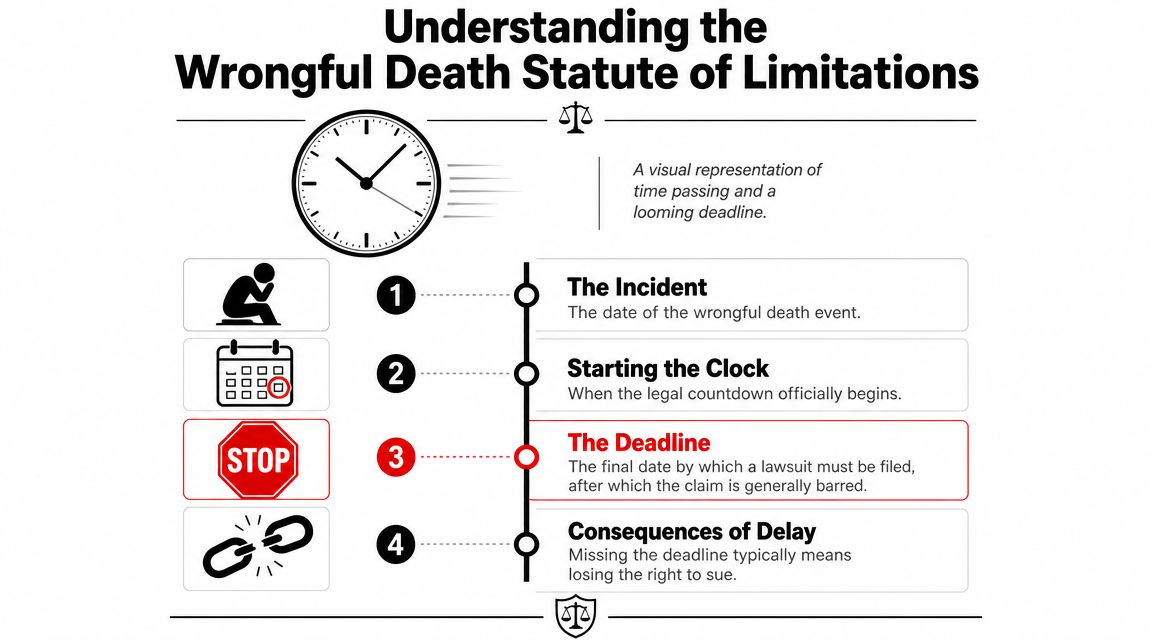
A wrongful death lawsuit statute of limitations is the legal deadline for filing the case in court. Think of it as a filing window that opens when the law says the claim accrues and closes on a fixed date. If the lawsuit isn't filed before that window closes, the claim is usually barred.
That rule feels harsh when a family is grieving, but courts use filing deadlines for a reason. Evidence doesn't improve with age. Witnesses move. Records get harder to obtain. Companies change personnel. Physical evidence can disappear. The statute of limitations is the legal system's way of forcing claims into a timeframe when the facts can still be tested.
The trigger date most families miss
In wrongful death law, the deadline is usually triggered by the date of death, not the date of the underlying negligent act, as explained in this wrongful death limitations overview. That matters most in delayed-fatality cases.
A simple example helps. Suppose a person is badly injured in a truck collision, survives for a time, and later dies from those injuries. The personal injury timeline and the wrongful death timeline may not start on the same day. The wrongful death claim commonly starts at death. Related claims can follow different accrual rules.
That's why I tell families to stop thinking of “the accident date” as the only important date. In many cases, you need a list of dates:
- The injury date
- The date of death
- The date the family first learned key medical or causation facts
- The date any government notice rules may have been triggered
Why facts matter early
A statute question often becomes an evidence question very quickly. If the cause of death is disputed, medical proof can become central. In some cases, families look into proving negligence with private autopsies when they need clearer answers about cause and mechanism of death.
A filing deadline isn't just a calendar issue. It's a case-preservation issue.
What doesn't work is relying on a short online answer that says, “You have two years,” without examining who died, where the claim belongs, whether a public entity is involved, and whether there is a separate survival claim tied to the same event.
Why Your State's Deadline Is the Only One That Matters
There is no single nationwide wrongful death deadline. The filing period is set by state law, and it commonly ranges from 1 to 3 years, with examples including Colorado at 2 years, Louisiana at 1 year, and Maryland at 3 years according to LawInfo's wrongful death limitations summary.
That one point changes how families should approach these cases. If a death happened during travel, involved an out-of-state trucking company, or followed medical treatment in more than one state, assumptions become risky. The law that governs the claim may not match the state where the family lives now.
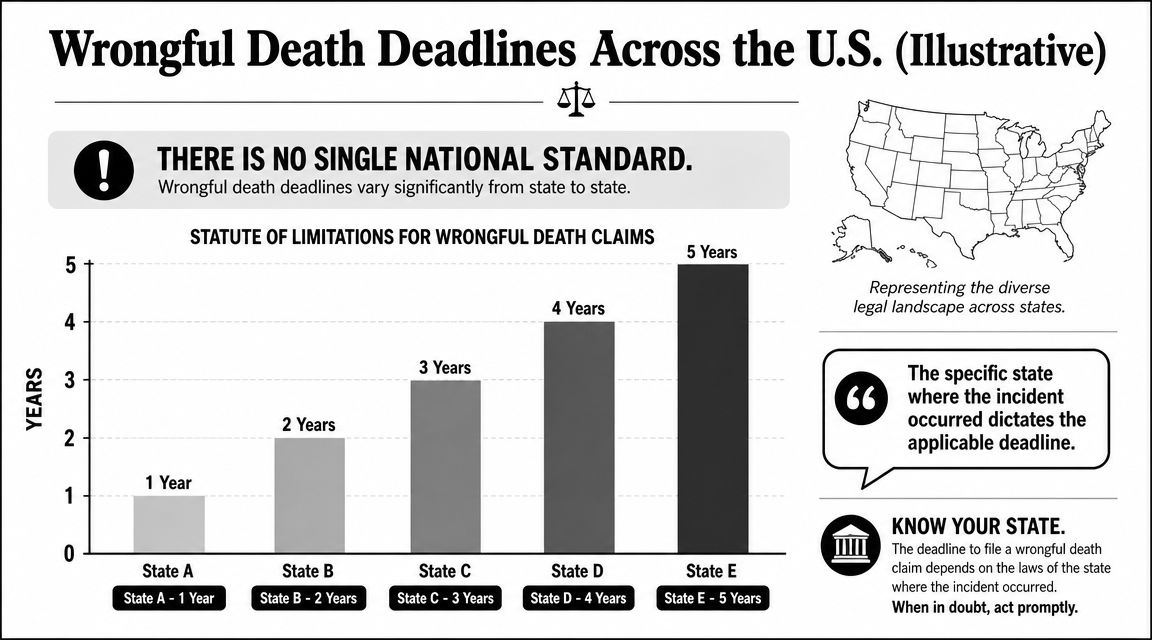
A quick comparison
Here is a simple reference table using examples reflected in the verified data.
| State | General Statute of Limitations |
|---|---|
| Louisiana | 1 year |
| Colorado | 2 years |
| Maryland | 3 years |
The danger is obvious. A family that assumes “every state gives two years” could miss the deadline in a one-year state. A family that reads a one-year article and panics may also misunderstand a state that allows more time. Neither assumption helps.
Why border and residency issues confuse families
Nares Law Group LLC is licensed in Colorado, Texas, and New York, and that matters because multi-state crash cases often create confusion about where the case belongs and which deadline applies. The answer usually doesn't come from where the funeral was held, where the family moved afterward, or where the defendant's insurer is headquartered. It comes from legal analysis of the claim itself.
Here's what tends to work in practice:
- Pin down the forum early: Determine where the death-related claim should be filed before negotiating in circles with an insurer.
- Map every relevant jurisdiction: In trucking cases, the crash location, corporate defendant location, and medical treatment history can all matter.
- Verify special defendant rules: Public agencies and other protected defendants can carry separate notice requirements or shorter timelines.
What usually doesn't work is relying on a general internet answer from the wrong state.
The only deadline that matters is the one that applies to your claim, in your jurisdiction, against your defendant.
Families should also be careful with delayed-fatality cases. Even where the wrongful death claim starts on the death date, there may be related claims with different rules. That's one reason deadline analysis should happen before settlement talks gather momentum.
Can the Wrongful Death Deadline Be Paused or Extended
The short answer is sometimes, but families shouldn't count on it.
Wrongful death statutes often combine firm filing deadlines with narrow tolling rules. For example, Georgia's general rule is 2 years from death, but that period may pause for up to 6 years if the wrongful death is tied to a criminal case, and California claims involving a public agency may require action in as little as 6 months, as described in this state-specific overview of wrongful death filing deadlines.
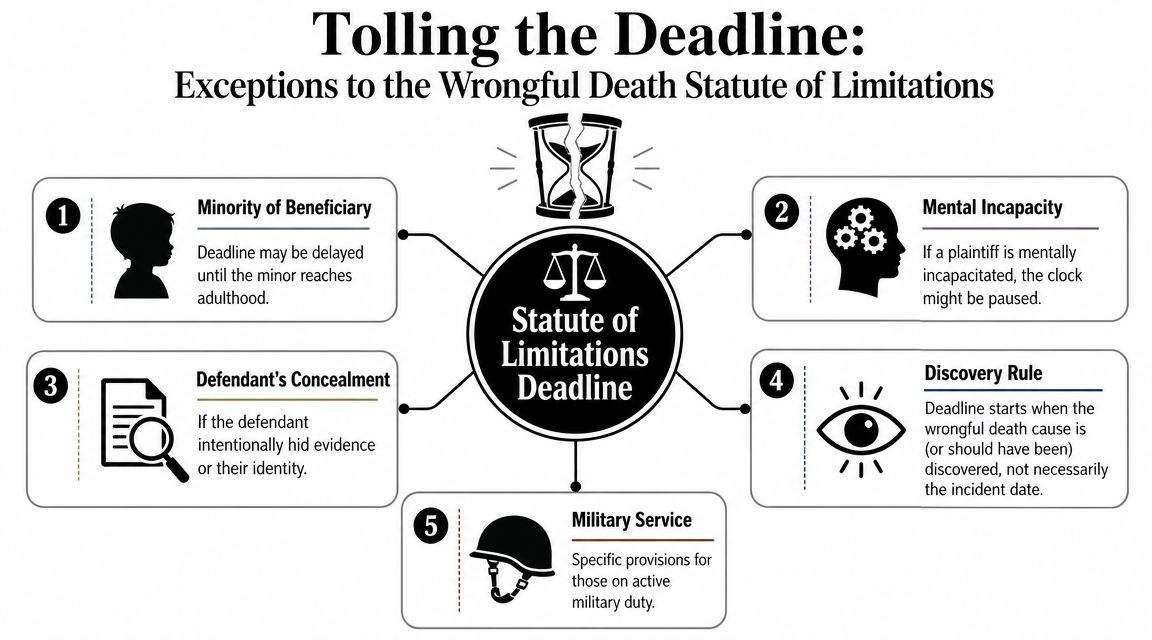
What tolling means in real life
“Tolling” means the legal clock pauses, delays, or starts later under specific conditions. It is not a free extension. It is a fact-driven exception that usually has to be supported carefully.
Some examples families ask about include:
- A related criminal case: In some states, the civil deadline may pause while criminal proceedings are pending.
- No personal representative appointed yet: In some jurisdictions, the absence of an estate representative can affect timing.
- Concealment of wrongdoing: If critical facts were hidden, the start date or running of the period may be disputed.
- A discovery issue: If the family did not and could not reasonably know the cause of death right away, that can matter in some states and fact patterns.
Why discovery issues are so hard
The “discovery rule” sounds simple until you apply it. Families often know that a loved one died. They do not always know whether negligence caused the death, which person or company caused it, or whether a medical event was preventable. That gap between death and understanding is where legal analysis matters most.
A delayed diagnosis case is a good example. A family may suspect something went wrong but not learn key facts until records are reviewed. A product-related death can raise the same issue if the defect isn't obvious at first.
Tolling arguments are strongest when they are built early, documented carefully, and tied to specific facts. They are weakest when used as a last-minute rescue.
What families should not assume
Don't assume grief itself extends the deadline. Don't assume an insurance claim preserves your rights. Don't assume the other side will “work with you” because the facts seem clear.
Courts usually treat the statute of limitations as a procedural gate. If you miss it, the court may never consider the substance of the case. Tolling can help in the right case, but it isn't something to gamble on.
Wrongful Death Claims vs Survival Actions
Families are often told they have “a wrongful death case” as if that settles the issue. It usually doesn't. In many cases, there may be two distinct claims to evaluate: a wrongful death claim and a survival action.
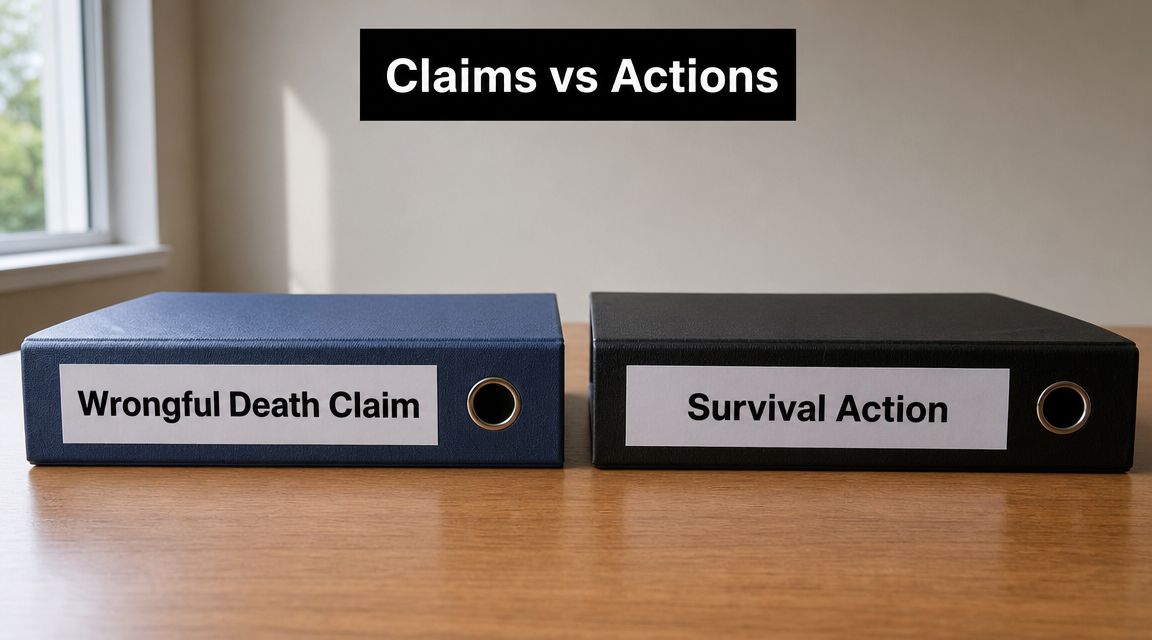
A wrongful death claim focuses on losses suffered by surviving family members because of the death. A survival action focuses on the claim the deceased person could have pursued had they lived. Those are different legal interests, even when they arise from the same event.
For many families, one of the first practical questions is who can sue for wrongful death. The answer often depends on state law, family relationships, and whether an estate representative has been appointed.
Why the distinction matters financially
The claims may share a filing deadline in some states, but they don't recover the same categories of damages. Verified Pennsylvania guidance explains that wrongful death and survival actions are distinct claims that typically share the same 2-year deadline there, and also notes a California development: for survival actions filed on or after January 1, 2026, pre-death pain and suffering is no longer available, while medical bills and lost earnings may still be recoverable, as discussed in this analysis of wrongful death and survival claims.
That kind of rule change matters because delay can affect more than filing rights. It can affect the damages available once the case is filed.
A short video explanation can help clarify how these claims operate in practice.
A simple side-by-side view
| Claim | Core purpose |
|---|---|
| Wrongful death claim | Addresses losses suffered by surviving family members |
| Survival action | Preserves the deceased person's own claim that existed before death |
What doesn't work is filing one claim and assuming it covers everything. In serious crash cases, especially where there was treatment before death, counsel should examine both tracks early. Waiting too long can create avoidable damage disputes even when liability is strong.
The Cost of Waiting and Your Immediate Next Steps
Missing the deadline can end the case, even if liability is clear.
That's the hard truth families deserve to hear early. A strong case filed too late can fail for procedural reasons alone. And because the actual start date may depend on whether the law looks to death, discovery, or another event in a particular fact pattern, early legal analysis matters more than most families realize. A useful explanation of that problem appears in this discussion of when the deadline clock starts in a wrongful death case.
What to do right now
If your family is even considering a claim, focus on preservation first.
Gather the core documents. Get the death certificate, police report, incident report, discharge papers, and any correspondence from insurers or employers into one folder.
Preserve photos and digital evidence. Save vehicle photos, scene images, text messages, emails, dashcam footage, and social media posts before accounts change or phones are replaced.
Write down the timeline. Memory fades fast after trauma. Create a basic chronology of the injury event, treatment, hospitalization, conversations with doctors, and the date of death.
Be careful with insurance adjusters. They may ask for recorded statements or broad authorizations. Don't assume those requests are routine or harmless.
Identify whether an estate needs to be opened. In some cases, the lack of a personal representative affects who can act and how claims are organized.
Get a legal opinion on the actual deadline. A lawyer should evaluate the controlling state law, any discovery issue, any public defendant issue, and whether a survival claim should be filed alongside the wrongful death claim. Families looking for Colorado-specific guidance can review this wrongful death attorney Colorado guide.
Early action doesn't mean rushing into a lawsuit blindly. It means preserving options before they disappear.
What waiting usually costs
Delay creates practical damage even before a filing deadline arrives. Witnesses become harder to find. Companies lose records in ordinary retention cycles. Vehicles are repaired, sold, or destroyed. Medical causation questions get harder to prove when no one organized the records early.
The best approach is simple. Treat the deadline as uncertain until a lawyer confirms it. That mindset protects families from the false comfort of a generic online answer.
Frequently Asked Questions About Wrongful Death Deadlines
What if a government employee or public agency caused the death
These claims often move on a faster track. Some states require very early notice or action against public entities. California, for example, may require action in as little as six months in public-agency cases, as noted earlier. Government claims are not the place to rely on assumptions.
Does a criminal case change the civil deadline
Sometimes it can, but only under state-specific rules. The verified Georgia example shows that a wrongful death period may pause for up to six years when tied to a criminal case. In other states, the criminal case may not protect the civil claim the way families expect. Never assume prosecutors are preserving your civil rights.
Can I file without a lawyer
Legally, some people can file on their own. Practically, wrongful death cases are some of the most deadline-sensitive and procedure-heavy cases in civil litigation. The risks aren't limited to losing the case. You can also lose parts of it by filing the wrong claim, naming the wrong party, or missing an estate issue.
What if we still don't know what caused the death
That is one of the most important reasons to speak with counsel early. The factual cause of death, the legal cause of action, and the filing trigger may not line up neatly. Cases involving delayed medical complications, disputed autopsy findings, or multiple defendants need careful review.
Does the family member who calls the lawyer have the right to sue
Not always. State law controls who may bring the claim, whether an estate representative is required, and whether surviving relatives have priority or shared rights. That issue should be sorted out at the beginning, not after settlement talks begin.
We're also caring for an elderly surviving parent. Are there legal planning resources that help
Yes. Families dealing with both a wrongful death and elder care responsibilities often need broader practical support. This practical guide for senior legal issues may help families organize related legal concerns while they work through next steps.
If you're unsure whether the clock has started, who can file, or whether your case includes both a wrongful death claim and a survival action, treat that uncertainty as a reason to act now, not later.
If your family is facing questions about a wrongful death deadline, the safest next step is to get a case-specific review from Nares Law Group LLC. The firm handles wrongful death and serious injury cases involving crashes, trucking, and complex liability issues, and can help assess the likely start date, applicable state law, and whether related claims need to be preserved promptly.