A fall in a Denver grocery store can look simple at first. Then the questions multiply. Was the floor wet, icy, cluttered, or uneven? Did the owner or manager know about the danger, or should a reasonable inspection have found it? Were you shopping, visiting, working, or passing through? If a person was attacked in a parking lot, the legal focus may shift from maintenance to lighting, locks, warnings, and foreseeable criminal activity.
Those differences matter because premises liability isn't one single type of claim. It's a group of claims involving unsafe conditions, inadequate security, animals, structural defects, environmental exposure, and other property-related dangers. The same injury, such as a broken wrist or traumatic brain injury, can require a different legal theory depending on what caused it and who controlled the area.
The eight types of premises liability cases below focus on the evidence that can matter, the legal theory behind each claim, common injury patterns, and practical next steps in Colorado. Early action is important. Get medical care, preserve photographs and video, report what happened, and discuss Colorado deadlines and comparative negligence with counsel before signing a release or giving a recorded statement. A broader liability management guide can also help property operators understand why documentation and hazard response matter.
1. Slip and Fall Accidents
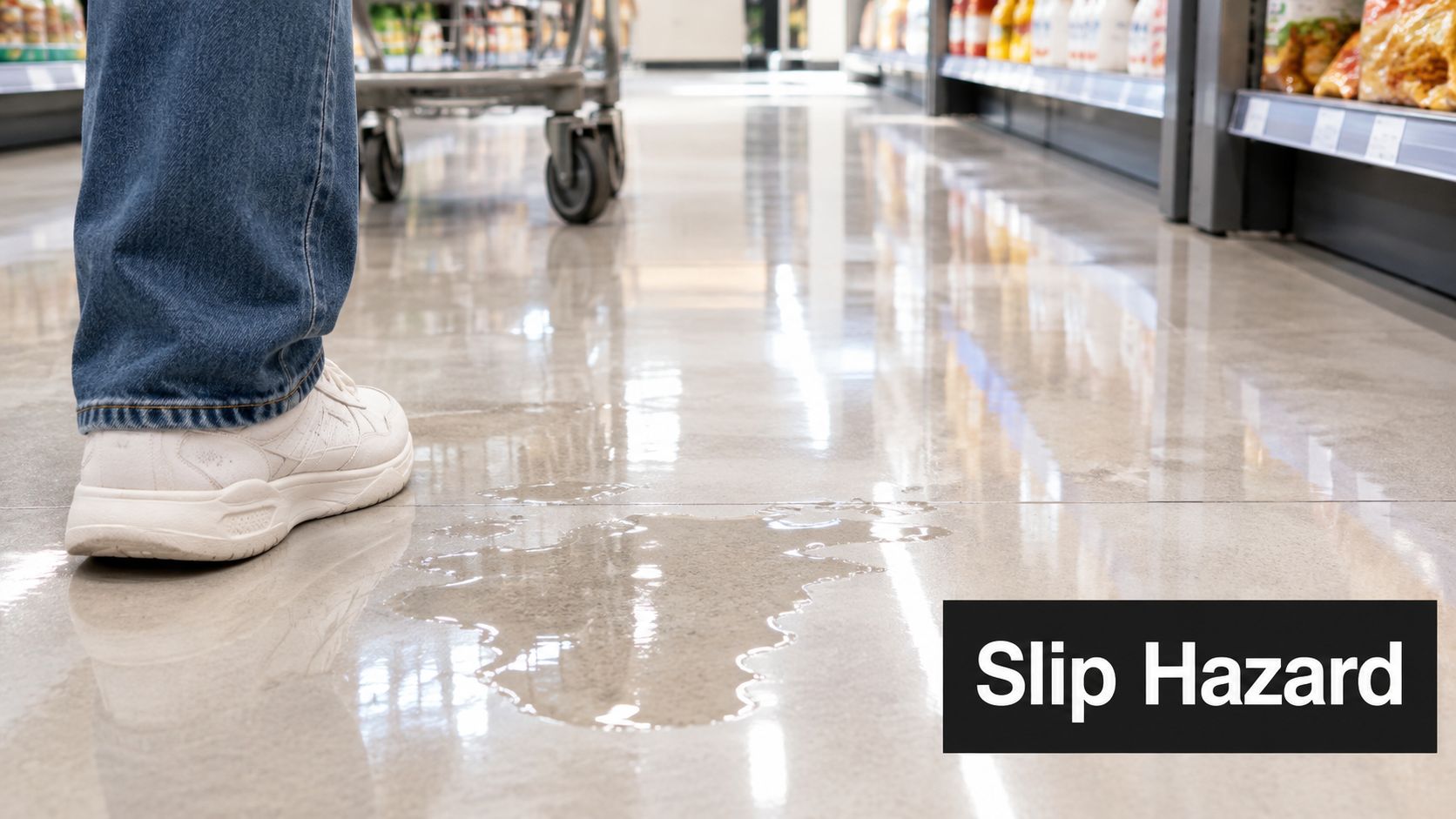
A shopper walks into a Denver grocery aisle, steps on an unmarked spill, and falls before an employee places a warning sign. The same pattern can involve ice in a parking lot, debris in a medical-office hallway, or a workplace spill left unattended. The visible hazard may be brief, but the legal questions begin with what caused it and who controlled the property.
Colorado slip and fall claims generally examine whether the owner or occupier knew, or should have known, about the dangerous condition; whether reasonable steps could have addressed it; and whether that condition caused the injury. The person's reason for being on the property and any conduct that contributed to the fall may also affect the analysis. A broken wrist, head injury, or other harm does not establish responsibility by itself.
Workplace falls, slips, and trips remain a significant source of injury claims. A study indexed by PubMed on ladder-related workplace falls shows why ladders, elevation changes, and access areas deserve close attention. The same evidence-focused approach applies to stores, offices, apartment buildings, and parking areas.
Evidence can disappear quickly
If it is safe, photograph the floor, lighting, footwear, warning signs, barriers, and surrounding area. Ask witnesses for contact information, report the incident in writing, and request that management preserve surveillance footage. Cleaning or repairs may remove the condition soon afterward, so early photographs and a prompt preservation request can help show what existed.
- Record conditions: Note weather, lighting, ice, water, debris, and the location of signs or barriers.
- Keep medical records: Save discharge papers, bills, prescriptions, work restrictions, and follow-up instructions.
- Avoid premature paperwork: Do not sign a release or settlement document at the scene without understanding its effect.
Connect the evidence to the claim
Settlement evaluation depends on liability evidence, medical proof, and the injury's lasting effects. A Colorado premises liability settlement resource offers general background, but it cannot evaluate the facts of a particular fall. Balance and strength exercises, including balance exercises for older adults, may help reduce future fall risk. They do not decide who was responsible for an injury that already occurred.
A short video can show why the visible hazard is only part of the legal analysis.
2. Inadequate Security and Premises Assault Cases
An assault outside an apartment building, hotel, store, or parking garage can raise a different premises liability theory than a fall. The focus is often whether the owner or occupier should have anticipated criminal conduct and taken reasonable steps to reduce the danger.
Security failures may include burned-out exterior lights, a disabled alarm, an unsecured entrance, missing locks, absent security staff, or no warning about a known threat. Earlier incidents at the property or nearby can provide context, though they do not decide the claim by themselves. The analysis also depends on who controlled the area and which precautions were reasonable there.
Build the timeline before conditions change
A parking-lot assault may require evidence beyond the police report. Security footage can be overwritten, a broken gate can be repaired, and lighting can be replaced. A prompt written request to preserve records can identify the incident and the materials that may show what happened.
The physical setting should be examined alongside the event itself. A dark walkway, blocked camera view, damaged lock, or access point open to the public may help explain how the assault occurred. Prior complaints, calls for service, access logs, alarm records, maintenance tickets, and communications can show whether the property had notice of a recurring problem.
Foreseeability connects the hazard to the legal theory
The owner may argue that the attack was too unexpected to prevent or that the assailant alone caused the injury. An injured person may point to repeated incidents, a broken gate, poor lighting, or a known access problem. The question is whether those facts made criminal conduct reasonably foreseeable and whether reasonable security measures could have addressed the risk.
Useful evidence includes:
- Incident history: Investigate law-enforcement reports and earlier complaints involving the property.
- Physical conditions: Document lighting failures, broken locks, damaged gates, and obstructed sightlines.
- Digital records: Seek surveillance footage, access-control logs, alarm records, and maintenance tickets.
- Professional review: A qualified security professional may assess whether the property's design and practices were reasonable.
The general-liability discussion from Verisk describes premises and operations exposure as a distinct concern for owners, landlords, and tenants. That general discussion does not establish liability in a particular Colorado case. It does show why the analysis turns on the property's security conditions and available evidence, not on whether a guard was present.
3. Elevator and Escalator Accidents
Elevator and escalator injuries often turn on a technical question: what failed, and who had the duty and ability to correct it? A passenger might be caught by a closing door, crushed, injured by an uneven elevator stop, or hurt when an escalator suddenly malfunctions. Potentially responsible parties include the building owner, property manager, maintenance contractor, equipment manufacturer, or several parties together.
What the equipment and records may show
An elevator or escalator is like a machine with a service history. Inspection reports, service contracts, repair tickets, mechanic notes, code documents, and incident logs can reveal whether the problem existed before the event and whether someone knew about it. Surveillance footage may show the sequence, including door movement, an abrupt stop, warning signs, or crowd conditions.
The equipment should not be altered, repaired, or discarded before relevant evidence is preserved. A prompt written request can identify the incident, the specific device, and the records to retain. If repairs already occurred, photographs, maintenance histories, witness accounts, and video may still help reconstruct the event.
Write down the details while they remain clear:
- Sequence: Record where you stood, what the device did, which warnings appeared, and how you exited.
- Witnesses: Gather contact information for passengers, employees, security staff, and first responders.
- Technical records: Seek inspection, maintenance, repair, shutdown, and reopening documents.
- Control and responsibility: Determine which parties controlled inspection, repairs, operation, or warnings.
A mechanical failure may point to maintenance, installation, or equipment-design issues. A warning failure may raise a different negligence question. An engineering or elevator-industry expert may be needed to explain the connection between the technical condition and the injury.
Building-code compliance can matter, but it does not automatically resolve every negligence issue. The investigation must connect the defect or malfunction to the injury and clarify who was responsible for addressing the risk. In Colorado, preserving records early can help an injured person evaluate the legal theory before key evidence becomes harder to obtain.
4. Dog Bite and Animal Attack Cases
A child visiting an apartment complex, a delivery driver approaching a home, or a tenant using a shared walkway may be attacked by a dog. The location and the person's reason for being there can affect the legal analysis. Colorado claims may involve the dog owner's responsibility, the animal's conduct, control of the property, and the injured person's status and actions.
Start with the injury, then trace control of the animal
Medical care should come first, even if the wound appears minor. A bite can lead to infection, nerve damage, scarring, emotional trauma, or limits on movement. Keep photographs as the wound changes, and request the animal-control or law-enforcement report, vaccination information, and quarantine details.
Colorado statutes can impose dog-owner liability in circumstances defined by law. A claim does not necessarily depend on proving that the owner knew about an earlier attack. The statutory requirements, whether the injury resulted from a bite or other animal behavior, and any applicable defenses still require close examination. This Colorado dog-bite law resource explains the general framework, but an online summary cannot decide how the law applies to a particular incident.
The most useful evidence often shows what happened, who observed it, and who could control the risk:
- Animal-control records: Preserve reports, quarantine information, licensing records, and available material about prior incidents.
- Scene details: Photograph gates, fences, leashes, warning signs, escape paths, and the attack location before conditions change.
- Witness accounts: Record contact information for people who saw the attack or observed the dog's handling beforehand.
- Medical records: Keep emergency-care notes, wound treatment, infection monitoring, surgery records, scar care, and documentation of psychological symptoms.
Property responsibility may belong to someone other than the dog owner. A landlord or property manager's control over a common area, knowledge of a dangerous animal, lease terms, and ability to repair a gate or enforce animal rules may affect the legal theory. A fence or warning sign can provide evidence about precautions, but it does not by itself settle whether the property owner or another party acted reasonably. In Colorado, identifying control and preserving records early helps connect the animal's conduct to the injury and the parties responsible for the conditions that allowed the attack.
5. Premises Liability from Motor Vehicle Accidents
A collision in a parking garage or shopping-center lot can begin with a driver's mistake, yet the property may have shaped what the driver could see, anticipate, or avoid. A pothole, loose debris, poor lighting, blocked sightline, icy driveway, missing sign, or confusing lane design may create a separate premises liability question.
The legal analysis usually has two tracks. One examines each driver's conduct, such as failing to yield. The other asks who controlled the parking area and whether its condition contributed to the crash, the timing of the impact, or the resulting injuries. Keeping those tracks separate helps identify the proper defendants and the evidence needed for each theory.
Start with the approach, not only the impact point
Photograph the entire route to the hazard as soon as possible. A close image may show a pothole or debris. Wider photographs can show lighting, signs, lane markings, drainage, sightlines, nearby businesses, and the placement of traffic cameras.
A parking-lot collision deserves a property investigation when the surface, visibility, layout, or maintenance may have influenced what happened.
Some evidence is time-sensitive. Ice melts, debris is removed, lighting changes, and video may be overwritten. If it is safe to do so:
- Document the defect: Photograph and measure potholes, broken pavement, ice, elevation changes, or debris.
- Record visibility: Note obstructions, signs, mirrors, lane markings, lighting, and camera locations.
- Request video preservation: Ask the owner, garage operator, nearby retailer, and security company to retain relevant footage.
- Identify insurance coverage: Gather the drivers' insurance information and the property owner's liability-insurance details, if available.
- Evaluate accident reconstruction: A qualified professional may help distinguish vehicle movement from the effect of roadway or property conditions.
Maintenance records can reveal inspection practices, prior complaints, snow and ice treatment, repairs, and notice of the hazard. Parking areas may involve an owner, tenant, contractor, or management company. Identifying who controlled the specific area is therefore an early Colorado claim-investigation step, particularly when injuries include fractures, head trauma, or other harm requiring continuing treatment.
6. Hazardous Condition and Structural Defect Cases
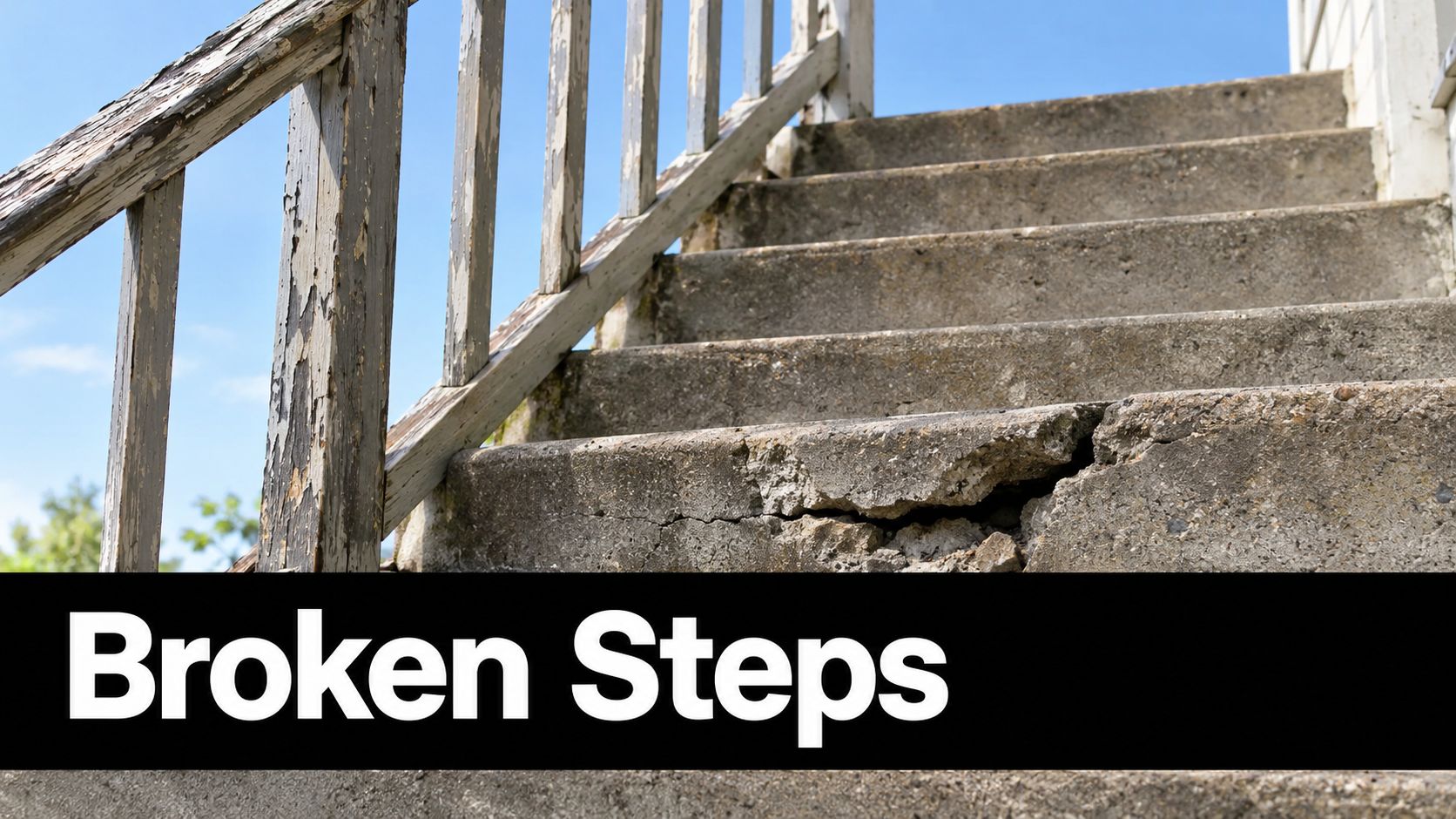
A person reaches for a stair railing, and it pulls loose. Someone walking below is struck by a falling ceiling panel. A damaged walkway gives way under a visitor's foot. These incidents may involve a defect built into the property or a component that was poorly installed, inspected, or maintained.
The injury pattern can help identify the evidence. A failed railing may cause fractures or head trauma. A collapsing ceiling or falling window can injure someone without warning. The investigation may include repair history, construction decisions, permits, building-code requirements, contractor work, inspection practices, and earlier complaints.
Preserve the condition before it changes
Repairs may be necessary after an incident, but they can also alter or remove the condition that caused the injury. If it is safe, photograph the scene from multiple angles, record measurements, preserve damaged clothing and personal items, and identify witnesses who saw the property before or after the event.
Ask the owner or manager to preserve damaged stairs, railings, ceiling pieces, windows, decks, or other components. Keep shoes, clothing, mobility aids, and damaged belongings in their post-incident condition. These items can help show how the event occurred and whether the condition was consistent with the reported injury.
Building records may reveal who performed the work and who controlled the area. Look for permits, inspection documents, repair invoices, work orders, tenant notices, maintenance requests, emails, and reports describing a similar hazard. A structural engineer or another qualified professional may explain how the defect developed and whether it created an unreasonable danger.
Building codes can support an argument about applicable safety requirements, although a claim still must address duty, breach, causation, and damages. The relevant rule may depend on the property's location, construction or alteration history, and the rule in effect at the time.
The Colorado negligence proof guide provides general background on evidence connecting unsafe conduct with an injury. In Colorado, responsibility may extend beyond the property owner. A contractor, manufacturer, landlord, tenant, or property manager may have controlled the condition or shared responsibility, so identifying each participant is an important early step.
7. Toxic Exposure and Environmental Hazard Cases
A person may leave a building with a cough, headache, or other symptom and only later suspect the property. Mold in a ventilation system, lead paint in a rental, asbestos in an older commercial building, radon, chemical residue, and spills can create exposure without one obvious accident. Symptoms may also develop gradually.
Start with the exposure pathway
The claim depends on more than identifying a harmful substance. Evidence should address what was present, how it reached the person, who knew or should have known, whether warnings were given, and who controlled the source. A rental property, industrial site, school, office, or older building may have different records and responsible parties.
Begin with a medical evaluation, and describe the possible exposure to the treating provider. Keep a dated record of when you lived or worked at the property, where you spent time, when symptoms began, and whether they changed after you left. Medical history may become part of the dispute if an insurer argues that another condition caused the symptoms.
Testing should be performed by qualified environmental professionals. Do not disturb suspected asbestos, mold, lead, or chemicals yourself. Preserve notices, inspection reports, work orders, renovation records, communications with landlords or employers, and photographs showing visible conditions.
Four evidence questions can organize the investigation:
- Test the substance: Use appropriate professional testing instead of relying on appearance or smell.
- Research the property: Earlier industrial, commercial, renovation, or manufacturing uses may explain how the hazard developed.
- Check regulatory records: Citations, inspection findings, and notices may show knowledge or required corrective action.
- Coordinate experts: Environmental specialists can evaluate the property and exposure route, while medical experts address the resulting condition.
Long-latency conditions make dates and records especially important. Someone may not immediately connect respiratory, neurological, or other symptoms with a building condition. Early documentation can preserve the sequence, but it does not establish causation by itself. In Colorado, a lawyer and qualified experts may need to examine the exposure pathway, alternative causes, medical findings, and applicable rules before the potential claim can be assessed.
8. Sports and Recreation Facility Injury Cases
A swimmer slips on a wet deck, a treadmill belt stops suddenly, or a skier encounters an unmarked hazard. Gyms, pools, amusement parks, ski areas, fitness studios, and recreation centers combine property conditions with equipment, supervision, and participant activity. That combination makes the evidence and legal theory different from an ordinary fall.
Separate activity risks from facility failures
A pool injury may involve inadequate lifeguard supervision or an unsafe deck. A gym injury may stem from equipment failure, poor maintenance, or a missing warning. A recreation facility may argue that the participant accepted ordinary risks or signed a waiver. The key question is whether the injury came from an expected part of the activity or from a preventable condition, negligent operation, inadequate supervision, or a concealed danger.
Waiver language requires close reading. Keep membership agreements, digital check-in terms, posted rules, incident forms, and signed releases. The wording, presentation, scope, and applicable Colorado law can affect whether a waiver applies. It may cover certain activity risks without covering every negligent act or dangerous property condition.
The scene can change quickly after an incident, so record it promptly. Photograph flooring, barriers, equipment settings, warning signs, lighting, water conditions, and access points. Request preservation of facility video and electronic records, and identify staff members and witnesses before details are lost. Inspection records, maintenance logs, training materials, and earlier incident reports may help show what the facility knew and how it responded.
Four questions can organize the claim:
- What activity was underway? Record your instructions, equipment use, and any unexpected change.
- What condition caused the injury? Identify the specific defect, missing warning, supervision gap, or equipment problem.
- What does the facility's record show? Preserve communications, membership notices, incident reports, and requests for maintenance.
- Was the risk inherent or preventable? Compare the ordinary danger of the activity with the condition that produced the injury.
Medical records should connect the injury to treatment, restrictions, work limitations, and effects on daily life. In Colorado, the waiver, facility records, witness accounts, and medical evidence may all matter when assessing responsibility and the next steps for a potential claim.
Comparison of 8 Premises Liability Case Types
| Case Type | 🔄 Complexity | ⚡ Resource requirements | ⭐ Expected outcomes | 📊 Ideal use cases | 💡 Key advantage / Tip |
|---|---|---|---|---|---|
| Slip and Fall Accidents | Moderate, proof of condition & notice required | Low–Moderate, photos, witnesses, medical records | ⭐⭐ Often winnable; reduced by comparative negligence | Retail, grocery, icy parking lots, public walkways | 💡 Document hazard, preserve footage, get witness info |
| Inadequate Security & Premises Assault | High, must prove foreseeability of crime | High, police reports, crime data, security experts | ⭐⭐ Possible significant damages if foreseeability shown | Apartments, parking lots, hotels, retail centers | 💡 Obtain prior-incident data; retain security expert early |
| Elevator and Escalator Accidents | High, technical/mechanical causation, multiple parties | High, engineering experts, inspection & maintenance records | ⭐⭐⭐ Severe injuries → substantial recovery when negligence proven | Office buildings, malls, hospitals, residential elevators | 💡 Preserve device, secure maintenance logs, hire engineer promptly |
| Dog Bite and Animal Attack Cases | Low–Moderate, Colorado strict liability simplifies fault | Low, medical records, animal control reports, witness statements | ⭐⭐⭐ Easier to establish liability under strict liability statute | Private residences, delivery routes, rental properties | 💡 Seek immediate medical care; obtain animal control report |
| Premises Liability from Motor Vehicle Accidents | Moderate, blends driver and owner negligence issues | Moderate, maintenance records, surveillance, reconstruction | ⭐⭐ Strong if property defect caused collision; comparative negligence applies | Parking lots, garages, driveways, private roads | 💡 Photograph/measure defects and preserve surveillance; get maintenance history |
| Hazardous Condition & Structural Defect Cases | High, requires structural/engineering analysis | High, engineering experts, building permits, inspection records | ⭐⭐⭐ Code violations often create strong claims (negligence per se) | Broken stairs, faulty railings, ceiling/structural failures | 💡 Hire structural expert immediately and preserve physical evidence |
| Toxic Exposure & Environmental Hazard Cases | Very High, long latency and complex causation | Very High, medical & environmental experts, testing, regulatory reports | ⭐⭐ Potentially large damages but causation is challenging | Mold, asbestos, lead, chemical spills, industrial/commercial sites | 💡 Test property, document medical history, retain environmental & medical experts early |
| Sports & Recreation Facility Injury Cases | Moderate–High, waivers and assumption of risk common defenses | Moderate, facility records, video, industry-safety experts | ⭐⭐ Recovery limited by waivers unless gross negligence shown | Gyms, pools, amusement parks, ski resorts, recreational facilities | 💡 Review waivers closely; secure video and maintenance/supervision records |
Turn the Incident Into a Documented Claim
The label matters less than the proof. Calling an incident a slip and fall, security assault, structural defect, or recreation injury identifies a starting point, but it doesn't establish responsibility. A strong investigation usually has to answer four practical questions: What condition or conduct caused the event? Who controlled the area? Did that person know or should they have known about the danger? How did the condition cause the injury and resulting losses?
Colorado premises claims can involve complicated defenses. The property owner may argue that the danger wasn't known, that it was open and obvious, that the injured person entered without permission, or that another party controlled the condition. Comparative negligence may also become part of the discussion if the defense claims the injured person failed to use reasonable care. In recreation cases, assumption of risk and waivers can add another layer. These defenses are fact-specific, so don't decide that you have no claim because you were distracted, signed a form, or entered an area with a posted warning.
Early evidence preservation helps every category. Surveillance footage may be overwritten. A spill may be cleaned, ice may melt, a broken stair may be replaced, a light may be repaired, and a damaged elevator may return to service. Written preservation requests, photographs, witness information, maintenance records, incident reports, and expert inspections can protect details that otherwise disappear.
The practical sequence: Treat the injury, preserve the scene, identify the responsible parties, document the losses, and get legal advice before signing away rights.
After an incident, take these steps when your condition permits:
- Seek medical care: Follow treatment instructions and keep records of visits, diagnoses, prescriptions, restrictions, and future-care recommendations.
- Photograph the scene: Capture the hazard, surrounding conditions, signs, lighting, weather, clothing, footwear, and visible injuries.
- Report the event: Notify management or the property owner and request a copy of the incident report.
- Collect witnesses: Save names, phone numbers, emails, and short descriptions of what each person observed.
- Preserve records: Ask the property owner to retain video, access logs, maintenance files, inspection documents, complaints, and repair records.
- Protect your statements: Don't give a recorded statement, sign a release, or accept a quick payment before legal review.
- Discuss timing: Ask a Colorado personal injury attorney to evaluate deadlines, ownership, notice, comparative negligence, insurance, and possible defendants.
Keep your own file organized. A folder containing photographs, medical documents, wage information, reports, correspondence, and a written timeline can make the first legal consultation more productive. If you're also dealing with damaged clothing, a phone, glasses, or other belongings, use a clear process to document property damage correctly and retain receipts and photographs.
Nares Law Group LLC is a Denver-based personal injury firm that handles premises liability matters, including unsafe property conditions, falls, security claims, and related injuries. The firm offers free consultations, and a conversation can help you understand what evidence may matter without promising a particular result. Bring the incident date, property address, photographs, medical information, witness details, and any communication from the owner or insurer.
If you were injured because of an unsafe Colorado property, Nares Law Group LLC can review the condition, evidence, medical impact, and potential defenses with you. Visit Nares Law Group LLC to request a free consultation and discuss practical next steps before important evidence or deadlines become harder to protect.