You're sitting in your car after the impact, phone in your hand, trying to decide who to call first. The other driver's insurer may call within a day, asking for a recorded statement and sounding helpful. What you say in that first conversation, and what you document in the first week, can shape your motor vehicle accident claim for months. People often expect a straightforward process. What happens in reality is slower, more paper driven, and more contested than they anticipate.
What Is a Motor Vehicle Accident Claim
You've exchanged insurance information at the scene, a tow truck is coming, and an adjuster leaves a voicemail before you've even seen a doctor. It's easy to assume the claim has started on its own. It hasn't, not in the way that protects you.
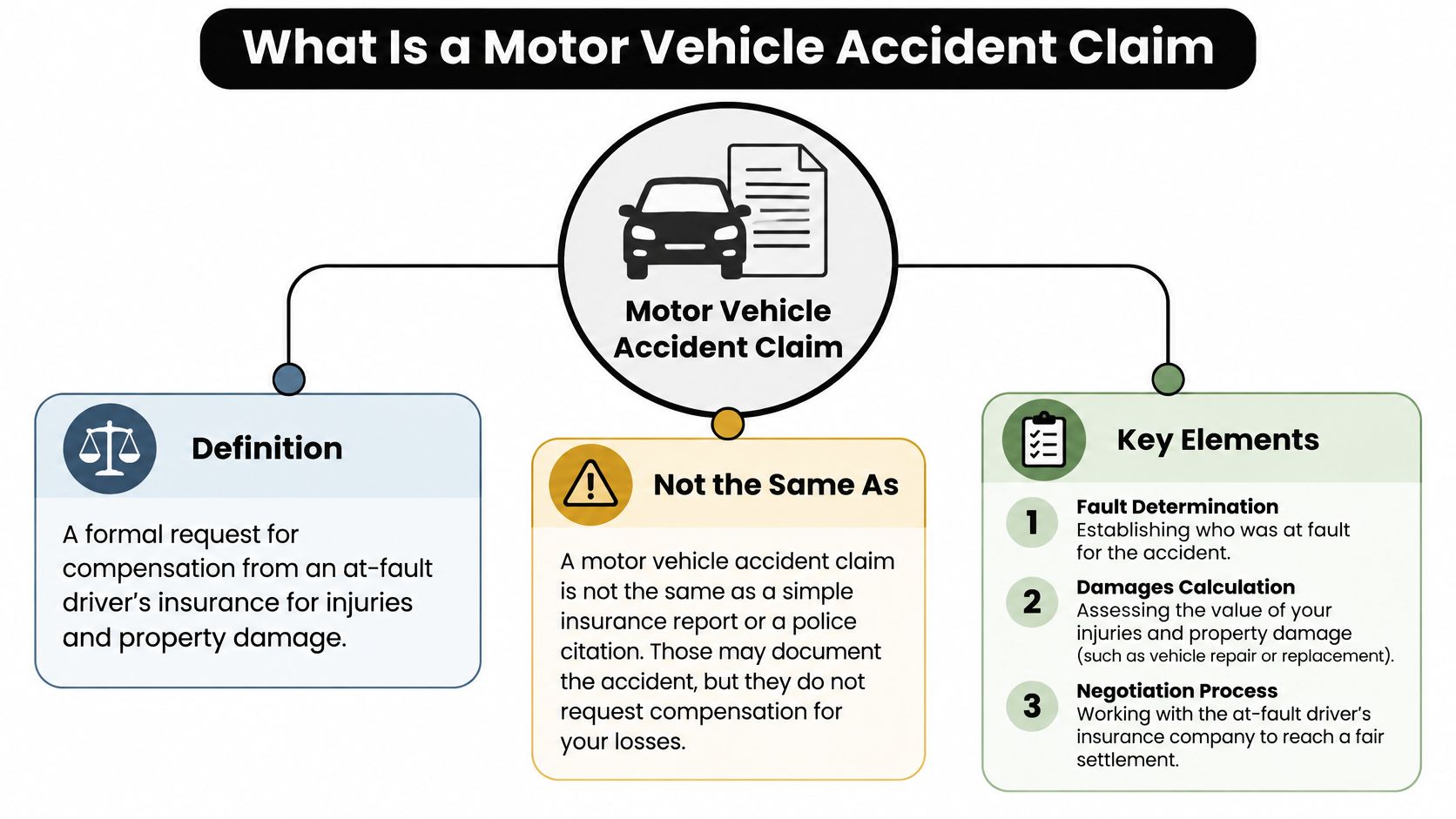
A motor vehicle accident claim is a formal demand for compensation made against the at fault party, usually paid through that driver's insurance. You're asserting that someone else's careless driving caused specific losses, and you're asking to be made whole for those losses. That demand needs a theory of fault, proof of injuries and costs, and a clear connection between the crash and each loss you claim.
What a Claim Is Not
Reporting the crash to your own insurer isn't the same thing. That's notice, and it may open medical payments coverage or collision coverage under your own policy, but it doesn't establish the other driver's liability.
A police citation isn't a claim either. An officer can ticket a driver for running a light, and that ticket can help your case, but no compensation follows from it automatically. You still have to prove fault, causation, and damages to an insurer or, if necessary, in court.
Why the Scale of Road Injuries Matters to Your Case
Claims like yours arise from a very common source of harm. Road traffic crashes kill approximately 1.19 million people globally each year and cause between 20 million and 50 million non-fatal injuries, according to the World Health Organization overview of road safety. Non-fatal injuries are the core of most claims, because they can involve emergency care, hospitalization, rehabilitation, assistive equipment, lost earnings, and future support needs long after the crash date.
That's the practical gap many people miss. A claim isn't a single phone call or a check for the repair bill. It's a documented record of how a crash changed your health, your work, and your daily life, built well enough that an adjuster can't reasonably dismiss it.
Before you talk details with an adjuster, know what you're actually claiming, who you're claiming it against, and what proof you have so far.
The Legal Elements of Fault and Negligence
Every claim rests on negligence, and negligence has four elements you have to prove. If one element fails, the claim fails, no matter how serious your injuries are. Here's how those elements look in a typical Denver intersection crash.
A driver heading east runs a red light and hits you in the intersection. Duty is the easiest element, because every driver owes others a duty to use reasonable care, obey traffic signals, watch the road, and maintain a safe following distance. Breach is what that driver did wrong, such as entering on red, looking at a phone, speeding, or following too closely to stop.
Causation and Damages
Causation connects the breach to your harm. You need to show the collision caused your injuries, not an earlier fall or an unrelated condition. Medical records that document symptoms right after the crash, imaging, and a treating provider's notes do most of this work.
Damages are the actual losses that followed, from medical bills and missed work to physical pain and limits on what you can do. Without documented damages, even clear fault doesn't produce compensation.
When Fault Is Shared in Colorado
Fault isn't always one sided. Maybe the other driver ran the light, but you were traveling above the limit, so the insurer argues you could have avoided the impact. Colorado follows a comparative approach that can reduce recovery when an injured person shares blame, which is why it's worth reviewing how Colorado comparative negligence can affect a recovery before you accept an adjuster's percentages.
Don't assume the police report settles this. Officers often arrive after vehicles have moved, they don't witness the crash, and their fault notations can be incomplete or based on one driver's account. Adjusters read reports closely, but they also look at damage patterns, witness statements, and footage. So should you.
- Duty and breach: What rule of the road did the driver violate, and who saw it
- Causation: When did symptoms start, and do the records tie them to this crash
- Damages: What bills, wage loss, and functional limits can you document today
That framework tells you what to gather and what an insurer will attack first.
Types of Recoverable Damages
A client sits across from me with a folder of emergency room bills and assumes that folder is the claim's value. Adjusters count differently. They score each damage category on its own, and a category you can't document gets valued at or near zero no matter how real the loss feels.
| Damage Type | Description | Examples |
|---|---|---|
| Medical expenses | Past and reasonably expected future treatment tied to the crash | Emergency care, imaging, surgery, physical therapy, medication |
| Lost income | Earnings lost during recovery and reduced future earning capacity | Missed shifts, used leave, inability to return to prior duties |
| Property damage | Vehicle repair or pre crash value, plus related costs | Repairs, total loss value, rental, damaged personal items |
| Pain and suffering | Physical pain and emotional effects of the injury | Ongoing pain, sleep disruption, anxiety while driving |
| Loss of enjoyment | Activities and roles the injury takes away or limits | Sports, hobbies, lifting a child, household tasks |
Colorado law also caps non economic damages in most injury cases, which shapes how insurers price pain and suffering from the first offer.
Economic and Non Economic Losses
Economic damages come with paperwork: bills, pay records, repair estimates, receipts. Keep all of it, including mileage to appointments and anyone you hired to help at home. Where future care is likely, a treating provider's written plan carries more weight than your own projection.
Non economic damages arrive without invoices, so they get built from different material. Consistent treatment notes, a short daily journal of pain levels and skipped activities, and statements from family members who see the change all feed the valuation. For claimants facing pain that outlasts the first few weeks of treatment, it helps to find physical therapy facts for chronic pain so therapy decisions match a longer recovery rather than only the initial flare.
The Drivable Car That Is Still a Total Loss
Property damage is where expectations and insurer math collide hardest. Total losses reached 23.1% of all loss categories, drivable total losses rose to 11.2% in the first half of 2026 compared with 6.3% in 2022, and the average vehicle age hit 12.8 years, according to CCC Crash Course 2026 claims reporting. An aging fleet means more borderline valuations and more cars declared total losses while they still drive.
"Repairable" and "worth repairing" are two different answers. Insurers usually decide based on pre crash value, not your remaining loan balance. If you dispute a valuation, challenge the comparable vehicles, the condition adjustments, the taxes and fees, and any salvage deduction if you keep the car. Maintenance records and pre crash photos support the condition argument, so pull them early.
Filing Timelines and Colorado Statutes of Limitations
Deadlines in these cases aren't flexible. Missing one can end a valid claim, even if fault is clear and your injuries are well documented.
The timeline below shows the main Colorado filing windows for injury, property damage, and wrongful death claims arising from a crash.
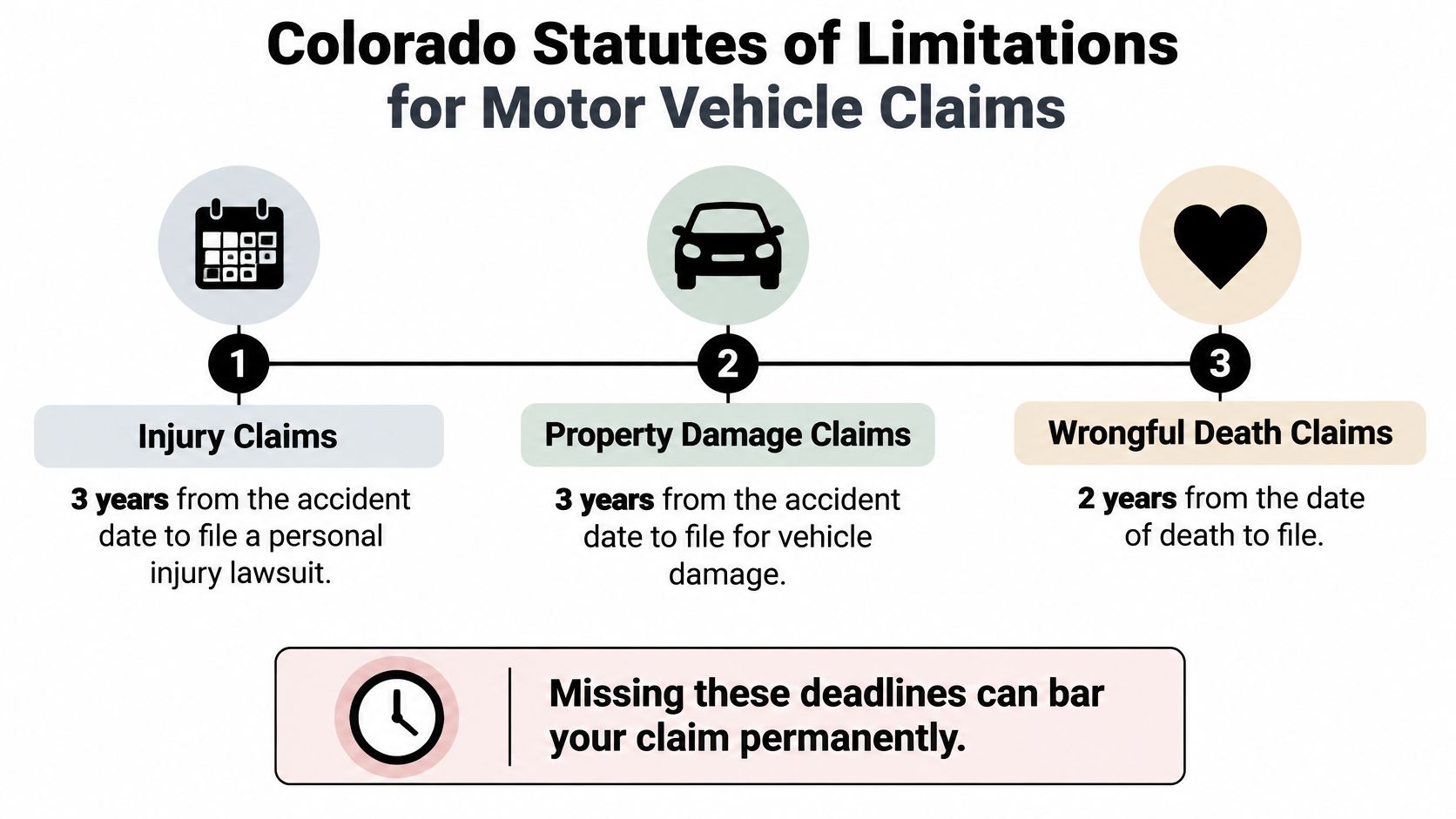
Colorado generally allows three years from the accident date to file a lawsuit for injuries from a motor vehicle crash, and property damage claims from the same crash follow that motor vehicle timeline. Wrongful death claims generally must be filed within two years from the date of death. Exceptions and special rules can apply, including claims involving government vehicles, minors, or a driver who leaves the state, so treat these periods as outer limits rather than planning targets. You can review the statute of limitations for personal injury claims in Colorado for how these deadlines are applied.
Why Waiting Hurts Long Before the Deadline
The legal deadline is the last problem, not the first. Surveillance video gets overwritten, vehicles get repaired or scrapped, skid marks fade, and witnesses move or forget details. Medical gaps also grow harder to explain as months pass.
Insurers track delay. If you report late, treat late, or send records late, an adjuster will argue the injury wasn't serious or came from something else. Acting early preserves options you can't recreate later.
The short video below walks through timing issues injured people commonly raise after a crash.
Calendar the deadline, then work as if you have far less time. Evidence preservation in the first weeks is worth more than arguments made in the final month.
If you're unsure when your clock started, get that question answered first. Everything else in the claim depends on still having the right to file.
Evidence and Documentation That Strengthens Your Claim
A client once described the scene this way: the other driver apologized, traffic kept moving, and both cars were gone within the hour. Two weeks later that driver told his insurer the light was green. Timestamped photos, a witness phone number written on a receipt, and video pulled from a nearby business before it was overwritten carried that claim.
Expect the other driver's story to change. Build your file like it will.
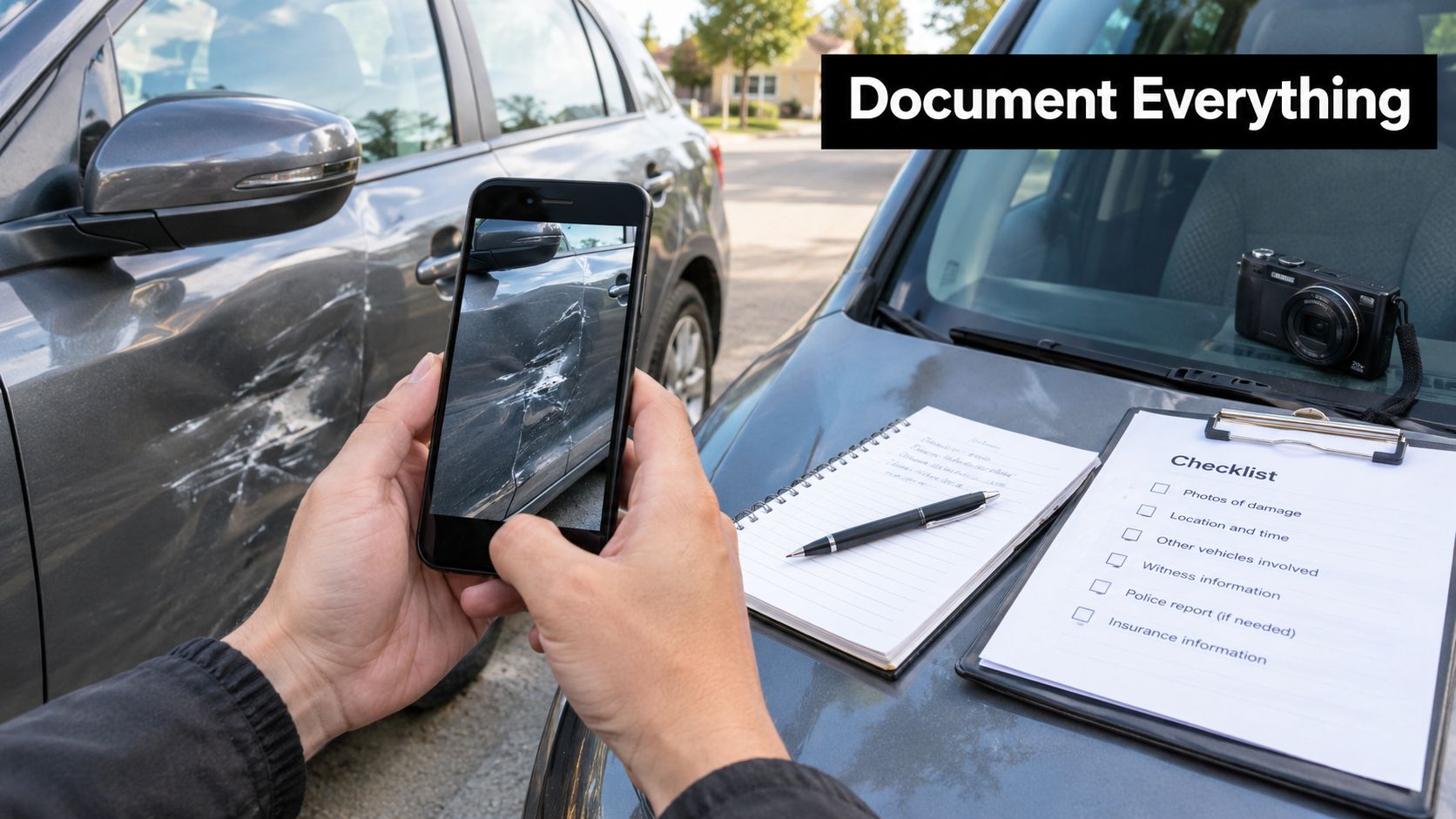
Start with what you can safely capture. Photograph vehicle positions, damage from several angles, license plates, road markings, signals, weather, and visible injuries. Get witness names and numbers yourself, because police reports don't always include every witness. If you're able, narrate a short video walking the scene so your account exists while details are fresh.
Build a Causal Chain, Not a Single Snapshot
An adjuster reads a police report looking for one line about fault. A strong claim file gives them several independent reasons to reach the same conclusion. NHTSA's National Motor Vehicle Crash Causation Survey separates the vehicle's movement before the critical event, the critical pre crash event, and the critical reason that made the collision imminent, and it notes that field investigations can capture more than 600 data elements covering crash events, damage, forces, and injury mechanisms (NHTSA's National Motor Vehicle Crash Causation Survey).
That layered approach matters in Colorado, where fault percentages directly shape what you recover. Preserve evidence in layers that can be compared against each other later:
- Vehicle evidence: Damage photos, repair estimates, and event data recorder information before repair or disposal
- Scene evidence: Roadway geometry, visibility, signal timing, surveillance or dash camera footage
- Human evidence: Witness accounts, and phone or dispatch records where they're legally obtainable
- Medical evidence: Records linking symptoms, findings, and treatment to the crash forces involved
Photograph safety equipment too: deployed airbags, a cracked windshield in line with a head strike, and a locked or damaged seat belt. Keep those parts through the repair process rather than discarding them. If a belt locked in the crash, you can browse SRS seat belt repair options after the vehicle has been inspected and documented.
Send preservation letters quickly when video, vehicle data, or a commercial vehicle is involved. In serious crashes, a qualified reconstructionist can map timing, speed, position, and impact geometry, but only if the vehicles and scene evidence still exist. Keep everything in one folder, physical or digital, sorted by date. Organized evidence gets evaluated faster and disputed less.
The Insurance Claim Process and Common Insurer Tactics
Injured drivers often expect the claim to move like a repair estimate: send the bills, get a number, haggle once, finish. Colorado claims rarely run that clean. Bodily injury paid claim severity increased 10.3% year over year and 32% over four years, bodily injury claim frequency rose 11% over two years, and average third party medical bill submissions per injured party increased 11.7% from the third quarter of 2024, according to CCC Crash Course 2025 fourth quarter reporting. Higher severity gives the adjuster a reason to test every record, every gap, and every word you gave on day two.
The file starts. You report the crash, receive a claim number, and get assigned to an adjuster who is pleasant, fast, and already building a fault theory. Colorado adjusters price comparative fault from the first call, so a casual "I didn't see him" can become a percentage before the bumper is even measured. Keep your notice short: date, location, vehicles, injuries reported, insurance information, and where the car is stored.
What Actually Drives the Timeline
Treatment controls value more than the calendar does. The insurer wants records, bills, wage proof, prior history, and often a recorded statement or broad medical authorization. Give what proves your loss, not unlimited access to fishing through years of unrelated care. If you need the filing sequence in plain order, use these steps for filing an insurance claim after a crash before documents go out piecemeal.
Keep a claim journal that generic guides skip: symptoms by day, missed work by shift or job duty, mileage to appointments, receipts, sleep disruption, and tasks you had to stop doing. Put every record in one dated folder. For a commercial policy, expect a heavier paper demand; Duncan & Associates trucking claim advice shows how early carriers want logs, maintenance material, and loss details.
Tactics to Recognize Early
- Fast money: an offer before symptoms have stabilized, paired with a full release
- Recorded questions: prior injuries, speed, phone use, weather, and “how are you feeling” asked before diagnosis is complete
- Treatment attacks: care framed as too long, too expensive, or tied to a prior condition
- Fault creep: small admissions converted into a Colorado fault percentage that shrinks payment
- Dragged feet: slow answers while rental, storage, and medical balances keep running
Protect the file with boring consistency. Report new symptoms promptly, follow referrals, explain gaps in writing, and keep damaged parts until inspection is done. Head injury complaints can lag behind the property damage photos, so a clean looking sedan does not settle the medical question. The insurer is allowed to ask hard questions. Your job is to make the answers already documented.
Settlement vs. Trial and How an Attorney Helps
You may expect the insurer to make a fair offer once it has your bills and the police report. In practice, the first offer can arrive before your treatment is complete, and the amount may not account for future care or time away from work. The choice to settle or go to trial depends on what the evidence supports, the available insurance, and the risks you can afford to take.
Weighing the Two Paths
A settlement provides a known amount without the delay and uncertainty of a trial. It can also make it easier to resolve medical liens and bills. The trade-off is finality: after you sign a release, you generally cannot seek more compensation if symptoms worsen or treatment costs rise.
A trial gives a jury the chance to award more than the insurer offered, but there is no guaranteed result. A jury may value your injuries differently, assign you a greater share of fault, or award less than you sought. Going to trial also takes time and adds case costs. Strong records and, when appropriate, expert testimony can support your position in negotiations, whether or not the case reaches a courtroom.
Colorado's comparative-fault rules make evidence about how the crash happened especially important. If fault is disputed, preserve photographs, witness details, and any available video, and note when and where each item came from. A settlement decision should account for the strength of that evidence as well as the amount offered.
What Counsel Actually Does
An attorney can investigate fault, preserve vehicle and video evidence, review available coverage, and handle insurer communications. Counsel can also organize medical records, track liens and health-insurance reimbursement claims, and consult your providers about future care. If negotiations stall, an attorney can file suit before the applicable deadline.
Compare the likely net recovery, not just the gross settlement figure. Ask how the fee is calculated, what case costs may be deducted, who pays for experts if the case does not settle, and how liens may affect your share.
At an initial meeting, bring the crash report, photographs, insurance letters, medical records and bills, wage information, and symptom notes. A dated record of treatment, missed work, and ongoing limitations helps show how the injury has affected daily life and gives you a clearer basis for deciding whether an offer is enough.
If an adjuster is pressing for a statement or quick release, have your deadlines, coverage, and documentation reviewed before signing. Nares Law Group LLC offers a free case evaluation for people handling motor vehicle accident claims, including help investigating fault, coordinating medical records, and negotiating with insurers. Reach out through the firm's website to discuss your crash and possible next steps.