You can be driving home from work, get the call from the hospital, and then hear the insurer's first real number. The adjuster says the at-fault driver's policy has limits, and suddenly the whole claim changes shape. That number is not a formality. It is the ceiling that controls how much the carrier will pay, and if your injuries are serious, it can decide whether you're made whole or left filling in the gap yourself.
Few individuals realize this until the bills arrive. A policy limit is not a negotiation starting point, and it is not a guarantee that all crash-related costs will be paid. It is the insurer's contractual maximum, and once that ceiling is reached, the remainder may fall on the driver, other policies, or your own coverage. If you're looking at a pile of medical statements and questioning why the settlement discussion suddenly feels so limited, this is the reason.

For drivers in Colorado, the basics of liability coverage still matter even before a claim becomes serious, and Colorado liability insurance requirements set the backdrop for how quickly a small policy can run out. That's why policy limits are often the first thing I look at in a crash case, before arguing about pain, fault, or settlement value. If the limit is low, the case strategy changes immediately.
Why Policy Limits Matter After a Serious Crash
A crash injury claim can look strong on paper and still hit a wall fast. Medical care starts first, then imaging, specialist visits, surgery, therapy, missed work, and sometimes long-term treatment. The insurer's policy limit sits above all of that like a hard stop, and once the stop is reached, there's no hidden reserve inside the policy.
The number controls the ceiling, not the conversation
In practice, policy limits matter because insurers use them to cap payouts. California's Department of Insurance shows how much difference those numbers can make, using $30,000/$60,000 as a basic example and $100,000/$300,000 as a standard one for bodily injury liability, a materially larger layer of protection for injured people (California Department of Insurance auto limits). That gap is exactly why a claim can be undercompensated even when liability is clear.
Practical rule: if the insurer says the policy is “only” one amount, confirm whether that number is the full ceiling or just one layer of coverage.
The same issue shows up in serious injury claims because carriers define the limit as the maximum they'll pay on a covered claim, with anything above it becoming the policyholder's responsibility. Once you understand that, the settlement posture makes more sense. The insurer isn't being stingy in a vague way, it's following the contract.
Why a low limit creates leverage problems
A low limit changes bargaining power. If the insurer knows the claim may exceed coverage, it often tries to resolve the case quickly and within policy. That can be a good result if every layer of coverage has been identified, but it can also become a trap if the settlement is rushed before the full picture is known.
The challenge is simple. Injuries don't care what the policy says, and the claim doesn't stop just because the policy does. That disconnect is where families get surprised, especially when a crash causes long recovery times or affects earning ability in a lasting way.
Decoding Split Limits and Coverage Tiers
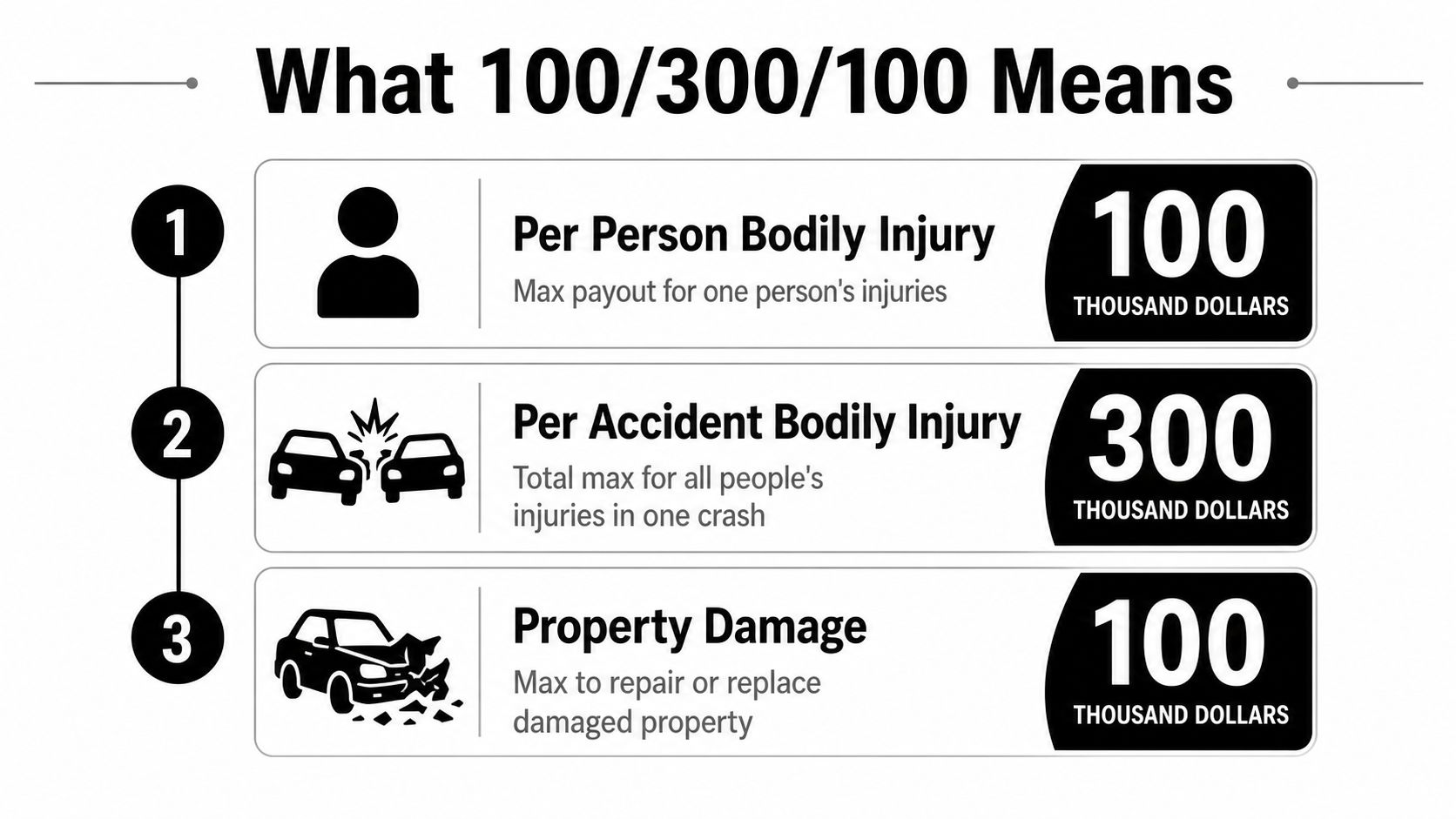
Most auto policies do not use one flat number for everything. They use split limits, which means the policy is divided into separate buckets for one injured person, everyone injured in the same crash, and property damage. If you can read those numbers correctly, you can tell a lot about what the policy can and can't do.
How to read the numbers on the declarations page
A notation like 50/100/30 means three separate caps. $50,000 is the maximum for bodily injury to one person, $100,000 is the maximum for bodily injury in one accident, and $30,000 is the cap for property damage (Progressive on insurance limits). If one person's injuries exceed the first bucket, the excess doesn't magically move into the second one. The buckets are separate.
That's why California's examples matter. Its published coverage tiers show $30,000/$60,000 as a basic bodily injury liability example and $100,000/$300,000 as a standard one (California Department of Insurance auto limits). Those are not abstract labels. They tell you how much protection exists for one person and for the whole crash.
Practical rule: a per-person cap can be exhausted even when the per-accident cap still has room.
Why the tier gap matters in real injury claims
A policy that looks adequate at a glance may not be enough once the bills become real. The jump from a basic tier to a fuller tier can materially change the claim's value because medical costs, lost wages, and long-term care can easily outrun a minimum policy. That's especially true when multiple people are hurt in one collision, because the per-accident cap has to be shared.
The Insurance Information Institute reported that the average auto liability claim for bodily injury was $28,278 in 2024 and the average auto insurance expenditure reached $1,127 in 2022, up 6.1% from $1,062 in 2021 (III auto insurance facts). Those figures don't tell you what your claim is worth, but they do show why modest claims can consume coverage fast and why policy design matters before anyone talks settlement.
What split limits do not tell you
Split limits don't show whether the policy includes other restrictions. A declarations page can look generous and still be narrowed by different coverage layers or by who else was injured. That's why reading the number is only the first step, not the full answer.
Per-Occurrence Caps Versus Aggregate Limits
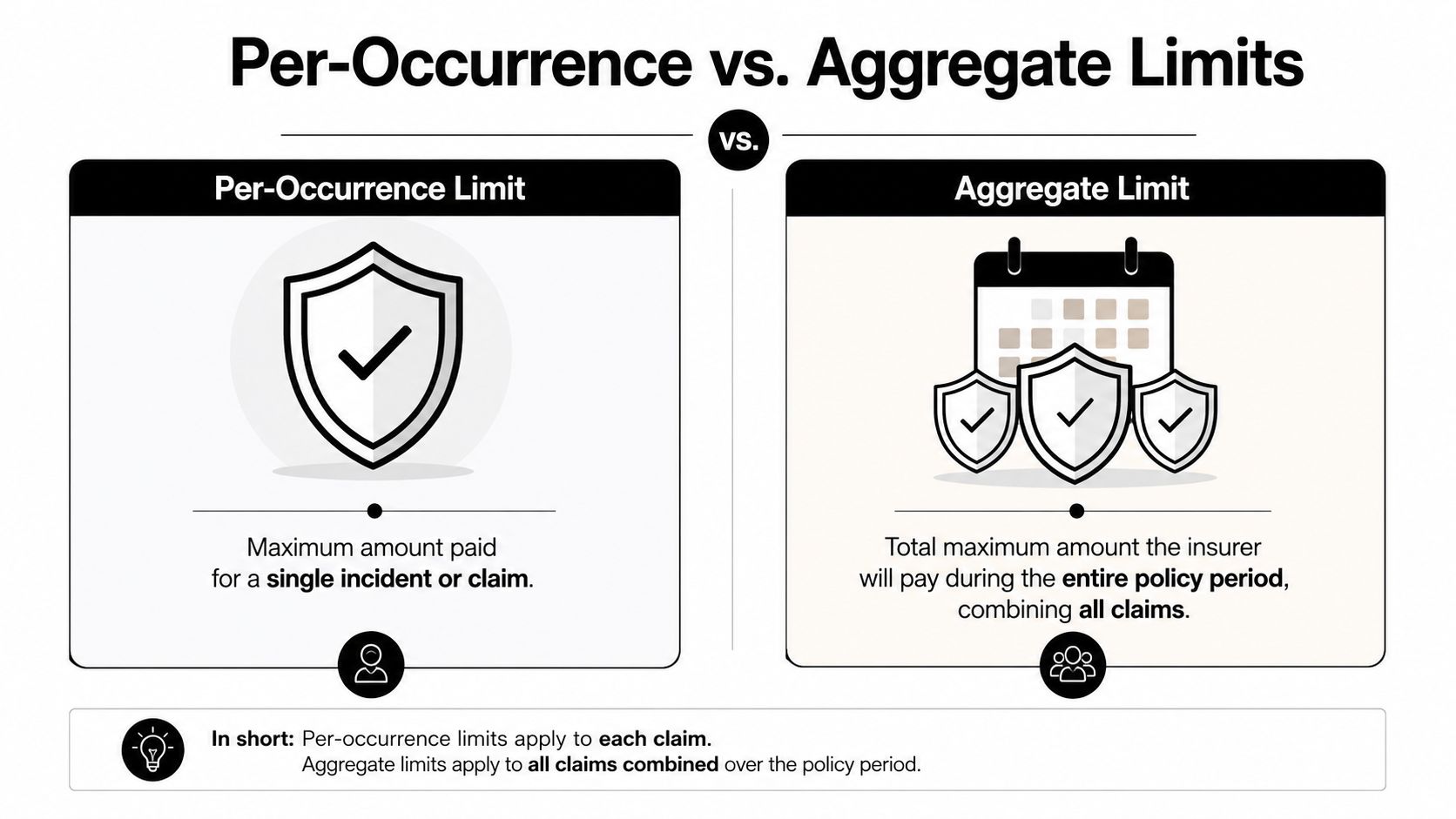
A lot of people stop at split limits and never ask the deeper question. Is the policy capped by each accident, or by the whole policy period? That distinction can completely change what's available in a trucking case, a commercial vehicle case, or any claim with more than one loss in play.
Per-occurrence coverage resets, aggregate coverage does not
A per-occurrence limit applies to one covered incident, then resets for the next one. An aggregate limit caps the insurer's total payout across the policy period, usually a year, so multiple claims can drain the available protection early (Brightway on policy limits). In plain terms, one structure protects each event separately, while the other sets a hard annual ceiling.
That difference matters because a policy can look large and still be vulnerable to depletion. If several claims hit the same aggregate pool, later claimants may find less coverage left, even if their injury is serious. That's not a theoretical concern, it's how the contract works.
A policy can be “big” on paper and still run out early if it uses an aggregate cap.
Why trucking and commercial cases need a second look
Commercial claims are where these layers matter most. A truck wreck can involve one policy, another layer above it, and sometimes category-specific restrictions inside the contract. If you only look at the top number, you can miss what is available for the injured person in front of you.
This is also where sublimits become important. A sublimit is a smaller cap inside a broader policy, and it can reduce the amount payable for a specific category of loss. So even when the headline limit sounds adequate, the available amount may be smaller once the policy is applied the way the carrier applies it.
The question that should always be asked
Before anyone accepts a number at face value, ask whether it's the full ceiling or just one layer of protection. That single question can expose a problem a generic policy summary will never show. In serious claims, especially where more than one person was injured, that difference can decide whether a settlement is fair or fast but incomplete.
Worked Examples From Real Crash Scenarios
Numbers become much easier to trust when you run them through an actual claim. The policy limit on the declarations page is only useful if you can see how it behaves when injuries exceed coverage. These examples show how quickly the math can leave a real family short.
A single injured passenger and a 50/100/30 policy
A driver carries a 50/100/30 policy. A passenger is badly hurt, and the claim value reaches $120,000. Under that split limit structure, the bodily injury cap for one person is $50,000, so the insurer pays that amount and the remaining $70,000 is left uncovered by that policy.
| Policy Limit | Injury Claim Value | Insurer Pays | Remaining Gap |
|---|---|---|---|
| 50/100/30 | $120,000 | $50,000 | $70,000 |
That gap is not unusual in serious injury work. The Insurance Information Institute's $28,278 average bodily injury claim figure for 2024 (III auto insurance facts) helps explain why even a moderate injury can eat through a smaller limit, especially once future care is involved. When the policy is exhausted, the injured person does not get paid more just because the losses are larger.
A multi-vehicle truck wreck with several injured people
Now take a trucking wreck with three injured claimants and a 100/300 bodily injury policy. The per-accident cap is $300,000, which sounds substantial until it has to be divided among multiple people. If the claims are severe enough, the aggregate of the injuries can consume the whole layer quickly, and each person may receive only a portion of what their own damages justify.
That's the problem with looking only at the headline number. The per-person layer and the per-accident layer both matter, and in a multi-injury crash the shared bucket becomes the battleground. The policy doesn't stretch just because the injuries are spread out.
What these examples teach
The policy limit is not just a number. It's a set of rules about who gets paid, how much, and in what order the coverage can disappear. Once you understand that, you can stop asking whether the insurer is being unreasonable and start asking whether the policy itself is too small.
How to Locate and Verify the At-Fault Driver's Limits
Finding the limit is often harder than explaining it. The insurer may give you a number quickly, slowly, or not at all, and each version can affect the strategy. When the claim is active, the goal is not to guess. It's to verify what coverage exists and whether there are other layers hiding behind the first answer.
Start with the sources that actually matter
Ask the adjuster directly for the policy information, and ask for it in writing if possible. Review the crash report for insurance details, then compare that against what the carrier says once the claim is opened. If your lawyer is involved, send a formal limits request through counsel so the demand is documented and the insurer can't pretend the question was never asked.
The declarations page is useful, but it isn't the full story. It tells you the policy summary, not necessarily every restriction, layer, or related policy that might also apply. That's one reason free tools for background checks can be a useful starting point when you're trying to learn who was involved, who owns what, and whether more than one person or entity may have coverage tied to the crash.
Practical rule: never treat the first policy number you hear as the last policy number that exists.
Verify the answer, don't just accept it
If the insurer is being vague, ask for the name of the insured, the policy number, and whether any umbrella, excess, or commercial coverage sits above the primary policy. In my own case review work, a separate investigation often changes the file at this stage. A simple insurance company investigation can reveal coverage paths that a quick phone call would miss.
A few red flags should make you push harder. The adjuster says “we're still looking,” the first answer sounds oddly incomplete, or the claim involves a commercial driver and nobody mentions whether the employer's policy is in play. Those moments usually mean more digging is needed.
Use the limit information to control the claim
Once you know the true limits, you can judge whether a settlement offer is meaningful or just convenient for the insurer. That information also matters if you're deciding whether to keep negotiating, demand more, or preserve your rights under your own coverage. The number is only useful once it's verified.
What to Do When Policy Limits Fall Short
A small policy limit is frustrating, but it doesn't end the analysis. It just means you need to look beyond the at-fault driver's primary coverage and figure out what else exists. The right next move depends on the facts, not on the insurer's first explanation.
Look for every available source of recovery
If the other driver's limit is too small, your own underinsured motorist coverage may fill part of the gap. That's one reason underinsured motorist claim guidance matters so much after serious crashes. Your own policy can become the difference between a partial recovery and a fuller one.
Other routes may also exist. The at-fault driver might have personal assets, an employer could share liability, or a vehicle owner, manufacturer, or commercial carrier may have separate coverage. In some cases, an umbrella policy sits above the primary auto policy and adds another layer of protection.
Decide carefully before accepting a policy-limit settlement
A fast policy-limit offer can be a warning sign, not a favor. It may mean the carrier sees exposure beyond the primary policy and wants a quick release before anyone asks about other insurance. Before you sign, make sure the release won't cut off other claims or leave you exposed to unpaid liens.
If the crash involves a commercial driver, ask whether the company's broader coverage has been identified. If the insurer has only talked about the smallest layer, there may still be room to investigate higher limits or additional defendants. In those cases, a limit that looks final is often just the first layer of the picture.
Umbrella policies can matter more than people expect
Personal and commercial umbrella coverage can sit above the base policy, and the carrier will not volunteer it unless asked. If you're reviewing your own protection, you can compare umbrella insurance quotes to understand how extra liability coverage works on the consumer side. That same concept matters in injury claims, because another layer above the auto policy can change the entire settlement range.
The bottom line is simple. A short policy doesn't automatically mean a short recovery, but it does mean you need to identify every possible layer before you settle.
When to Bring in a Personal Injury Attorney
Policy limit issues look simple until they aren't. Once you're dealing with split limits, multiple claimants, hidden layers, or an insurer that won't answer directly, the claim has already become a coverage investigation as much as a liability case. That's the point where a lawyer stops being optional.
The warning signs are usually obvious
Bring in counsel if the insurer refuses to disclose the limits, the at-fault driver only carries minimum coverage, several people were injured in the same crash, or your medical bills are already brushing against the stated limit. Those are all signs that the first policy number is not the full story. Commercial trucking claims deserve even more scrutiny because layered coverage and sublimits can change the answer quickly.
A lawyer's job is not only to argue value. It is to identify every available layer of insurance, force the carrier to answer the right questions, and protect you from settling too early. That work matters because real policies can contain per-occurrence limits, aggregate limits, and sublimits, and those differences can drastically change what's available after a catastrophic claim (Allstate on policy limits).
Why timing matters
Colorado injury claims, like claims anywhere else, get harder once a release is signed. If you settle before the coverage picture is complete, you may give up negotiating power you can't get back. If you wait too long without documenting the claim properly, the insurer may use that delay against you.
The right time to ask for help is before the release, not after the check clears.
If you're dealing with a serious crash, mounting bills, or an insurer that keeps talking around the coverage, Nares Law Group LLC can help you sort through the policy language and the recovery options tied to your case. Visit Nares Law Group LLC to learn how the firm handles crash, truck, and serious injury claims, then reach out for a consultation before you sign anything.