There is no single universal legal definition of a catastrophic injury. The standard varies by jurisdiction, but it increasingly centers on permanent functional incapacity and the loss of independent living, not on a diagnosis alone.
A family may be facing that uncertainty right now. Someone leaves home for an ordinary drive, survives a serious car or truck crash, and initially hopes the hospital stay will be followed by a normal recovery. Then the weeks become months, therapy continues, memory and concentration change, work becomes impossible, or everyday tasks require help.
What Happens When an Injury Changes Everything
A catastrophic injury can alter nearly every part of a person's life. The injured person may need repeated treatment, rehabilitation, assistive equipment, changes to the home, or continuing support from relatives and professional caregivers. The family may also be trying to understand medical records while dealing with lost income, insurance calls, and an uncertain future.
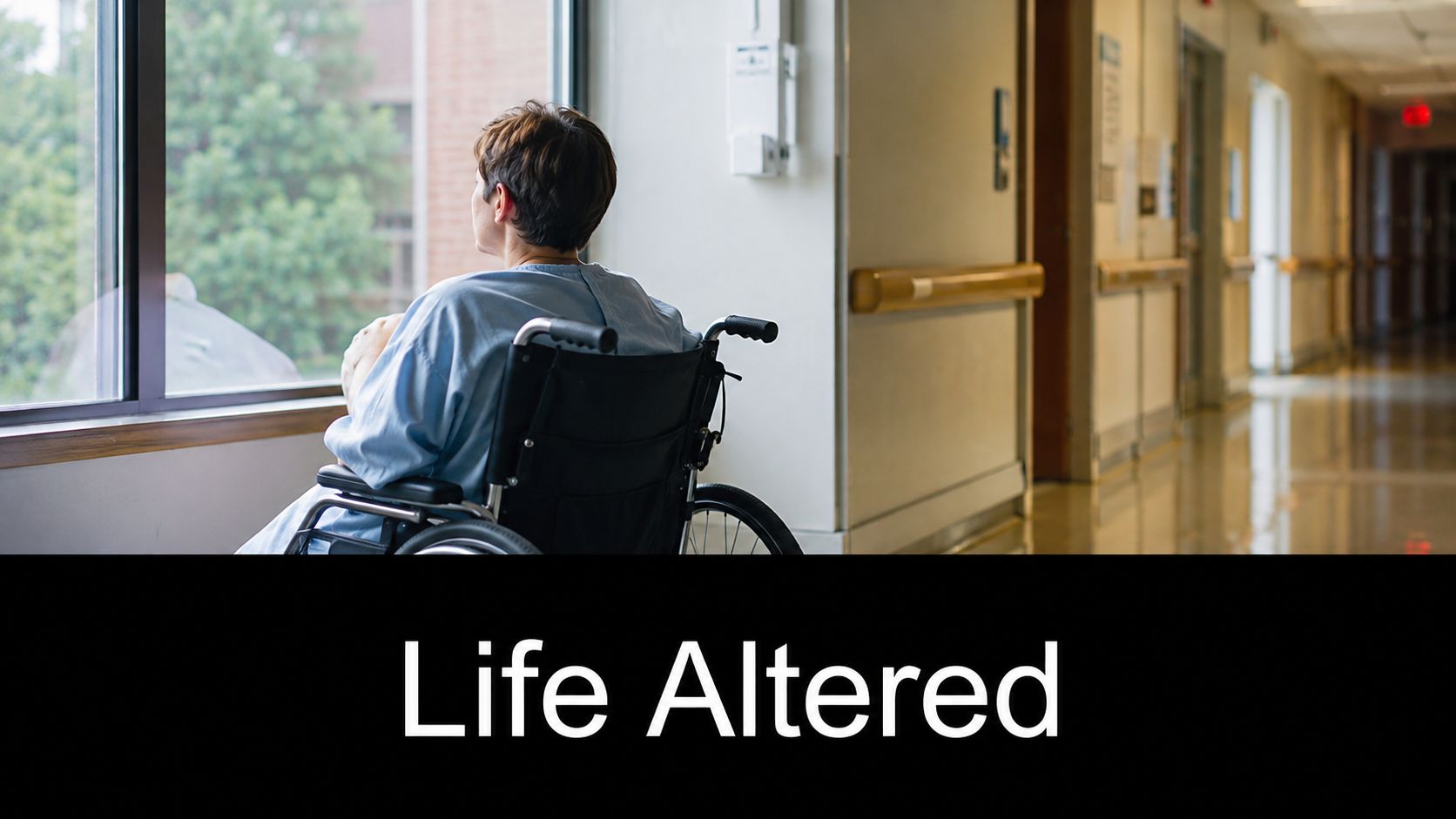
The phrase catastrophic injury doesn't depend only on whether the initial accident looked dramatic. A person can have a visible spinal injury, or an apparently invisible brain injury, and the legal analysis still turns on what the person can do after the injury stabilizes. Can they work consistently? Can they manage medication, finances, transportation, hygiene, and household responsibilities? Can they live safely without another person's assistance?
Practical rule: The important question is often not “What was the diagnosis?” but “What permanent abilities were lost?”
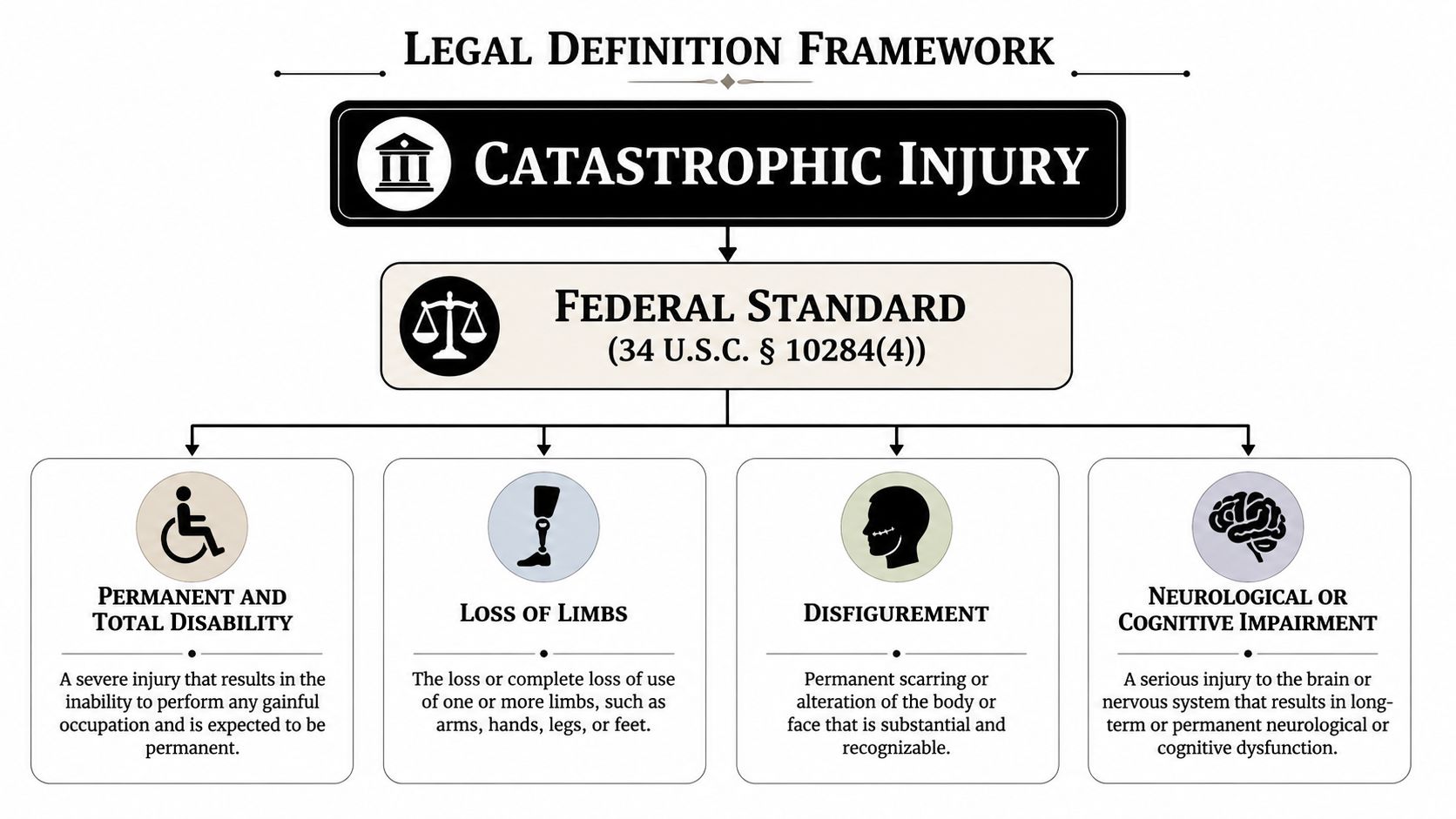
Federal law provides a useful foundation. Under 34 U.S.C. § 10284(4), a catastrophic injury is one that, under the state of medicine when the claim is decided, permanently renders a person functionally incapable, including through a directly and proximately resulting neurocognitive disorder. The federal definition reflects why function matters more than a label.
The classification matters because a short-term injury claim may focus heavily on past bills and temporary wage loss. A catastrophic claim must account for lasting medical needs, support services, reduced earning capacity, diminished independence, and the effect on family life. That doesn't guarantee a particular recovery, but it changes the questions that must be investigated and documented.
How Catastrophic Injury Is Defined Across Law
The catastrophic injury definition changes depending on the legal system involved. There isn't one nationwide rule that automatically classifies every brain injury, paralysis case, amputation, or burn injury as catastrophic. Authorities use different combinations of permanence, work capacity, independent living, daily activities, and specified injury categories.
The federal approach focuses on functional incapacity. As noted above, 34 U.S.C. § 10284(4) includes permanent functional inability and a directly resulting neurocognitive disorder. That language is significant in traumatic brain injury cases because a person may walk and speak while still being unable to sustain employment, make safe decisions, regulate behavior, or live independently.
State laws illustrate the variation. Indiana defines catastrophic injury as bodily injury so severe that the ability to live independently is significantly impaired for at least one year, and it includes blindness, deafness, paralysis, or intellectual disability. Indiana's statutory definition shows how a jurisdiction can combine a duration requirement with examples of severe impairment.
Florida uses another model. Its definition describes a permanent impairment and identifies categories that include spinal cord injury with severe paralysis, amputation, severe brain or closed-head injury, major burns, and total or industrial blindness. The brain-injury language emphasizes functional deficits involving sensory or motor ability, communication, complex integrated cerebral function, and episodic neurological disorders. The Florida-focused overview illustrates why imaging alone may not resolve the legal question.
Why the legal setting changes the analysis
A workers' compensation claim, a disability claim, and a personal injury lawsuit may use related language but apply different rules. Some definitions emphasize the inability to perform gainful work. Others emphasize the inability to live independently or perform activities of daily living. Still others list specific injury types.
That variation creates a common misunderstanding. A diagnosis can be medically serious without automatically satisfying the applicable legal threshold, while a less visibly dramatic injury may qualify when it permanently destroys a person's ability to function. The strongest analysis therefore connects medical evidence to real-world limitations, rather than relying on the diagnosis name alone.
Common Types of Catastrophic Injuries
Certain injuries frequently raise catastrophic-injury issues because their effects can permanently interfere with work, independence, and daily living. The injury category helps identify the issue, but it doesn't answer the legal question by itself.
Traumatic brain injuries
A traumatic brain injury may affect memory, attention, processing speed, judgment, communication, impulse control, or emotional regulation. These problems can be difficult for outsiders to see. Someone may walk into a room and hold a conversation yet be unable to follow a work schedule, manage money, drive safely, or complete multi-step tasks.
A neurocognitive injury can therefore be catastrophic when its lasting effects make independent living or sustained employment impossible. Medical records should describe practical abilities, not just the initial blow, concussion diagnosis, or imaging result.
Spinal cord injuries and paralysis
Spinal cord damage can affect movement, sensation, bladder and bowel function, transfers, skin care, and the ability to move through a home or community. The legal significance depends on the lasting consequences, including whether the person needs assistance with personal care, transportation, or other daily activities.
Families dealing with fractures alongside spinal or neurological symptoms may also benefit from coordinated treatment information, such as the Interventional Pain Management fracture team, while preserving records for the legal claim.
Amputation, severe burns, and blindness
An amputation can permanently change mobility, balance, employment options, prosthetic needs, and personal care. Severe burns may create lasting scarring, contractures, pain, disfigurement, and emotional consequences. Blindness can affect navigation, work, communication, and household safety.
The common thread is functional loss. A severe injury becomes legally catastrophic when its durable consequences severely limit what the person can do and the support they require. A medical label starts the inquiry. Evidence about independence, daily routines, and future care completes it.
How Colorado Applies the Catastrophic Injury Standard
Colorado personal injury law doesn't rely on a single statute that lists every injury considered catastrophic. In a Colorado claim, the practical inquiry centers on the permanence and seriousness of the impairment, including how it affects independent living, work, treatment, and ordinary activities.
That makes early case development especially important. A person may still be in active treatment when an insurer seeks a settlement. The medical picture may not yet show the full effect of a brain injury, spinal injury, or multiple-system trauma. Accepting a settlement before future needs are understood can leave the family without a realistic way to pay for later care.
Function and damages
Colorado lawyers must connect the injury to the damages that the law permits a claimant to pursue. Those damages may include past and future medical care, rehabilitation, equipment, home accessibility work, lost income, reduced earning capacity, pain and suffering, and the loss of ordinary life activities. The classification doesn't create a separate automatic award, but it can make the long-term consequences central to valuation.
Comparative negligence can also affect recovery. If the evidence shows that the injured person shared responsibility, the final recovery may be reduced under Colorado's applicable comparative-fault rules. The degree of fault and the proof supporting it matter, even when the injuries are devastating.
Colorado families should review the broader legal framework, including deadlines and fault rules, through a resource such as Colorado personal injury laws. The point isn't to force a label onto the case. It's to identify the evidence needed to show how the injury changed the person's capacity and future needs.
A catastrophic claim should be built around the person's life after the crash, not only the emergency treatment that followed it.
Catastrophic Injury Versus Serious Injury in a Claim
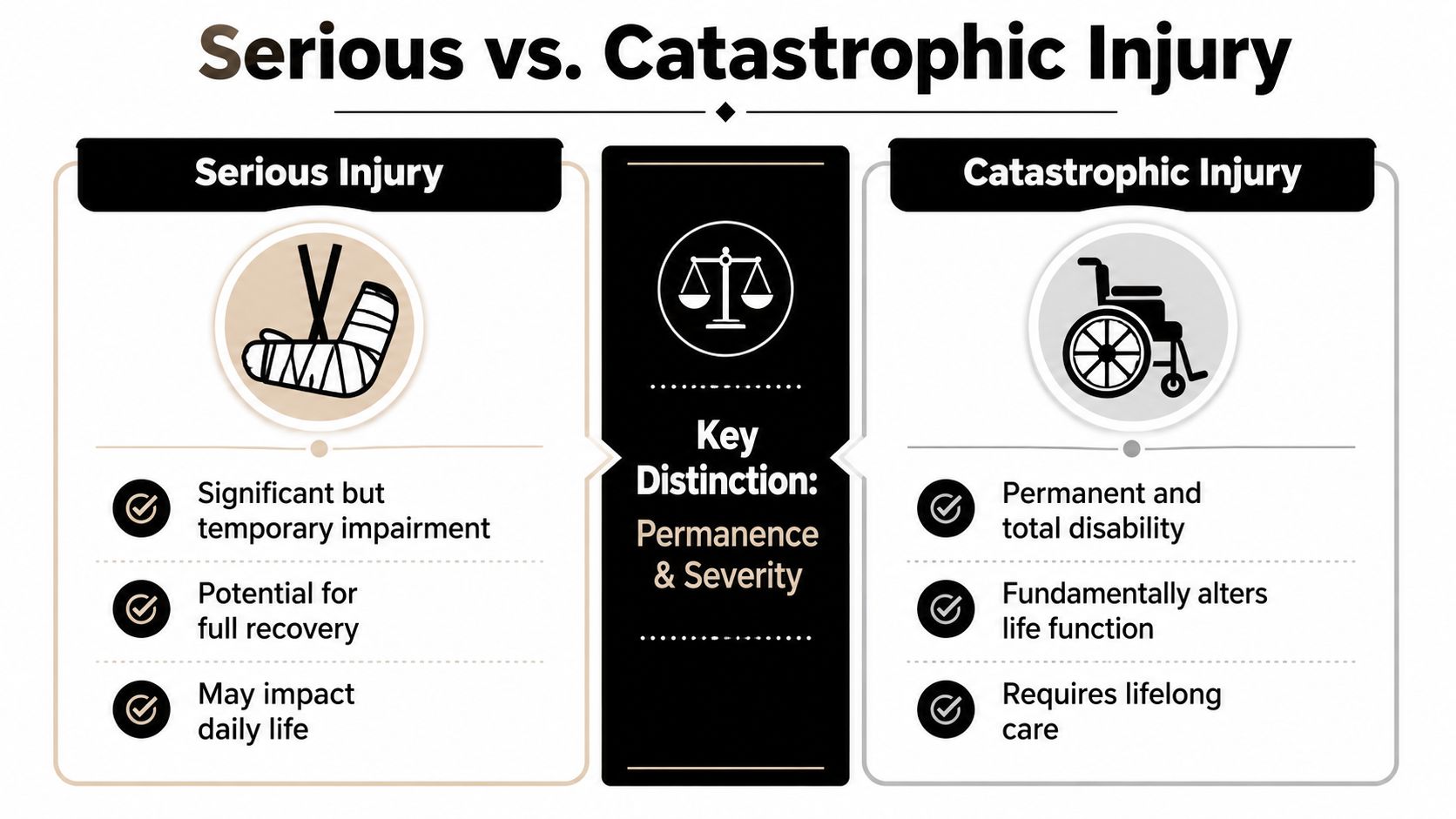
A serious injury can require surgery, hospitalization, and extensive rehabilitation while still allowing substantial recovery. A catastrophic injury involves a more enduring change, such as permanent inability to work, dependence on others for daily activities, or a continuing need for intensive medical and support services.
The distinction isn't merely descriptive. It affects the investigation, the experts involved, and the way damages are calculated.
| Serious injury | Catastrophic injury |
|---|---|
| Significant impairment that may improve | Permanent or profoundly lasting functional impairment |
| Treatment may end after recovery | Ongoing treatment, support, or equipment may remain necessary |
| Daily routines may be disrupted temporarily | Independent living may be permanently limited |
| Work may resume after rehabilitation | Previous work or gainful employment may no longer be sustainable |
Why insurers challenge the classification
An insurer may point to a single favorable fact. The claimant can walk. They can answer basic questions. They returned to limited work. Those facts don't necessarily resolve whether the person can maintain employment, live alone, or manage a full range of daily responsibilities.
A well-supported claim addresses the whole pattern. Neurological testing may show cognitive limits. A vocational professional may explain why part-time or supervised activity doesn't equal competitive employment. An occupational therapist may document assistance with household tasks. A life-care plan may identify future treatment and equipment needs.
Damages require a long view
A serious-injury valuation may concentrate on past expenses, current treatment, temporary wage loss, and recovery progress. A catastrophic-injury valuation must examine future medical care, continuing rehabilitation, attendant assistance, accessibility changes, lost earning capacity, pain, loss of life enjoyment, and family losses such as loss of consortium when legally available.
That long view makes premature settlement risky. The question isn't whether the person has improved since the crash. It's whether the person has regained the functional capacity needed for a stable and independent life.
Evidence You Need to Prove a Catastrophic Injury
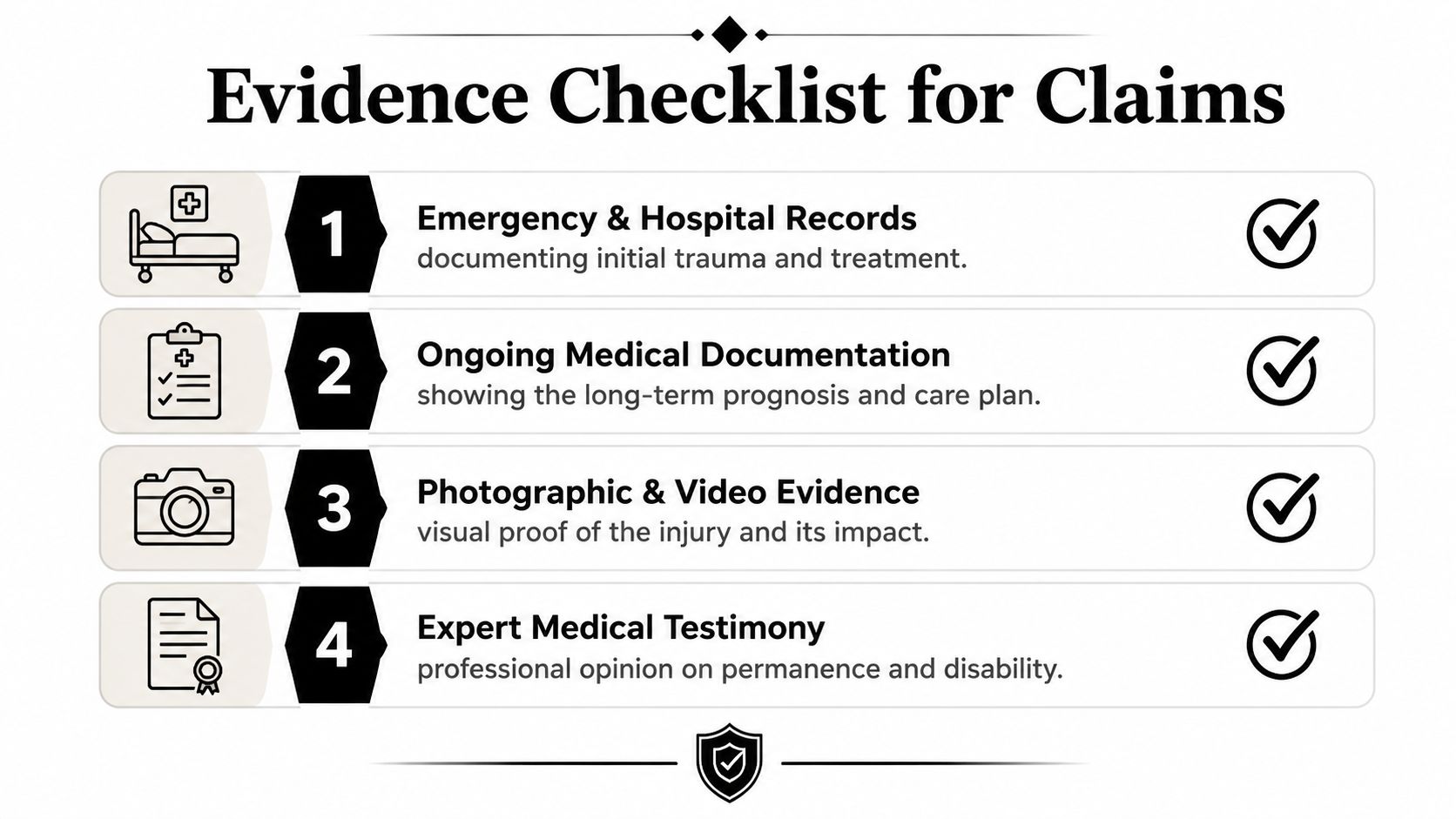
Evidence must show both what happened medically and how the injury permanently affects life. A diagnosis, hospital bill, or scan may establish the injury, but functional incapacity usually requires a broader record.
Build the medical foundation
Start with emergency records, hospital charts, surgical reports, imaging, therapy notes, prescriptions, and discharge instructions. Keep records from neurologists, physiatrists, orthopedic surgeons, psychologists, occupational therapists, and other treating professionals whose observations address prognosis and ability.
Ask providers to document concrete limitations. “Cognitive impairment” is less informative than a description of missed steps, unsafe judgment, inability to retain instructions, or the supervision required for daily tasks.
Document work and daily living
Vocational and occupational assessments can explain whether the injured person can return to prior work, perform alternative work, maintain a schedule, or complete tasks without accommodation and supervision. Family observations can also matter, particularly when the person's limitations are subtle or fluctuate.
A life-care planner can organize projected medical treatment, rehabilitation, equipment, home changes, and support needs. Life-care planning helps translate medical prognosis into a practical picture of future care.
Preserve the human record
Photographs, videos, calendars, caregiver notes, employment records, and messages may show changes that a clinical snapshot misses. Keep a consistent record of appointments, assistance, symptoms, missed work, and daily tasks that require help.
Expert testimony must connect the injury to the permanent limitations. Families considering providers outside Colorado may also find treatment resources such as Salt Lake City car accident therapy, while ensuring that every relevant provider and therapy record is preserved.
For the legal role of specialized testimony, review expert witness testimony. The strongest opinions explain the medical basis, the functional consequence, and the expected future course without overstating certainty.
Medical and Legal Consequences of a Catastrophic Injury
The consequences of a catastrophic injury usually unfold over time. Emergency care may be followed by surgery, inpatient rehabilitation, outpatient therapy, medication management, assistive equipment, home adaptations, and continuing supervision. The family may also need to coordinate transportation, employment changes, benefits, and caregiving.
Those needs become legal damages only when the evidence connects them to the injury and applicable law. A claim may address past treatment and future medical care, lost income and earning capacity, pain and suffering, diminished quality of life, and support required because the person cannot safely function alone.
The family's losses matter too
A spouse or family member may take on transportation, personal care, household work, and emotional support. Depending on the claim and the governing law, family members may have claims involving loss of consortium or other legally recognized losses. If the injury later proves fatal, the case may instead involve wrongful-death rights, which require a separate analysis of beneficiaries, damages, and deadlines.
Catastrophic injuries also create difficult financial decisions. Families may encounter questions about benefits, disability planning, insurance, and end-of-life concerns. General financial information, including life insurance for terminal illness, may be relevant to some families, but it isn't a substitute for advice specific to the injury claim and available coverage.
Timing can affect rights
Colorado deadlines and notice requirements depend on the type of claim and the defendant involved. Government entities, employers, insurers, and private individuals may be governed by different procedures. A family shouldn't assume that the seriousness of the injury automatically extends every deadline.
The legal claim is one part of the recovery plan. The larger purpose is to secure resources that match the person's actual future needs, preserve the family's options, and hold responsible parties accountable where the evidence supports liability.
What to Do Next and Questions Families Ask
Families don't need to decide the final legal label immediately, but they should protect the evidence early. Follow the treatment plan, request complete records, save photographs and communications, avoid posting about the crash, and be careful with recorded statements or broad medical authorizations from an insurer.
A lawyer can investigate the collision, identify responsible parties, coordinate with medical and vocational professionals, and evaluate future needs before settlement discussions move too far. Don't assume an early offer reflects the cost of a lifetime change.
Can a brain injury qualify without paralysis?
Yes. A brain injury can meet a catastrophic standard even when the person walks, speaks, or appears physically independent. The key issue is whether lasting neurocognitive or behavioral impairment prevents sustained work, safe independent living, or ordinary daily functioning.
How long does a Colorado catastrophic injury claim take?
There isn't one reliable timeline. The duration depends on liability disputes, the number of responsible parties, medical stabilization, the need for future-care opinions, the amount of available insurance, discovery, negotiation, and whether the case proceeds to trial. A claim may require patience because evaluating permanent impairment before the medical picture is sufficiently clear can produce an incomplete result.
What if the injured person shares fault?
Shared fault doesn't necessarily eliminate a claim. Colorado's modified comparative-negligence rules can reduce recovery according to the claimant's assigned responsibility, subject to the legal requirements that apply to the case. The evidence may include crash reconstruction, witness accounts, vehicle data, photographs, and the parties' conduct before the collision.
Preserve evidence before memories fade and before an insurer defines the injury for you.
Nares Law Group LLC offers investigation, treatment coordination, negotiation, and trial representation for Colorado families dealing with motor-vehicle crashes, truck wrecks, traumatic brain injuries, and wrongful death. Visit Nares Law Group LLC to review the firm's catastrophic-injury resources and request a consultation about the functional losses and future needs in your case.