One day your family is handling school pickups, work schedules, and dinner plans. The next, you're learning new words from surgeons, answering calls from insurers, and trying to understand whether your loved one will ever return to the life they had before a truck crash or traumatic brain injury.
Most families in that moment ask the same questions. What happens next? What care will be needed after the hospital? How do we pay for equipment, therapy, home changes, or help at home if the injury lasts for years?
That's where life care planning becomes important. Not because it sounds technical, but because it turns fear into a written roadmap. It helps a family move from guessing to planning, from reacting to preparing, and from scattered bills to a clearer picture of what real recovery will require.
The Unanswered Questions After a Catastrophic Injury
The first weeks after a catastrophic injury often feel like living in two worlds at once. In one world, doctors and nurses are focused on survival, stabilization, and discharge planning. In the other, the family is already facing practical questions that nobody seems to answer in one place.
A spouse may hear that rehab is needed, but not know how long it may continue. A parent may be told their child will need supervision, but not understand what that means for work, school, or home life. A family may know a wheelchair is coming, yet still have no idea whether the bathroom doorway is wide enough or how the injured person will get to follow-up appointments.
What families are really asking
Underneath all the medical language, most questions come down to daily life:
- Can they live at home safely: Will they need a ramp, a hospital bed, bathroom changes, or hands-on help?
- What care will continue: Are there likely to be ongoing physician visits, medications, therapies, or equipment needs?
- Who coordinates all this: Which needs belong to doctors, which belong to rehab providers, and which become the family's responsibility?
- How will the cost be handled: If the injury was caused by someone else, how does a legal claim account for needs that haven't happened yet?
Those questions become even heavier after a trucking collision or severe brain injury, because the damage can affect nearly every part of a person's routine. Memory, balance, speech, judgment, mobility, stamina, and behavior can all change. So can the family's role.
A serious injury doesn't just create a medical problem. It reshapes a household's schedule, finances, housing, transportation, and sense of stability.
That's why a life care plan matters. It answers the question many families keep asking in different forms: “What will this person need in the future, and how do we prepare for it?”
Instead of treating care as a string of disconnected appointments, the plan gathers future needs into one organized picture. It helps identify the support a person may need to function, stay safe, and avoid preventable complications. For a family in crisis, that can bring relief. Not because the situation is easy, but because the uncertainty starts to shrink.
Decoding the Life Care Plan A Blueprint for the Future
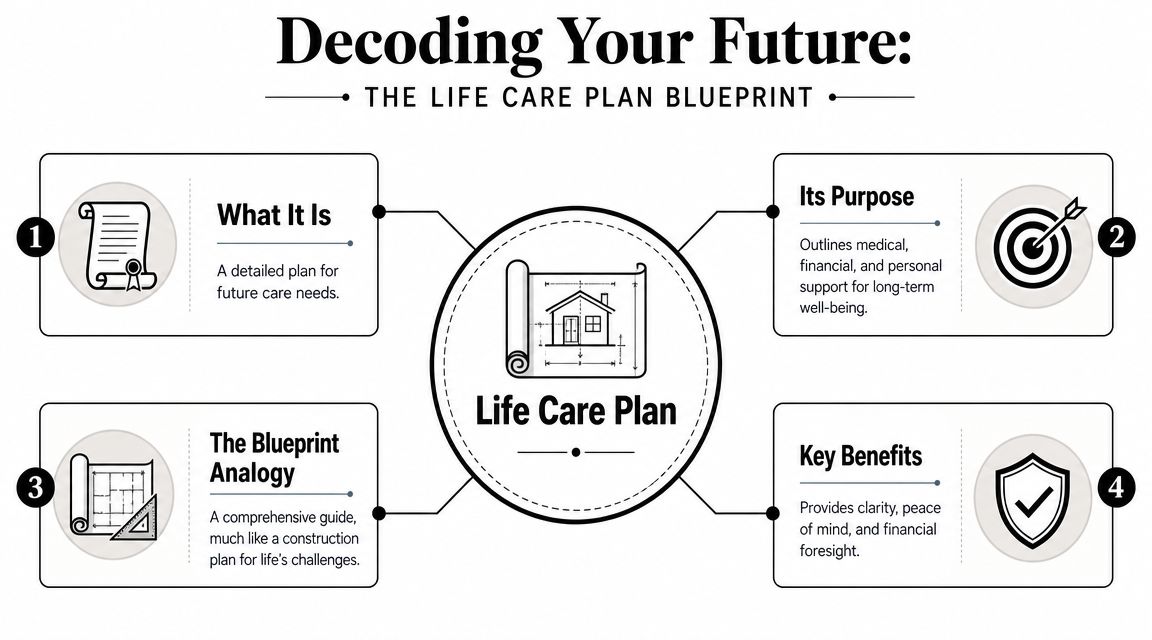
If you're asking what is life care planning, the simplest answer is this: it is a detailed roadmap for future care after a serious injury.
A more complete definition comes from the rehabilitation and forensic world. A life care plan is a dynamic, evidence-based document built from published standards of practice and thorough assessment, designed to project an injured person's future medical and supportive-care needs and translate them into monetary cost projections, as described by TPLCP's explanation of life care planning.
That may sound formal, but the idea is practical.
Think of it like a construction blueprint
When a house is badly damaged, nobody repairs it by guessing. Workers use a plan. That plan identifies what must be rebuilt, what materials are needed, what labor is required, and what the project will cost.
A life care plan works in much the same way for a person after catastrophic injury.
It identifies what the injured person is likely to need over time. That can include medical services, therapies, medications, equipment, home changes, and personal assistance. Then it connects those needs to costs so lawyers, insurers, and families can evaluate what long-term care may require.
What it is not
Many people run into a confusing problem right away. Some organizations use “life care planning” to mean advance care planning, such as naming a health care agent or preparing directives for future medical decision-making. The Life Care Planning and Case Management Handbook literature notes this naming collision and explains that catastrophic-injury life care planning is a different concept focused on lifelong needs after serious injury or chronic disability, as outlined by the Life Care Planning and Case Management field overview.
Here's a simple comparison:
| Type of planning | Main purpose | Typical use |
|---|---|---|
| Advance care planning | States wishes about medical decisions | End-of-life or incapacity planning |
| Catastrophic-injury life care planning | Maps future care and support needs | Personal injury, disability, long-term recovery |
That distinction matters. A living will tells others what care you want or don't want if you can't speak for yourself. A life care plan in an injury case asks a different question: what care, support, and resources will this person need to live as safely and fully as possible?
Why families often need both clarity and legal structure
After a severe brain injury, families sometimes also need to sort out who can make decisions, manage services, or help protect the injured person's interests. In that situation, learning the basics of understanding Texas guardianship can help clarify a separate but related issue.
A life care plan doesn't make legal decisions for the family. It does something equally valuable. It creates a usable blueprint for the future, one grounded in the person's actual condition and needs.
Key Components of a Comprehensive Life Care Plan
Once families understand the blueprint idea, the next question is usually, “What goes into the plan?”
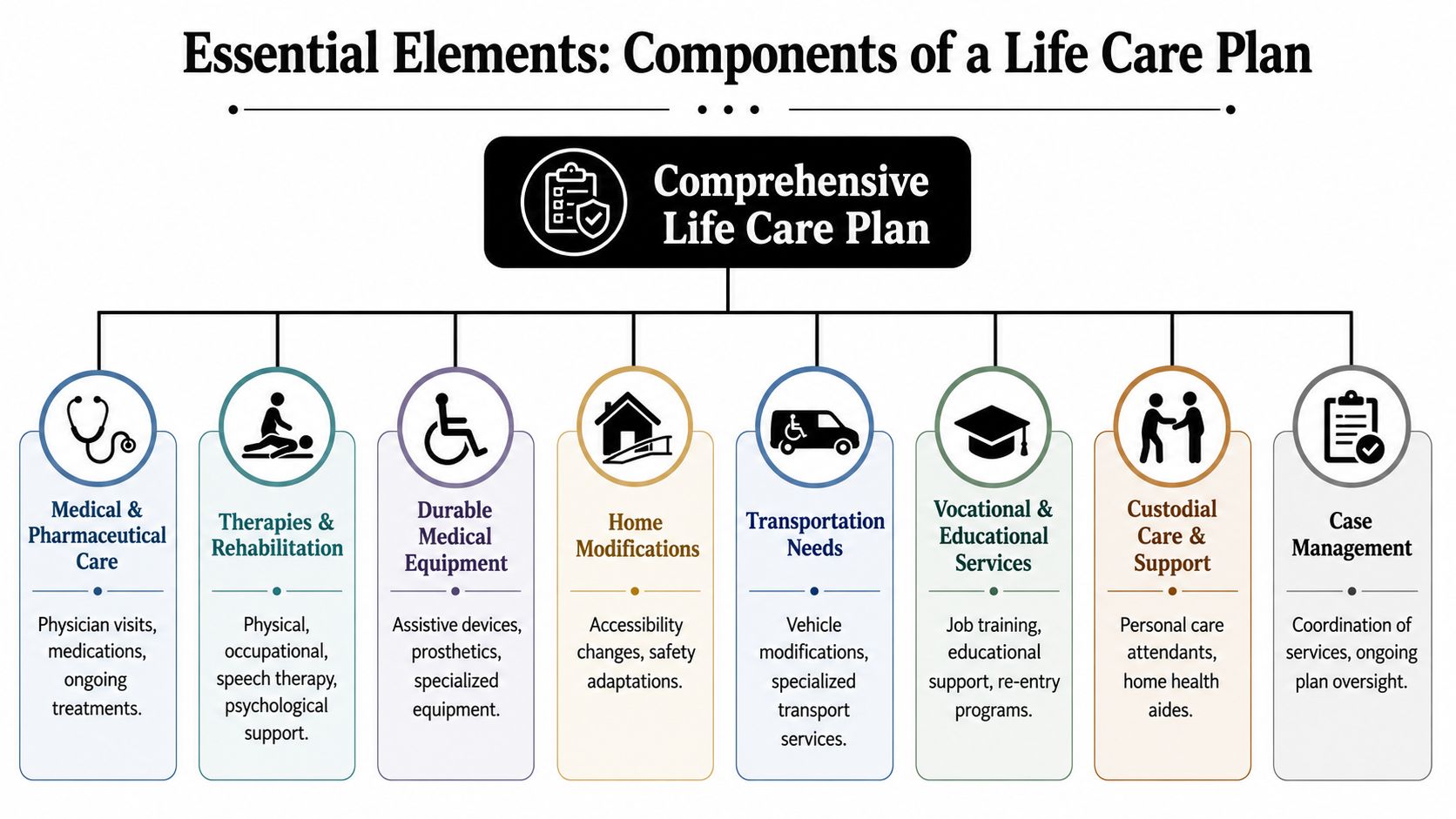
The answer is broader than many people expect. A complete life care plan doesn't stop at doctor visits. It looks at the whole routine of living with injury and what support is needed to restore function where possible and reduce risks such as falls or pressure sores.
Medical and rehabilitation needs
Some parts of the plan are what are generally expected:
- Physician and specialist care: Follow-up with neurologists, orthopedic providers, rehabilitation doctors, or other treating clinicians.
- Medications: Prescriptions for pain, seizures, mood regulation, sleep, spasticity, or other injury-related needs.
- Therapies: Physical therapy, occupational therapy, speech therapy, counseling, or cognitive rehabilitation.
- Medical supplies: Ongoing items needed for day-to-day care at home.
For a person with a brain injury, therapy may be as important as surgery was in the beginning. Speech therapy can support communication. Occupational therapy can help with everyday tasks such as dressing, cooking, or safely using a bathroom. Counseling may help the injured person and family adjust to emotional and behavioral changes.
Practical rule: If a service helps the person function, stay safe, or avoid setbacks, it belongs in the conversation about a life care plan.
Equipment, housing, and transportation
Other categories become visible only after the person comes home.
A wheelchair is not just a chair. It may require fitting, maintenance, accessories, and eventual replacement. A brace, prosthetic, walker, shower chair, transfer device, or pressure-relief mattress may also be part of daily life. These items often shape whether a person can move through the day with dignity and less pain.
Home modifications can be just as important. A ramp, widened doorway, roll-in shower, grab bars, lowered counters, or safer bedroom layout may determine whether a spouse can realistically care for the injured person at home.
Transportation needs also matter. A family vehicle may no longer work if the injured person uses mobility equipment or can't safely transfer in and out without changes.
Human support and long-term coordination
One of the most misunderstood parts of a life care plan is attendant care. Families often assume this only applies to the most severe injuries. In reality, support can range from supervision and cueing to help with bathing, dressing, meals, medications, mobility, and safety monitoring.
A plan may also account for:
- Case management: Coordination of appointments, providers, services, and follow-up
- Vocational or educational support: Help with returning to work, retraining, or adapting to school
- Psychological support: Care for anxiety, depression, trauma, frustration, or adjustment issues
- Family burden relief: Services that reduce burnout for the spouse, parent, or adult child who has become a caregiver
Families caring for an older adult or disabled loved one may also benefit from broader insights on senior care planning, especially when daily support needs overlap with injury-related care.
Why these details matter
A settlement that covers a hospital bill but ignores the realities of home life isn't a full recovery plan. The details matter because life after injury happens in kitchens, bathrooms, cars, workplaces, and living rooms, not only in clinics.
That's why a strong life care plan is grounded in real life. It asks what this person will need to function, heal, participate, and live with as much independence as their condition allows.
The People and Process Behind the Plan
A life care plan carries weight because it isn't built from guesswork. It is built through methodical review, clinical judgment, and cost research tied to the injured person's actual situation.
A valid plan must use scientifically sound methods and published standards to estimate life expectancy and convert needs into a lifetime budget. Planners use thorough assessment, data analysis, and research, and they must be prepared to defend how their projections are built, especially when insurers challenge them in personal injury and brain injury cases, according to the rehabilitation professionals' guidance on life care plan validity.
Who usually helps build the plan
The professional creating the plan is often a certified life care planner or another qualified rehabilitation expert. Many come from backgrounds such as nursing, rehabilitation, case management, or related health fields.
They do not work in isolation. A reliable plan usually depends on input from the people already involved in the injured person's care, including treating physicians, therapists, family members, and sometimes other specialists.
Here's what that often looks like in practice:
Record review
The planner studies medical records, treatment history, diagnoses, and recommendations.Interviews
The injured person and family explain what daily life looks like now, what challenges keep repeating, and what support is already being used.Clinical consultation
Treating providers help clarify prognosis, restrictions, and likely future needs.Cost research
The planner researches current pricing for services, equipment, and support relevant to the case.
Why the order matters
The sequence matters because each later step depends on the earlier one. If a planner starts with generic assumptions instead of the actual medical record and family experience, the plan may miss critical needs or include items that don't fit the case.
That's one reason attorneys often coordinate closely with care teams. For example, some firms provide case management services for injured clients so treatment coordination and documentation stay organized while the legal claim is developing.
The strongest plans connect every projected need to evidence. They don't rely on broad averages or wishful thinking.
What insurers tend to challenge
Insurance carriers often focus on assumptions. They may question whether a service is necessary, whether a therapy should continue, whether supervision is really needed, or whether the selected cost source is appropriate.
That doesn't mean the plan is weak. It means the planner must be able to explain why each recommendation appears in the document and how the cost projection was built.
For families, this process can feel slow. But careful work at this stage can make the difference between a vague claim and a plan that stands up under scrutiny.
Using Life Care Plans in Personal Injury Cases
In a lawsuit, the phrase “future medical expenses” can sound abstract. A life care plan changes that. It gives the claim shape, structure, and supporting logic.
In the legal setting, a life care plan acts as a quantification framework. It applies methodological analysis to determine care requirements for chronic conditions and then converts those requirements into time- and cost-based projections. The American Academy of Physical Medicine and Rehabilitation explains that this data analysis is critical for withstanding cross-examination and is commonly used to support claims for future medical expenses in catastrophic injury cases in its overview of life care planning in legal practice.
Here is the broad litigation path families are often trying to understand:
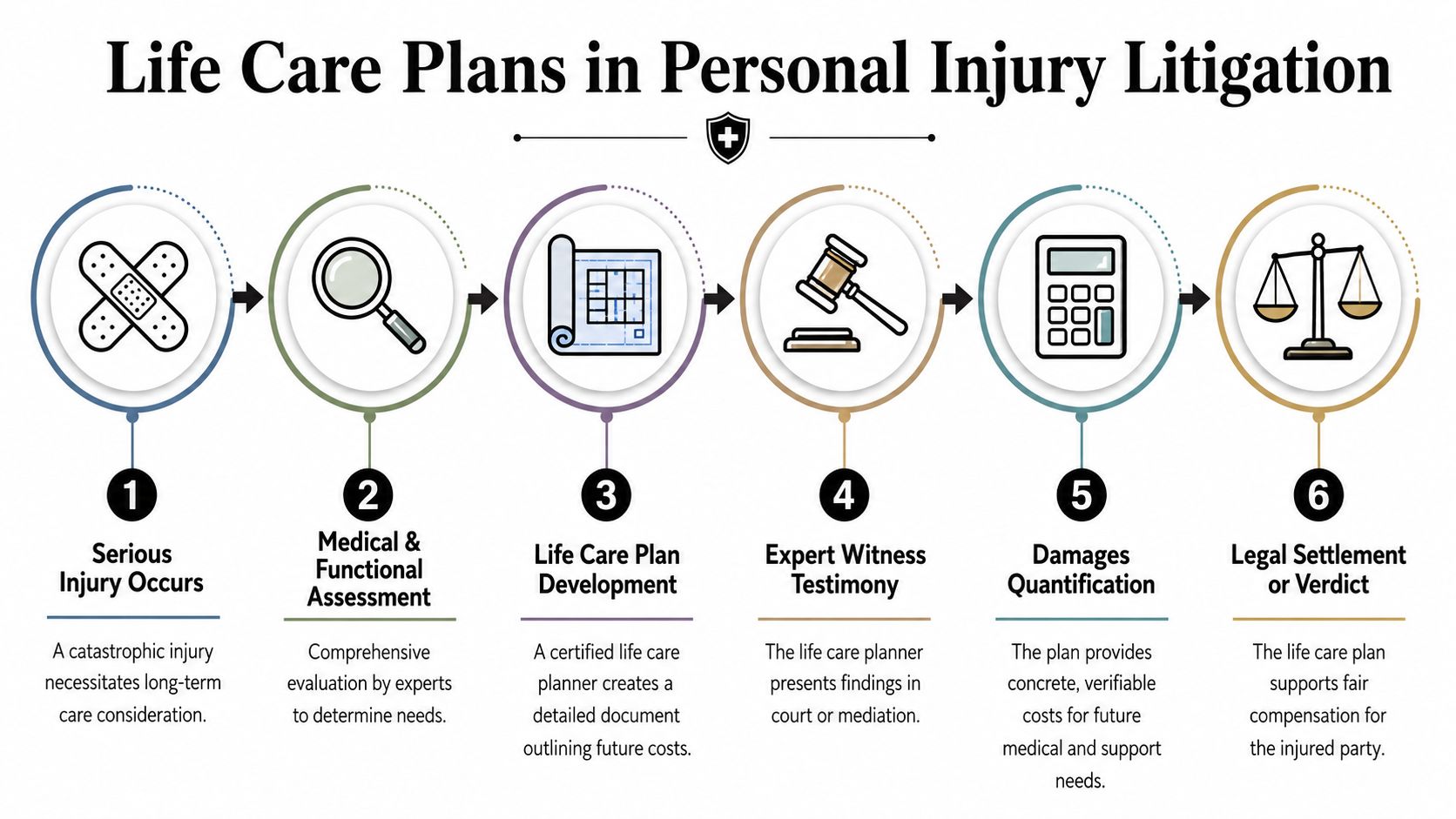
It turns a story into a supported damages claim
Without a plan, an attorney can say the injured person will need care for years. That may be true, but it leaves room for an insurer to minimize the problem.
With a plan, the legal team can show a more organized picture of need. Not just “ongoing treatment,” but categories of future care. Not just “help at home,” but support tied to the person's limitations and living environment.
That structure becomes especially important when paired with a separate economic damages calculation that translates care projections into the larger financial case.
It helps mediators, insurers, and juries understand daily life
A life care plan does more than total up costs. It tells the truth about how the injury affects ordinary life.
For example, a juror may not immediately understand why a person with a brain injury needs supervision. But when the evidence shows memory lapses, unsafe judgment, and difficulty managing medication or cooking alone, the need becomes more concrete. The plan gives that reality a framework people can follow.
This video offers another accessible look at the topic:
It supports expert testimony
In many serious injury cases, the planner may testify as an expert witness. That matters because numbers alone can feel cold or confusing. Testimony helps explain why certain therapies, equipment, supports, and modifications are included.
A strong expert can walk through questions like these:
| Question from the case | What the plan helps show |
|---|---|
| Why isn't current treatment enough? | Recovery may involve long-term needs beyond the hospital phase |
| Why are home changes included? | The person's disability affects daily function and safety |
| Why is attendant care listed? | Support needs can continue after formal rehab ends |
| Why are cost projections necessary? | A legal claim must account for future losses, not only past bills |
A life care plan gives future harm a language the legal system can use.
That is why these plans often become central in trucking cases, severe crash cases, and traumatic brain injury litigation. They make the future visible.
Practical Questions About Life Care Planning
Families usually reach this point with very practical concerns. They want to know when a plan is created, who pays for it, and whether it's worth the effort.

When is a life care plan prepared
Usually, the plan is most useful once the person's condition has become clearer. That doesn't always mean recovery is finished. It means the medical picture is developed enough for experts to assess likely long-term needs with more confidence.
In some cases, attorneys begin planning early by gathering records and monitoring treatment, then retain the planner when prognosis, limitations, and future recommendations are better documented.
Who pays for the plan
The answer depends on the case arrangement. In many personal injury matters, the cost of obtaining expert support is handled as part of case preparation rather than paid out of pocket by a family upfront. The exact approach should be discussed directly with counsel because fee structures and litigation expenses vary.
What matters most for the family is asking early. Don't assume the issue is too expensive to explore. In catastrophic injury cases, failing to document future needs can create a much larger problem later.
Does every serious injury case need one
Not always. Some injuries heal without long-term complications, and some cases don't justify the level of expert work a life care plan requires.
A plan becomes especially valuable when the injury involves permanent limitations, chronic treatment, ongoing supervision, future equipment, home changes, or a significant question about lifelong support. Truck wrecks, severe orthopedic injuries, spinal trauma, and traumatic brain injuries often raise those concerns.
What should you ask before hiring a planner
Use a short checklist:
- What is their background: Are they trained in rehabilitation, nursing, case management, or a related field?
- Do they work in litigation settings: Building a treatment summary is different from preparing a plan that may be examined in court.
- How do they gather information: You want a process tied to records, interviews, provider input, and cost research.
- Can they explain their reasoning clearly: A useful expert should communicate well with lawyers, insurers, and juries.
How should the plan fit into the case strategy
A life care plan works best when it is part of a larger legal and medical strategy, not an isolated report ordered at the last minute. The attorney should understand the medical evidence, coordinate with the right experts, and know when the plan is mature enough to support mediation or trial.
For families, the core question isn't whether the document is technical. It is whether the future has been taken seriously. That is what a life care plan is meant to do.
Finding the Right Planner and Securing Your Future
The right life care planner should have the training, clinical foundation, and forensic discipline to build a plan that reflects the injured person's real life. Credentials matter. So does experience with catastrophic injury, especially in cases involving trucking collisions and brain injury.
Families should also look at the legal team guiding the process. The attorney has to know which expert fits the case, what records and provider input are needed, and how to use the finished plan in negotiation or trial. For brain injury claims, that often means working with lawyers who understand the medical and day-to-day consequences of cognitive change. One example is a firm resource on working with a certified brain injury specialist, which reflects the kind of focused knowledge these cases often require.
A life care plan is more than a report with prices attached. It is a practical map for housing, treatment, equipment, support, and independence. When it is done well, it helps a family see a future they can prepare for, not just fear.
If your family is trying to understand what life care planning means after a truck wreck, traumatic brain injury, or other catastrophic crash, Nares Law Group LLC can help you evaluate the medical, financial, and legal issues involved and determine whether a life care plan may be an important part of your case.