A settlement offer has arrived, and the family is gathered around the kitchen table trying to make sense of it. The number on the page looks substantial until someone asks the question everyone has been avoiding: How much will we receive after the lawyer's fee, case expenses, liens, and any probate work?
That's not an awkward question. It's part of deciding whether an offer works for your family. You're grieving, managing practical responsibilities, and being asked to make a major financial decision. You deserve a clear explanation, not a percentage dropped into a contract without showing what it means in dollars.
Wrongful death attorney fees are only one part of the calculation. The agreement also controls when the percentage changes, how expenses are handled, and whether you could owe costs if there's no recovery. Families considering representation can use a free wrongful-death consultation to ask direct questions before signing.
The contract shapes the money survivors walk away with. Read it as carefully as you review the evidence in the case.
The First Conversation Most Families Never Have About the Bill
A family receives a settlement proposal and starts calculating what it could mean for the people left behind. Then they see the fee agreement: a percentage, a reference to expenses, and perhaps a different rate if the case goes to trial. The family's real question isn't just, “What percentage does the lawyer take?” It's, “After every deduction, what reaches the people this case is meant to help?”
That question deserves a written answer before anyone accepts the agreement or the settlement. A gross recovery is the total amount obtained. The net recovery is what remains after fees, case expenses, liens, and any other authorized deductions. Those figures can be meaningfully different, and a headline percentage won't tell you why.
Grief can make it hard to slow down and compare contract language. A lawyer should make the terms understandable, explain what could change the final distribution, and give the family room to ask questions. If an answer is vague, ask for an example in dollars.
Ask for the math, not just the rate. A family should be able to follow how the agreement turns a recovery into the final distribution.
Treat the fee agreement like a financial plan for the claim. It should say how the lawyer is paid, which expenses may be deducted, who bears costs if the case doesn't succeed, and whether the fee changes as the case advances. You shouldn't have to wait until settlement to discover how those terms work.
Contingency Fees and Hourly Fees in Plain English
A contingency fee ties the lawyer's fee to money recovered for the client. Think of a tip jar at a restaurant, with an important difference: the lawyer's payment isn't an optional tip. It's an agreed percentage of the recovery. If there's no recovery, the lawyer generally doesn't receive a fee under that arrangement, though the agreement may treat case expenses separately.
An hourly fee works more like paying for professional time as it's used. The client is billed for work performed, whether the case ultimately results in a recovery or not. The agreement may require money up front or regular payments as work proceeds.
Contingency arrangements have a long history in U.S. civil litigation. The American Bar Association recognized contingent-percentage fee contracts in its 1908 Code of Professional Ethics, a major milestone discussed in scholarly legal analysis of contingent fees.
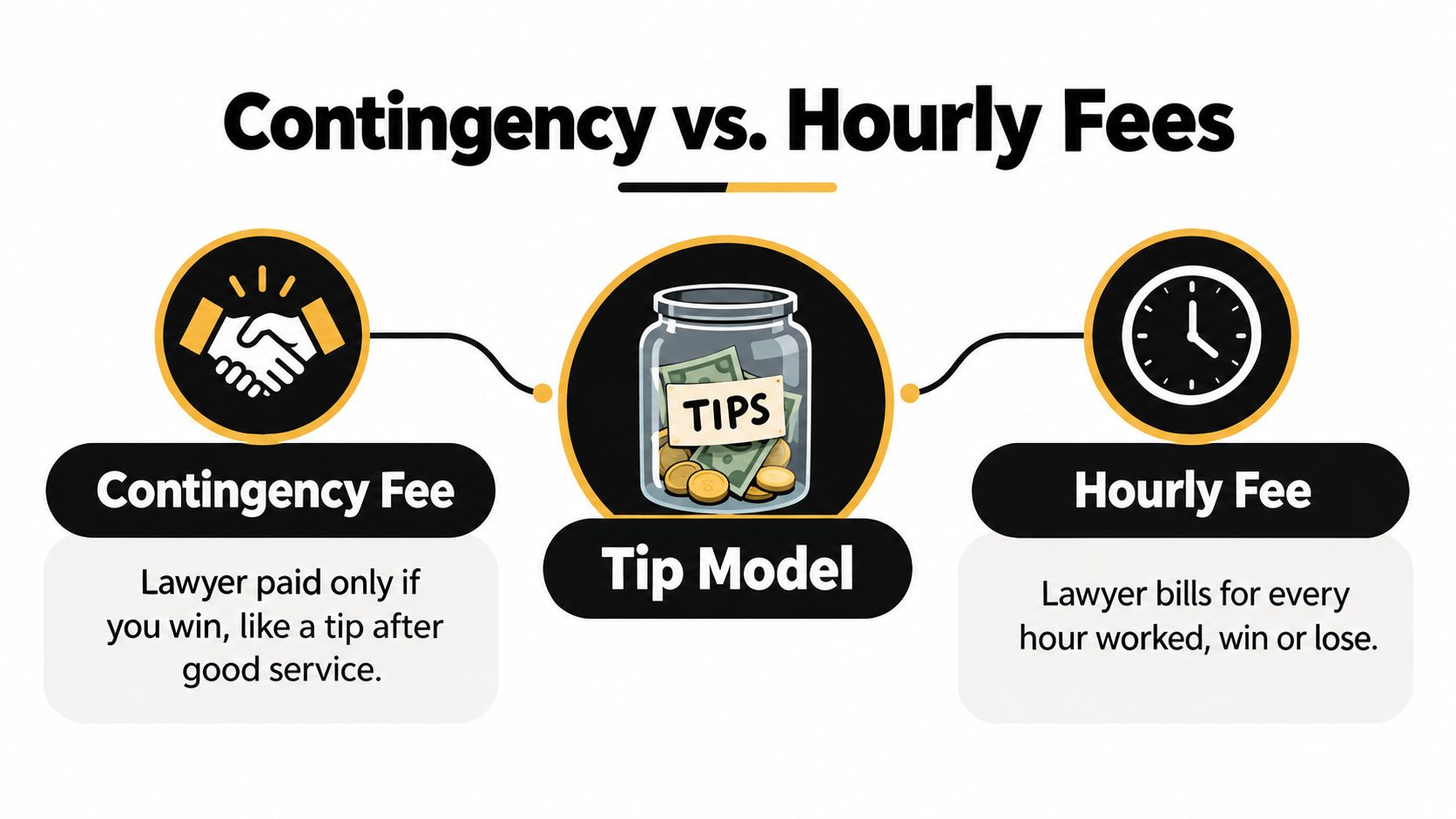
Contingency fees are common in wrongful-death representation because families may not be in a position to pay legal bills as a case is investigated and pursued. But “no attorney fee unless there's a recovery” doesn't automatically mean no costs are owed if the case loses. That's a separate contract question.
A modified arrangement may be possible
Some fee agreements combine a reduced hourly rate with a reduced percentage of a recovery. Bar guidance recognizes that modified arrangements can be used if the total fee remains reasonable under the applicable ethics rules. Whether this structure makes sense depends on the case, the family's finances, and the exact written terms. New York bar guidance on modified fee arrangements offers a useful reference point.
Ask the lawyer to explain the trade-off plainly: what you pay as the case progresses, what happens if there's a recovery, and what you might owe if there isn't one. The right model is the one you understand and can evaluate, not the one described with the fewest words.
How the Percentage Is Calculated and Why the Order of Deductions Matters
A percentage alone doesn't reveal what survivors will receive. The order of deductions matters. If expenses are taken out before the fee is calculated, the lawyer's percentage applies to a smaller amount. If the fee is calculated on the gross recovery first, expenses come out afterward.
ABA Model Rule 1.5(c) says a signed contingent-fee agreement should specify the applicable percentages at settlement, trial, or appeal; identify expenses; explain whether they're deducted before or after the fee; and disclose expenses the client might owe without a recovery. The text of ABA Model Rule 1.5 is a useful reference when reviewing those provisions.
Consider a $1,000,000 recovery, a 33.33% fee, and $50,000 in expenses. The contract's calculation sequence changes the net:
| Calculation Method | Attorney Fee | Case Expenses | Net to Family |
|---|---|---|---|
| Fee calculated after expenses are deducted | Approximately $316,650 | $50,000 | Approximately $633,350 |
| Fee calculated on gross recovery | Approximately $333,300 | $50,000 | Approximately $616,700 |
The $16,650 difference comes from the calculation sequence alone, before other liens or deductions. This is why families should request a sample distribution statement using the actual contract language, not rely on a general explanation.
Read the closing statement line by line
At resolution, ask for an accounting that reconciles the gross recovery, attorney fee, expenses, liens, and final distribution. The closing statement should show the method used to calculate each deduction so you can compare it with the signed agreement.
Probate may involve another professional and another fee. If you're trying to understand that separate expense, this guide to how much probate can cost can help frame questions for the probate lawyer. Keep that charge distinct from the wrongful-death attorney's fee when reviewing the final numbers.
Costs Clients May Still Owe Even With No Win, No Fee
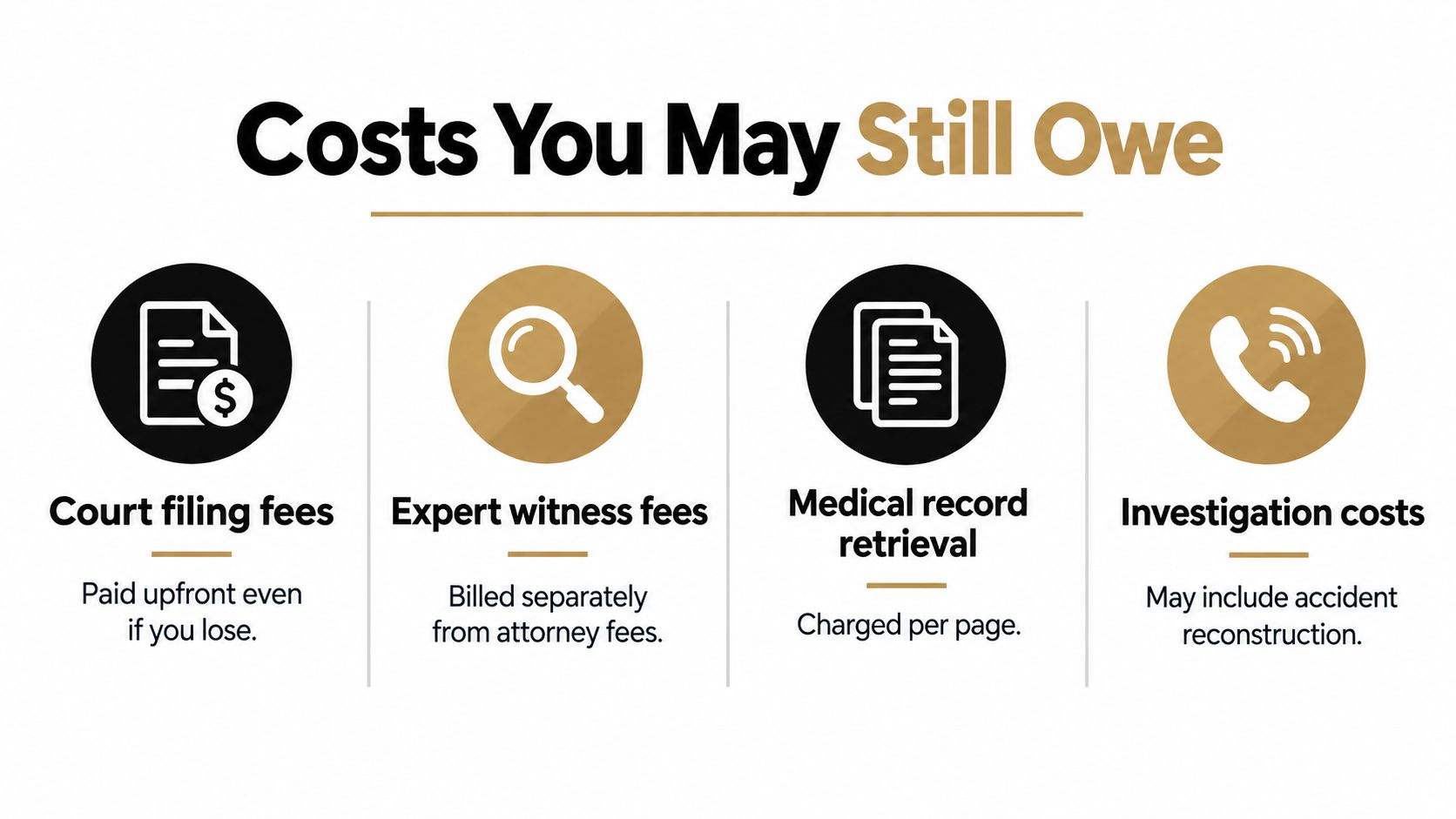
“No fee unless there's a recovery” can sound like “nothing comes out of your pocket if the case loses.” That may not be what the contract says. Attorney fees and case expenses are different charges, and the agreement should tell you who pays each one.
Costs can include court filing fees, deposition transcripts, expert witness work, medical records, investigation, accident reconstruction, trial exhibits, and electronic trucking data. Some firms advance expenses and seek reimbursement from a recovery. Other agreements may make the client responsible for some costs even if the case ends without money for the family.
Use this checklist before you sign
Ask for written answers to these questions:
- Who advances litigation costs? Clarify whether the firm pays expenses as they arise or asks the client to pay them.
- What happens if there's no recovery? Identify any costs you could still owe after a loss.
- Which expenses can be charged? Ask how the agreement treats experts, depositions, records, investigations, and trial preparation.
- Are costs deducted before or after the attorney fee? Make sure the contract's language matches the sample dollar calculation you're given.
- Could probate counsel be paid from the settlement? Confirm whether a separate probate lawyer may charge the recovery and whether that fee requires review or approval.
An Ohio probate-court order addresses circumstances in which separate probate counsel seeks payment from a wrongful-death settlement, including situations that may require court review, consent, or an itemized fee application. The Ohio probate-fee guidance is a reminder to ask whether probate work is included or billed separately.
Medical or governmental liens are separate deductions too. They can reduce what remains for survivors even when the attorney's percentage stays the same, so ask how the firm will identify and address them. This overview of a medical lien on a settlement can help you prepare for that conversation. For broader context on resolving injury disputes, M&N's Los Angeles personal injury guide discusses mediation and negotiation.
State-Specific Rules That Change the Math
There's no reliable nationwide fee rule that makes one percentage appropriate for every wrongful-death case. State law, professional-conduct rules, the defendant involved, and the stage of the case can all affect the agreement. A contract that seems straightforward in one jurisdiction may need different terms in another.
Colorado: The Colorado Court of Appeals has described Rule 1.5 as requiring a contingent-fee agreement to be written, identify the lawyers and clients who are bound, and be signed by the relevant parties. It must also address what happens if representation ends before the contingency occurs. The Colorado Court of Appeals decision makes those terms a practical checklist, especially when multiple family members or firms are involved.
Florida: A Florida Senate bill analysis, citing Florida law, describes a 25% ceiling on attorney fees in claims against public entities. The same analysis identifies a two-year wrongful-death limitations period after the death. Those rules apply in the circumstances described, not as a universal fee cap or deadline for every state and case. The analysis also shows why fee discussions shouldn't distract families from deadlines that may govern their claim. ABA guidance on contingent fees emphasizes that the fee must be appropriate and reasonable and that clients should be informed about alternative billing arrangements.
New York: Bar guidance for matters governed by applicable appellate rules says wrongful-death contingency fees may be calculated after litigation expenses are deducted. The agreement still needs to explain how expenses and fees interact. Families should confirm which rule applies to their specific matter rather than assume that a New York calculation applies elsewhere.
Co-counsel terms need to be visible
If one firm brings in another lawyer, ask whether the arrangement changes the total fee or divides the existing fee. The contract should identify the firms' roles and make clear what the client will pay overall. Don't assume that a familiar percentage means the same thing across states, case stages, and fee agreements.
Why the Lowest Percentage Is Not Always the Best Deal
A lower percentage can look attractive and still leave a family with less. The meaningful comparison is the net recovery under the actual contract, including expenses, liens, and the work the firm will undertake. A lower fee doesn't help if the agreement leaves major costs unclear or doesn't explain who funds the investigation and litigation.

For a complex claim, the investigation may require expert analysis, accident reconstruction, electronic trucking records, or other technical work. Ask what resources the firm expects to commit and how those costs will be handled. A lawyer should explain the planned work without promising a result.
Compare dollars and responsibilities
Ask each prospective lawyer to show how the contract would work under the same hypothetical recovery. Compare an early settlement with a case that reaches trial, and include expenses, liens, and any co-counsel arrangement. That comparison tells you more than putting two percentages side by side.
A modified arrangement may also be worth discussing. Bar guidance recognizes that a reduced hourly rate can be paired with a reduced contingency percentage when the total fee remains reasonable under the governing rules. Whether that structure fits your family depends on cash flow, case demands, and the terms offered.
A low percentage isn't automatically a bargain, and a higher percentage isn't automatically justified. Choose based on transparent terms and a credible plan for pursuing the claim. This short video provides another perspective to consider while evaluating the lawyer-client relationship and the work a case may require.
Questions to Ask and Clauses to Negotiate Before Signing
Take the agreement home if you can. Read the fee terms when you aren't being asked to make a decision on the spot, and ask the lawyer to explain any sentence you can't translate into dollars. A clear agreement should answer these questions:
- What percentage applies at each stage? Ask for separate calculations for settlement, trial, and appeal, using the contract's actual terms.
- When are expenses deducted? Confirm whether they're subtracted before or after the attorney fee is calculated.
- Who pays costs if there's no recovery? Get a direct written answer about experts, records, depositions, filing fees, and other expenses.
- Is probate counsel separate? Ask whether probate work is included, paid separately, or potentially charged against the settlement.
- How are liens handled? Request an explanation of how medical, governmental, or insurance liens may affect the final amount.
- Will another firm share the fee? Ask for the total fee cap and an explanation of any co-counsel division.
- What happens if representation ends early? Make sure the agreement explains fees and costs if you change lawyers or the lawyer withdraws.
For practical contract-review habits, Documind's advice on reviewing an agreement can help you organize questions, but it doesn't replace legal advice about your specific fee contract.
Request a sample net-recovery worksheet and a written closing accounting. The wrongful-death contingency-fee agreement resource can help you identify terms to discuss. At the end of the case, the accounting should show the outcome, the amount remitted, and how each deduction was calculated.
A fee conversation should leave you with a clear picture of the financial arrangement, not a promise to “work it out later.” If you can't explain the fee, expense responsibility, and likely deductions in your own words, ask more questions before you sign.
Nares Law Group LLC represents families pursuing wrongful-death claims and offers free consultations to discuss the case and fee agreement. To review how expenses, deductions, and representation terms may affect your family, visit Nares Law Group LLC.