The phone won't stop ringing. An insurance adjuster wants a statement. A medical provider sends another bill. Your car is in the shop or totaled, your body doesn't feel right, and people keep asking for paperwork when you're still trying to sleep through the pain.
That's where many Colorado injury claims begin. Not in a courtroom. In a living room, at a kitchen table, with someone staring at forms they don't understand and wondering whether they're already making a mistake.
If you're looking for a personal injury lawyer in Colorado, you probably don't need a lecture. You need a clear explanation of what happens next, what Colorado law says, and how those rules affect the money you may be able to recover after a crash or other serious injury. This guide is built for that moment.
After an Accident The First Question Is What Now
A lot of people make the same assumption after a collision. They think the facts are obvious, the insurer will be fair, and the process will sort itself out. Then the calls start.
One person asks for a recorded statement. Another asks for medical records. A repair issue turns into a bodily injury claim. Then the missed work begins, and the stress stops being abstract.
A personal injury case isn't just “some paperwork.” It sits inside a large, specialized legal field. The U.S. has over 1.3 million lawyers, and over 135,000 are personal injury lawyers, about 10% of all practicing attorneys. Industry revenue for U.S. personal injury lawyers reached $61.7 billion in 2025, with a reported 2.5% compound annual growth rate over the prior five years, according to Clio's personal injury law statistics. That tells you something important. This isn't a side issue. It's a major part of the legal system, and insurers handle these claims with trained professionals every day.
What confusion looks like in real life
Take a common Colorado scenario. You're rear-ended on the way home. At first, you think you're lucky because you walked away. Two days later, your neck tightens, your back hurts, and your doctor tells you to follow up. The insurer sounds friendly, but the questions are precise. They want to know whether you were distracted, whether you stopped suddenly, whether you had prior injuries.
None of that means you've done anything wrong. It means the claim has started.
You don't need to know every rule on day one. You do need to recognize when a simple claim starts becoming a legal and financial problem.
For practical guidance on handling those early insurer contacts, this article on how to deal with insurance after car accident can help you avoid common early errors.
Why many people call a lawyer early
People often wait because they think hiring a lawyer is only for a lawsuit. In reality, one of the most useful times to get help is before the claim gets shaped by the insurance company's version of events.
A lawyer can step in early, preserve evidence, manage communication, and help you make decisions that protect the value of your case while you focus on getting better.
The True Role of a Colorado Personal Injury Lawyer
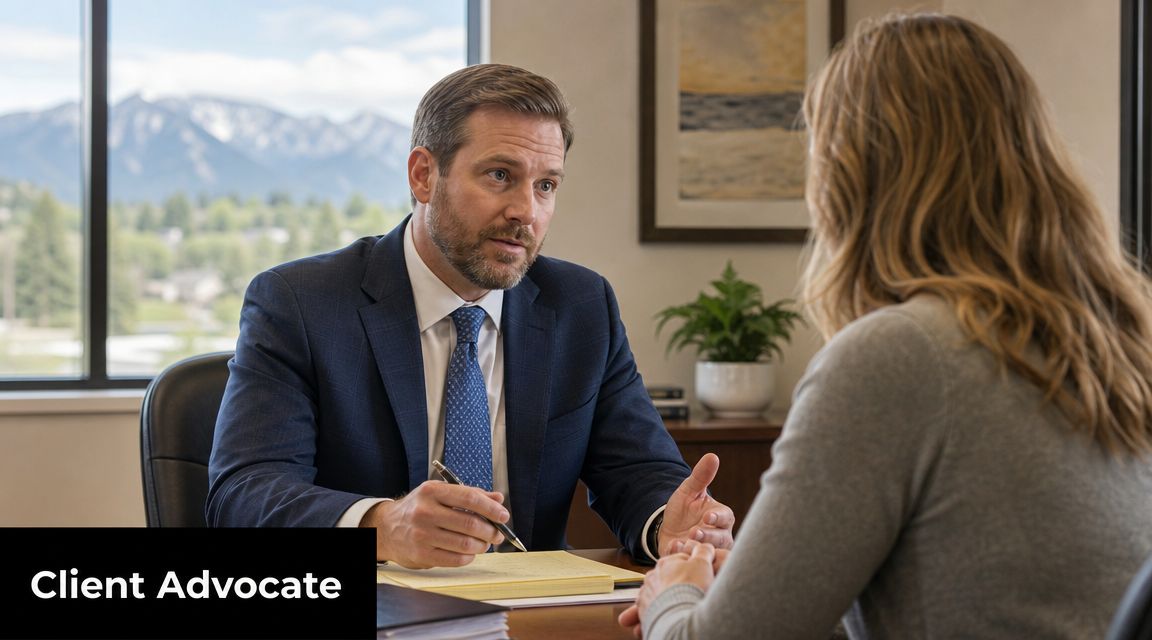
A Colorado injury lawyer does far more than file court papers. In a serious case, that lawyer becomes part investigator, part shield, part negotiator, and part guide.
The investigator
Negligence sounds like a legal word, but the idea is simple. Someone had a duty to act with reasonable care, they failed to do it, and that failure hurt someone else.
A lawyer proves that with evidence, not assumptions. That can include crash reports, photographs, witness statements, vehicle damage, medical records, phone records if relevant, and any video that still exists. Evidence disappears faster than one might expect. Skid marks fade. Surveillance footage gets deleted. Witnesses stop answering calls.
Think of the lawyer as the person building the timeline before the story gets blurry.
The shield
Insurance adjusters aren't just gathering facts. They're evaluating risk, testing your version of events, and looking for inconsistencies they can use later.
That's why many people describe a lawyer as a shield. Once represented, you usually don't have to handle every call, email, and pressure tactic alone. Your lawyer becomes the point of contact and helps prevent a casual comment from being turned into an argument against you.
If you want a closer look at that day-to-day role, this guide on what does a car accident lawyer do breaks it down in practical terms.
The advocate and translator
Injury claims involve two languages at once. There's the medical language in records, imaging, restrictions, and treatment notes. Then there's the legal language in liability, damages, defenses, and settlement demands.
A good lawyer translates both.
- Medical records into human impact: Not just “cervical strain,” but trouble turning your head, sleeping, driving, or lifting your child.
- Legal rules into plain choices: Not just “comparative fault,” but whether a disputed lane change could reduce what you recover.
- Insurance communications into strategy: Not just “we need more documentation,” but whether the carrier is delaying, disputing, or positioning for a lower offer.
Practical rule: If a document, call, or email feels confusing, don't guess what it means. Ask what effect it has on liability, treatment, or settlement value.
The counselor
Injury cases are emotional. People feel guilty for being hurt, embarrassed about needing help, and anxious about money. A lawyer can't remove that stress completely, but a steady one helps turn chaos into sequence.
That often means answering questions like these:
- Should I give a recorded statement?
- Do I need to finish treatment before settlement talks begin?
- What records should I keep?
- What happens if the insurer says I caused part of the crash?
Those answers matter because the legal process rewards consistency, documentation, and timing.
Common Injury Cases We Represent in Colorado
Injury law covers a wide range of harm, but some Colorado cases appear again and again because of how people travel, work, and live. The labels matter less than the actual situations behind them.
Car and truck crashes
A Denver commuter is hit at an intersection by a driver who claims the light was yellow. A family on the highway is sideswiped by a commercial truck during a lane merge. A rideshare passenger is injured in a multi-vehicle pileup and suddenly multiple insurers are involved.
Truck cases often become more complex because the claim may involve a driver, a trucking company, maintenance issues, cargo issues, and corporate records that need to be preserved early. For a closer look at these cases, see truck accidents in Colorado.
Traumatic brain injuries
A person may not lose consciousness and still suffer a serious brain injury. They start forgetting appointments, feel overstimulated in busy places, or can't handle work tasks they used to manage with ease. Family members often notice the change before imaging or paperwork tells the full story.
These claims require careful storytelling because brain injuries often affect memory, mood, focus, and personality in ways that outsiders underestimate.
Wrongful death
Some cases begin with a call no family is ever prepared to receive. A spouse, parent, or child dies after a crash or another preventable event, and the surviving family has to grieve while bills, insurance letters, and legal deadlines keep moving.
A wrongful death case is about accountability, but it's also about structure. Families need help gathering records, understanding who can bring the claim, and protecting the future the deceased would have helped provide.
Why case type matters early
Different injuries create different proof problems. A visible fracture tells one story. A disabling concussion tells another. A fatal trucking case raises a different set of questions than a straightforward rear-end crash.
For lawyers and firms building practices around motor vehicle cases, market visibility also shapes who injured people can find when they need help. Some agencies and vendors help firms access exclusive leads tied to motor vehicle accident inquiries, which reflects how competitive and specialized this area has become. For injured people, the takeaway is simple. You want a lawyer whose daily work already matches the kind of harm your family is facing.
Navigating Colorado's Critical Injury Laws
A Colorado claim can look strong on Monday and become much harder by Friday if the wrong deadline is used or the insurance company gets a head start on blaming you. That is why this part of the case deserves early attention.
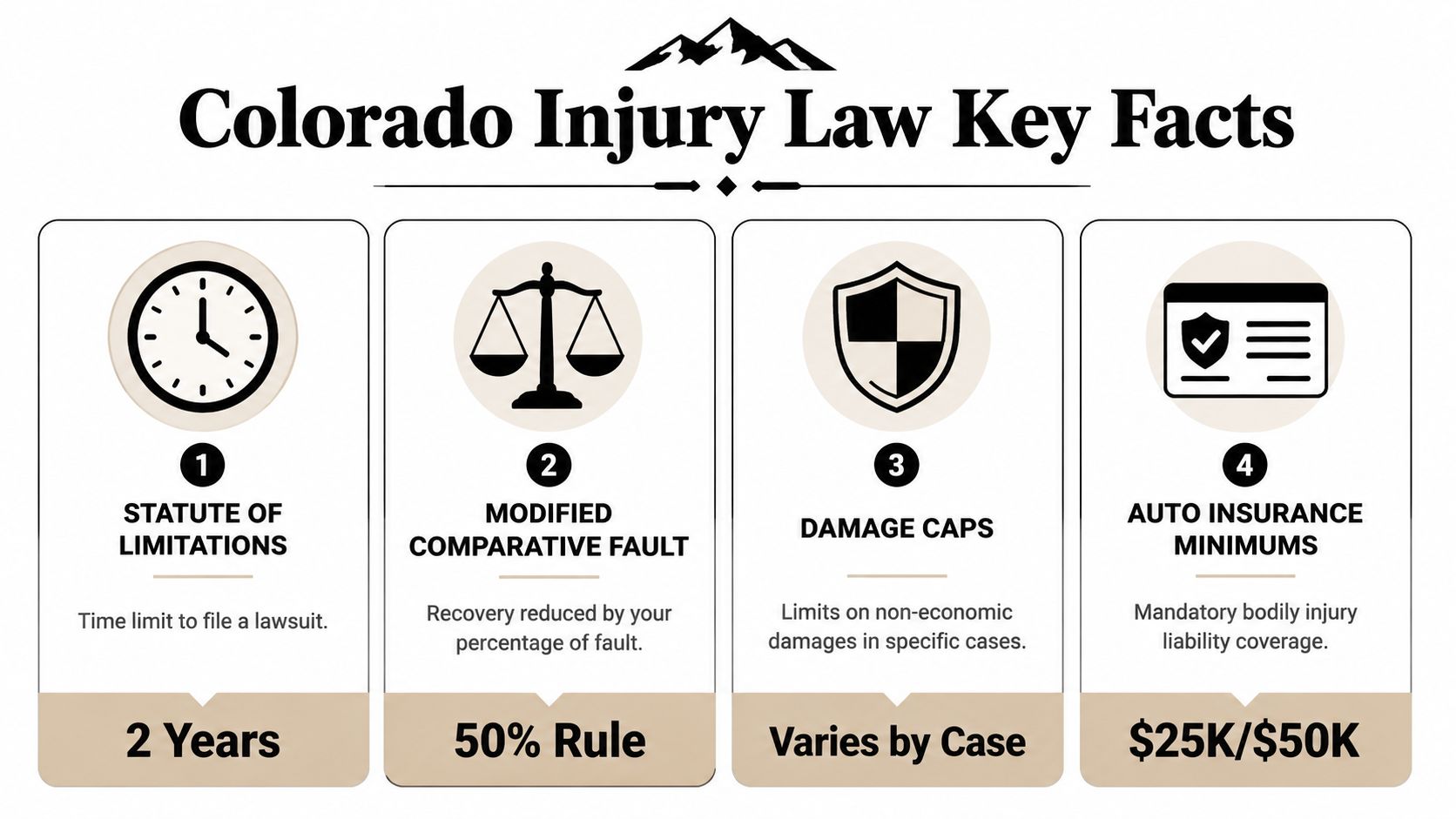
Colorado has two rules that often shape the result before settlement talks even begin. One controls how long you have to file suit. The other controls how much money you can recover if fault is shared.
The filing deadline works like a closing gate
The statute of limitations is the legal filing deadline. A simpler way to understand it is this: the courthouse door stays open only for a set period, and the clock is set by Colorado law, not by how serious the injury is or how reasonable the delay may seem.
In Colorado, the deadline changes based on the type of case. Many personal injury claims have a 2-year deadline, while claims arising from car, truck, and motorcycle crashes generally have 3 years from the date of the crash, as explained in Manning Law's overview of Colorado injury deadlines.
Here is the practical snapshot:
| Case Type | Filing Deadline (from date of incident) |
|---|---|
| Many personal injury claims | 2 years |
| Motor vehicle, truck, and motorcycle crash claims | 3 years |
That extra year can sound minor. It is not. For Colorado residents, using the wrong deadline can erase a claim that otherwise had real value.
Waiting creates problems before the deadline arrives
The deadline is only part of the risk. Delay also weakens the proof that supports your version of events.
- Video can be erased: Stores, apartments, and traffic-adjacent businesses may not keep footage for long.
- Witness memory changes: Even honest witnesses become less precise over time.
- Gaps in treatment create doubt: Insurers often argue that delayed or inconsistent care means the injury was mild or unrelated.
- Records get harder to collect: Pay information, repair documents, and medical billing can become scattered.
A case works a lot like a trail in fresh snow. At first, the path is clear. With time, new footprints, weather, and traffic make it harder to show exactly what happened.
Colorado's 50% fault rule can reduce or block recovery
Colorado follows a modified comparative negligence rule. In plain terms, your compensation can be reduced by your share of fault. If you are found 50% or more at fault, you usually cannot recover damages from the other side.
This rule matters because fault is rarely argued in simple, all-or-nothing terms. Insurance adjusters often look for ways to shift part of the blame onto the injured person, especially in car crashes, slip-and-fall claims, and pedestrian cases.
A common point of confusion shows up here. Being partly at fault does not automatically destroy a case. It changes the math. But once fault reaches the 50% line in Colorado, the claim can fail.
A plain example of how the rule works
Suppose you are injured in a Denver intersection crash while making a left turn. The other driver may have been speeding or looking at a phone, but the insurer argues that you misjudged the turn.
If your damages are valued at $100,000 and you are found 20% at fault, the recovery would usually be reduced to $80,000. If you are found 50% at fault, Colorado law generally bars recovery.
That is why early case handling matters. A quick apology at the scene, an inaccurate recorded statement, or a social media post that sounds casual can later be used to argue that your share of fault should be higher.
What Colorado families should do early
These rules lead to two immediate tasks.
- Confirm the correct deadline. Do not assume every injury case follows the same calendar.
- Protect the evidence that explains fault. Photos, witness names, medical records, and consistent reporting matter early.
Colorado's laws are not just technical details for lawyers to sort out later. They directly affect whether you can bring the case at all and how much financial recovery may still be available after fault is assigned.
How Fees Work and How Your Case Is Valued
A common Colorado question sounds simple but carries a lot of stress: how do I hire a lawyer if the accident has already put pressure on my budget?
In many personal injury cases, the fee is handled through a contingency arrangement. That means the lawyer is paid from money recovered in the case, rather than through hourly bills sent while you are still trying to heal. For many injured people, that structure makes legal help realistic at a time when medical bills and missed paychecks are already competing for attention.
The practical point is risk. In an hourly-fee case, the client pays as the work happens. In a contingency-fee case, the lawyer takes on much of that financial risk and gets paid only if the case produces a recovery.
That does not mean every fee agreement is identical.
Ask how the percentage works, whether case expenses are handled separately, and what happens if the case settles early or requires a lawsuit. A good explanation should read clearly on paper and sound clear out loud. If it still feels murky, keep asking until it makes sense.
Why valuation is more than adding up bills
People often assume case value is just a stack of receipts. Colorado injury claims are broader than that. A case is usually valued by looking at how the injury changed your health, your work, and your day-to-day life, then testing how well those losses can be proven.
A lawyer is doing two jobs at once here. One is measuring harm. The other is defending the claim against arguments that shrink it.
These factors often shape value:
- Medical treatment: Emergency care, follow-up visits, physical therapy, medication, future care, and how consistent the records are.
- Income loss: Time missed from work, reduced hours, job changes, and any lasting limits on earning ability.
- Human impact: Pain, sleep disruption, limits on movement, missed family roles, and the loss of routines that used to be normal.
- Strength of proof: Photos, records, witness statements, expert opinions, and whether the timeline of the injury is clear.
- Disputes about responsibility: Whether the insurance company can argue that your own actions should reduce what you recover.
That last point matters in Colorado because fault affects value directly. As noted earlier, recovery can be reduced by your share of fault, and a claim can fail if fault reaches the legal cutoff. So valuation is part accounting and part defense strategy. It works a bit like filling a bucket while someone else is trying to poke holes in the side. Your losses matter, but so does the quality of the evidence protecting them.
Comparing lawyers without getting lost
If you speak with more than one firm, listen for how each lawyer explains the numbers. Clear counsel should be able to walk you through fees, likely expenses, the strengths and weak points in your case, and what could change the value over time.
Nares Law Group LLC handles investigation, treatment coordination, negotiation, and trial work in Colorado injury matters. That gives prospective clients a practical way to ask how each stage is managed, who will communicate with them, and how settlement value is evaluated as medical treatment develops.
The right fee conversation should leave you better informed and less pressured. That is usually a good sign for the rest of the case too.
Your Case Journey From First Call to Final Settlement
People are often less anxious once they understand the sequence. A personal injury case may feel messy from the inside, but the work usually follows a recognizable path.
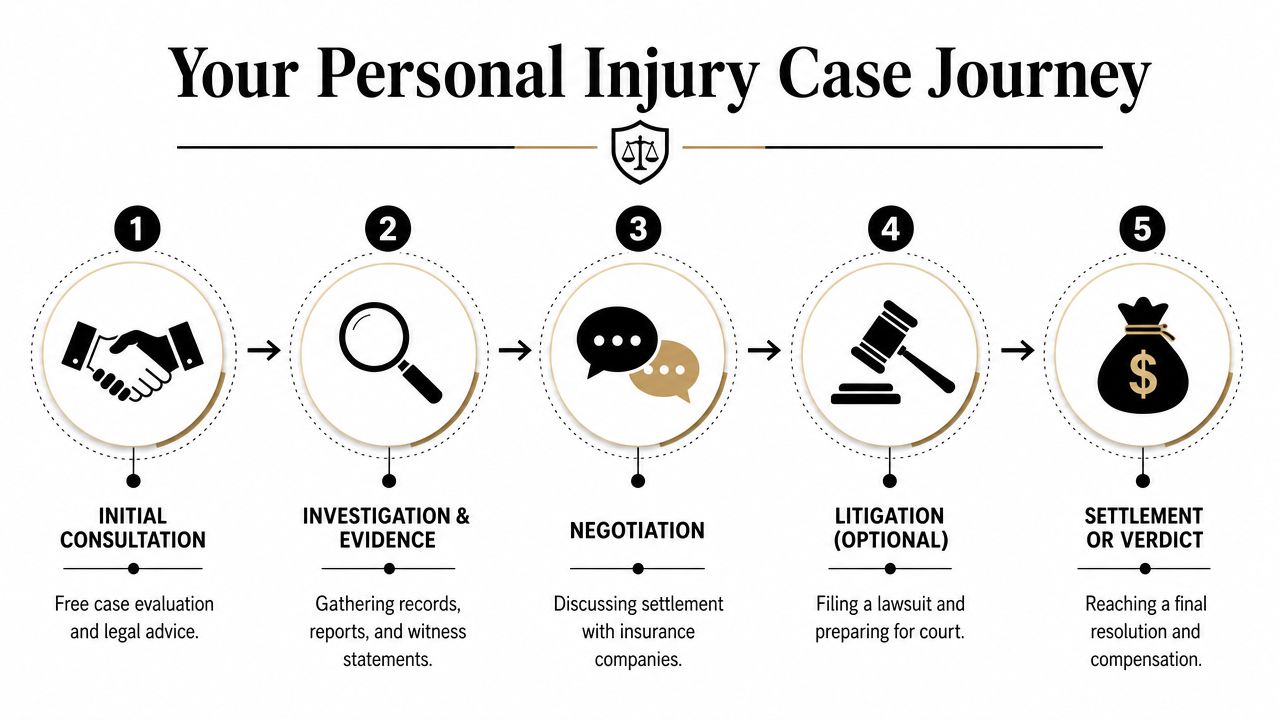
A quick visual helps:
The first phase
The case starts with a consultation. You describe what happened, what injuries you're dealing with, what treatment has begun, and what contact you've had with insurers.
Then the lawyer evaluates basic issues such as who may be responsible, what evidence likely exists, whether records need to be preserved, and whether there are any immediate mistakes to avoid.
The evidence phase
Next comes the gathering stage. This often includes:
- Collecting crash and incident records: Police reports, photos, witness information, and available video.
- Organizing medical proof: Treatment records, diagnosis details, restrictions, referrals, and bills.
- Documenting loss: Missed work, daily limitations, out-of-pocket costs, and the way the injury changed your routine.
This phase matters because insurance companies don't pay based on sympathy alone. They evaluate files. A claim with scattered records is harder to present than one built carefully from the start.
Here's a helpful overview of the process in video form:
The negotiation phase
Once the injuries and treatment picture are clear enough, the lawyer usually prepares a demand package. That package tells the story of liability, treatment, losses, and requested compensation in a structured way.
The insurer responds. Sometimes that response is reasonable. Sometimes it minimizes treatment, disputes fault, or argues your condition existed before the event. Negotiation follows, often in rounds.
Settlement talks are rarely a single yes-or-no moment. They are a series of moves built on evidence, timing, and leverage.
The lawsuit phase if needed
Not every case settles early. If the insurer won't offer a fair resolution, a lawsuit may be filed. That begins formal litigation, which can involve written questions, document exchanges, depositions, motions, and trial preparation.
Filing suit doesn't mean trial is guaranteed. Many cases still resolve before a jury ever hears them. But the willingness to prepare for court changes the pressure on the other side.
The finish line
A case ends in one of two broad ways. Either the parties reach a settlement, or the dispute is decided by verdict. Then remaining issues such as paperwork, lien resolution, and disbursement are handled before the client receives funds.
The timeline varies from case to case. Some claims move quickly. Others take longer because treatment is ongoing, fault is contested, or the damages are significant enough that the insurer resists paying fairly. What matters is that the process has a path, and a good lawyer helps you see where you are on it.
How to Choose the Right Lawyer for Your Colorado Case
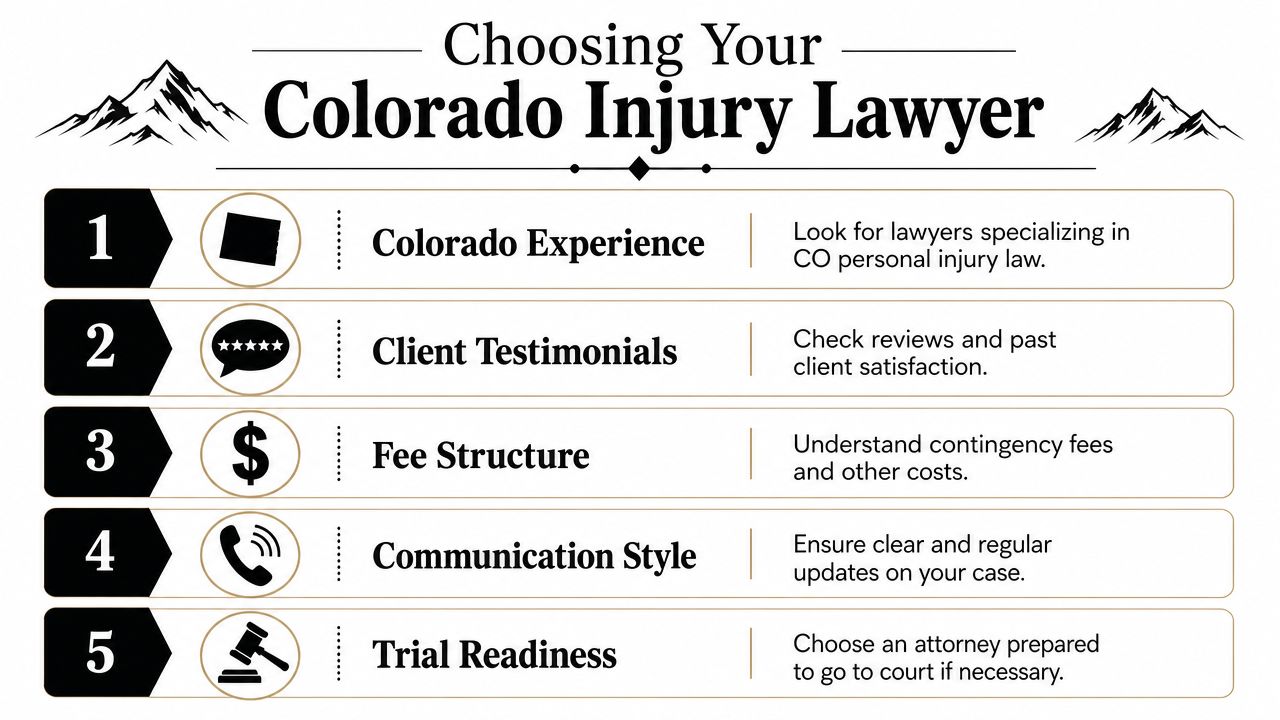
Choosing a lawyer while injured is hard because you're making an important decision at a time when you're tired, distracted, and probably new to the process. A simple checklist helps.
Questions worth asking
Some questions reveal a lot very quickly.
- Colorado focus: Do they regularly handle Colorado injury cases and understand the state-specific rules that affect timing and fault?
- Case fit: Have they handled claims like yours, such as truck collisions, brain injuries, or wrongful death matters?
- Communication: Will you get regular updates, and who answers your questions once you sign?
- Trial readiness: Are they prepared to litigate if the insurer refuses to be reasonable?
- Fee clarity: Can they explain the fee agreement and costs in plain English?
Red flags people often miss
A few warning signs deserve attention.
A lawyer who promises a specific dollar result too early may be telling you what you want to hear instead of what the evidence supports. A lawyer who rushes you to sign without explaining the process may handle the relationship the same way later. And if your questions seem to annoy them in the first meeting, communication probably won't improve once the file is opened.
What a strong fit feels like
The right lawyer doesn't make the situation feel trivial. They make it feel understandable. You leave knowing what the next steps are, what the pressure points in your case may be, and what information still needs to be gathered.
That matters because the right advocate isn't just pursuing compensation. They're helping your family make steadier decisions during a period that often feels unstable.
If you're searching for a personal injury lawyer in Colorado, look for a combination of calm communication, case-type experience, and the willingness to prepare thoroughly rather than chase a fast but shallow resolution.
If you need help after a crash, truck wreck, traumatic brain injury, or wrongful death in Colorado, Nares Law Group LLC offers free consultations and guidance on what your options may be. A conversation can help you understand the deadlines, fault issues, and next steps that apply to your situation without any obligation to move forward.