You may be reading this with an ice pack nearby, a stack of paperwork on the counter, and a phone full of missed calls from insurers, doctors, and family. That's normal. The first days after a crash feel disorganized, and individuals often don't know whether they need a lawyer yet, how to choose one, or what questions matter.
If you're trying to figure out how to hire a personal injury lawyer, start with one principle. Don't hire the first firm that sounds confident. Hire the lawyer who can prove they're prepared to build your case, value it correctly, and take it as far as it needs to go.
That distinction matters most in truck wrecks, traumatic brain injury cases, and any claim involving disputed fault or serious long-term harm. Plenty of firms can settle a straightforward case. Far fewer are built to pressure an insurer that won't pay fairly unless it believes the lawyer on the other side is ready for litigation.
When to Act and Where to Begin Your Search
The right time to contact a lawyer is usually as soon as possible after the accident. Not because every case turns into a lawsuit, but because evidence doesn't stay put. Vehicles get repaired, witnesses become harder to reach, surveillance footage disappears, and early statements to insurance adjusters can shape the claim before you know the full extent of your injuries.
Colorado accident victims often wait because they want to “see how they feel” first. That instinct is understandable. It's also risky when you've got a concussion, a soft tissue injury that worsens over time, or a truck crash case that may require immediate investigation into logs, maintenance records, and company practices.

Start with your immediate priorities
Before you compare law firms, do these things:
- Get medical care: Your health comes first. If you're dealing with pain, stiffness, headaches, or mobility issues after a crash, prompt evaluation matters. If you need help understanding recovery options, this guide to effective auto accident injury treatment gives a practical overview of the kinds of care accident victims often consider.
- Preserve what you already have: Save photos, police information, names of witnesses, discharge paperwork, towing records, and every insurer message.
- Avoid detailed insurance statements: You can report the crash, but don't guess about injuries, speed, or fault.
- Write down what changed: Pain, missed work, sleep problems, dizziness, anxiety, difficulty concentrating. Those details matter later.
Practical rule: If you're asking yourself whether it's too early to call a lawyer, it usually isn't.
Where to look first
A good search starts in a few places, not one.
Personal referrals can help, especially from someone who had a serious injury case rather than a minor fender-bender. Ask what happened after signing, not just whether they “liked” the lawyer. Did calls get returned? Did the case stall? Did the lawyer stay involved?
State and local bar resources can confirm whether an attorney is licensed and in good standing. That doesn't tell you whether they're the right fit, but it does help you rule people out.
Established legal websites and firm websites are useful if you read them critically. Look for case-type focus, attorney background, trial work, and whether the firm explains process and fees clearly.
If you want a deeper look at timing, this resource on when to hire a personal injury attorney is a helpful place to start.
Build a short list, not a final answer
Don't try to choose your lawyer from search results alone. Your goal at this stage is narrower. Build a shortlist of firms that appear to handle your kind of case, then vet them before you call.
For a routine crash, that may mean several strong local candidates. For a truck collision or brain injury case, narrow the field aggressively. General injury marketing is not the same thing as proven experience with high-stakes, evidence-heavy claims.
How to Vet a Lawyer Before You Even Call
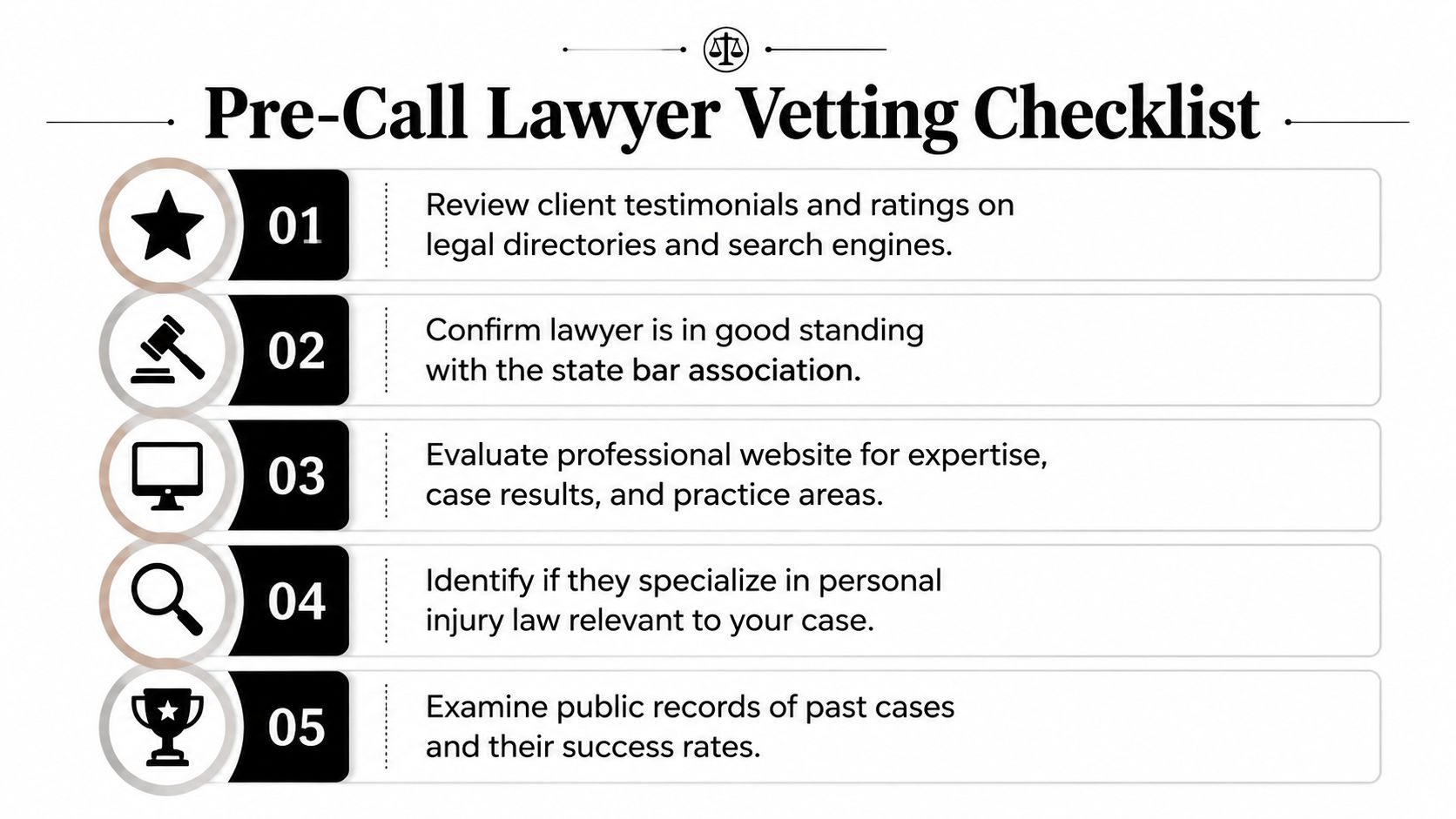
Most law firm websites are designed to reassure you. That's fine. What matters is whether the reassurance is backed by specifics.
When I evaluate a firm from the outside, I want to know three things fast. What cases do they really handle? Do they show signs of actual litigation work? Are they transparent, or are they hiding behind slogans?
What to examine on the website
A strong site usually gives you more than marketing language. It should show:
- Case-specific focus: If your case involves a truck wreck, traumatic brain injury, wrongful death, or a disputed liability crash, the site should reflect that work directly.
- Attorney identity: You should be able to tell who will likely handle the case, not just the firm name.
- Process explanations: Firms that can explain investigation, treatment coordination, insurance negotiations, and litigation usually understand those stages well.
- Meaningful results discussion: Not puffery. Look for enough detail to tell whether the firm has handled serious matters before.
- Clear fee information: You shouldn't have to guess how payment works.
A weak site often relies on phrases like “aggressive representation” or “we fight for maximum compensation” without showing how. Those phrases don't prove trial readiness.
Spot the difference between a real litigation firm and a settlement mill
This is where many accident victims get misled. According to Warshafsky's discussion of first questions to ask a firm, 96% of personal injury cases settle, but insurers tend to offer less when they think the lawyer lacks trial experience. That's why firms that rarely sue or try cases are often described as settlement mills. They move volume. They close files. They may not build the kind of pressure that forces a serious insurer to reassess a low offer.
Signs of a possible settlement mill include:
- High-volume language with little substance: “We handle thousands of cases” tells you nothing about quality.
- No visible litigation discussion: If the site never mentions lawsuits, discovery, depositions, experts, or trial work, notice that.
- Overpromising tone: Guarantees and easy-win messaging should make you cautious.
- No sign of case selectivity: Complex truck and brain injury cases aren't interchangeable with every car wreck.
Later, ask direct questions about filed lawsuits and trial preparation. But before the call, your first filter is whether the firm even talks like a litigation practice.
Here's a short video that helps frame what to look for when comparing lawyers:
Match the lawyer to the injury, not just the accident
This point gets missed all the time. A lawyer may handle “car accidents” generally and still be the wrong fit for a collision involving a commercial truck, a head injury, or long-term disability.
What works in those cases is different. The evidence is broader. The medicine is more complicated. The future damages are harder to value. The defense is often more organized.
A polished website can tell you the firm knows marketing. It cannot, by itself, tell you the firm knows trucking regulations, post-concussive symptoms, or how to prepare a case an insurer won't dismiss.
Before you ever call, remove any firm from your list if you can't tell what they do when a case becomes difficult.
Mastering the Free Consultation
The consultation is not a sales meeting where you just sit and hope someone impressive picks your case. It's an interview, and you're the one making the hiring decision.
That matters because nearly 40% of people looking for a personal injury lawyer rank experience and a strong track record as their top hiring factor, and one practical method is to schedule free consultations with at least three candidates so you can compare communication style, expertise, and whether the lawyer seems invested in your interests, as noted by Attorney at Work's survey summary.
What to bring to the meeting
A consultation goes better when the lawyer can see the shape of the claim. Bring what you have, even if it's incomplete.
- Crash documents: Police report number, exchange information, towing paperwork, citations, and insurer letters.
- Medical records in your possession: ER paperwork, imaging summaries, discharge instructions, prescriptions, work restrictions.
- Photos and video: Vehicle damage, visible injuries, roadway conditions, debris, skid marks, scene layout.
- Employment information: Missed work records, pay stubs if wage loss is already an issue.
- Your notes: A simple timeline helps. Date of crash, treatment dates, symptoms, missed events, new limitations.
If you don't have everything, that's fine. Bring what you do have. The point is to make the meeting concrete.
What good lawyers do in a consultation
A strong consultation usually feels focused, not theatrical. The lawyer listens carefully, asks follow-up questions, identifies missing information, and explains where the pressure points in the case are likely to be.
A weak consultation often feels scripted. You hear broad promises, but not much analysis. The lawyer may gloss over hard issues like preexisting conditions, fault disputes, treatment gaps, or what happens if the insurer refuses to pay fairly.
If the lawyer does most of the talking and very little listening, that's a warning sign.
Questions that reveal whether the lawyer is right for you
Use this table during the meeting. You don't need to ask every question word for word, but you should leave with clear answers.
| Question Category | Specific Question to Ask | What to Listen For |
|---|---|---|
| Experience | Have you handled cases like mine before? | Specific discussion of your injury type, liability issues, and likely challenges. |
| Litigation | What happens if the insurer won't make a fair offer? | A direct explanation of lawsuit strategy, not vague reassurance. |
| Case handling | Who will actually work on my case day to day? | Clear roles for the attorney, staff, and point of contact. |
| Communication | How often will I get updates, and from whom? | A concrete communication plan. |
| Medical issues | How do you approach complicated injuries or long-term treatment? | Thoughtful discussion of records, specialists, and documenting future impact. |
| Strategy | What are the strengths and weaknesses you see right now? | Honest assessment, including risks. |
| Fees | How are fees and expenses handled? | Clarity, not fast answers designed to move past the topic. |
| Timeline | What are the next steps if I hire you? | A process that sounds organized and realistic. |
Green flags and red flags
Some answers should put you at ease. Others should end the conversation.
Green flags:
- The lawyer explains both upside and risk.
- They can talk specifically about your kind of case.
- They tell you what documents matter and why.
- They answer fee questions without irritation.
- They don't promise a result.
Red flags:
- “This is an easy case.”
- “We'll definitely get a big settlement.”
- “Don't worry about the details.”
- “You probably won't ever need to know who's handling it.”
- “We settle almost everything quickly,” without explaining how they handle resistance from insurers.
If you're in Colorado and want to compare what a local practice looks like, reviewing a Denver personal injury attorney page can help you see how a firm presents its approach, injuries handled, and client communication philosophy.
The consultation is also about trust
The best lawyer on paper may still be the wrong fit if you leave the meeting confused, rushed, or talked over.
You're hiring someone to guide a painful, disruptive part of your life. You should feel that they understand the legal issues and the human cost. Respect matters. So does responsiveness. A serious case can last a long time, and frustration grows fast when clients can't get answers.
Understanding Contingency Fees and True Case Costs
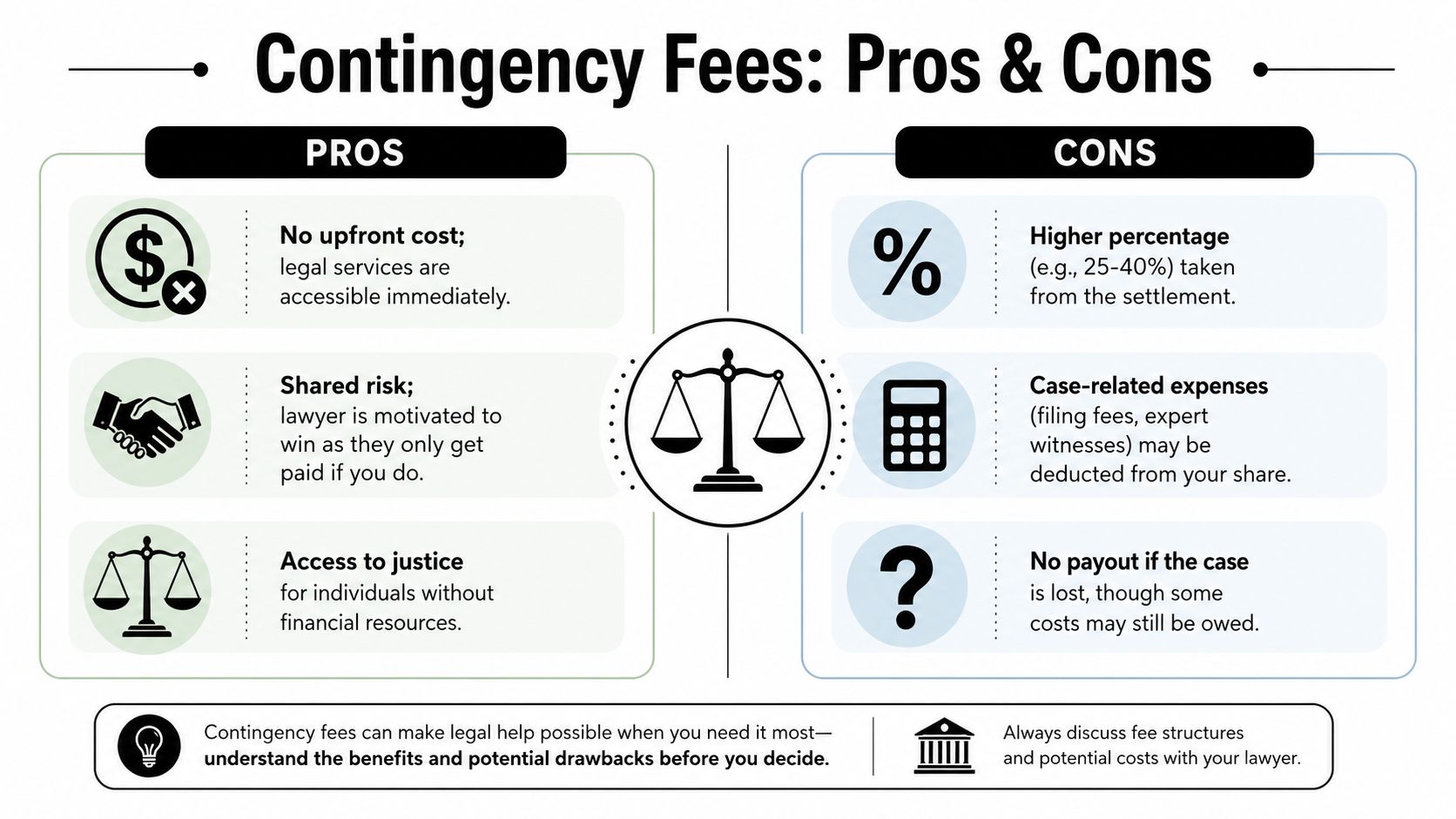
Most personal injury lawyers work on a contingency fee. That means you don't pay upfront for the lawyer's time. The fee comes out of the recovery if there is one.
That structure is standard because it gives injured people access to legal help without asking them to fund a case while they're already dealing with medical bills and missed work. According to CounselHound's overview of top personal injury firms, a typical contingency fee is 33.33% if the case resolves before a lawsuit is filed, and 40% if the matter proceeds into litigation.
The fee percentage is only part of the story
Many clients ask the right first question: “What's your contingency fee?” But they stop there.
That's a mistake because your net recovery depends on more than the fee percentage. It also depends on case expenses and how those expenses are deducted. As explained in Victims Lawyer's discussion of questions to ask a personal injury lawyer, this issue often gets overlooked even though expense deductions can change a client's final recovery by 10% to 15%.
Ask these fee questions in plain English
Use direct language. You don't need legal jargon.
- What percentage do you charge if my case settles before suit?
- Does that percentage change if you file a lawsuit?
- What counts as a case expense?
- Are expenses deducted before or after the contingency fee is calculated?
- If the case doesn't recover money, do I owe any costs?
- Will all of this be written clearly in the agreement?
Here's why this matters. Two firms may quote the same contingency percentage and still produce a different net result to the client if one handles expenses differently.
Financial checkpoint: Don't compare lawyers only on the advertised fee. Compare them on how clearly they explain your likely net payout.
What costs usually show up in a personal injury case
The exact list varies, but common expenses may include:
- Medical records and bills retrieval
- Court filing fees
- Deposition and transcript costs
- Expert review or expert witness charges
- Investigation expenses
- Exhibit and record preparation
None of that is necessarily improper. Serious cases often require serious investment. The problem is surprise. If a lawyer can't explain where those costs come from and how they affect your share, keep looking.
If you want to see what a written fee arrangement should address, this guide to a contingency fee agreement is a useful reference.
Making Your Final Decision and What to Expect in the Agreement
Once you've met with several lawyers, the decision usually becomes clearer than people expect. One lawyer understands the injury better. One explains the process more clearly. One makes you feel like a file. Another makes you feel represented.
The right choice usually rests on three things.
What should carry the most weight
First, choose demonstrated fit for your case. If you have a truck collision, brain injury, or wrongful death claim, that should outweigh a flashy office or polished intake process.
Second, choose communication you trust. You shouldn't have to chase the firm for basic answers before you've even signed.
Third, choose fee transparency. If the financial terms still feel slippery after a consultation, they won't become clearer later.
What to review before signing
Read the agreement line by line. Focus on these points:
- Contingency percentage: Confirm when it applies and whether it changes if suit is filed.
- Case expenses: Look for who advances them and when they're deducted.
- Scope of representation: Make sure the agreement states what the firm is handling.
- Client responsibilities: You may need to stay in treatment, provide documents, and keep the firm updated.
- Termination language: Understand what happens if representation ends before the case does.
A good agreement should answer questions, not create them. If you feel rushed to sign, slow down. The lawyer you hire should welcome careful review.
What Happens After You Hire Your Lawyer
Once you sign, the case moves from uncertainty into process. That alone often brings relief. You stop fielding every insurance call yourself. You stop wondering who should gather records. You stop carrying the legal burden alone.
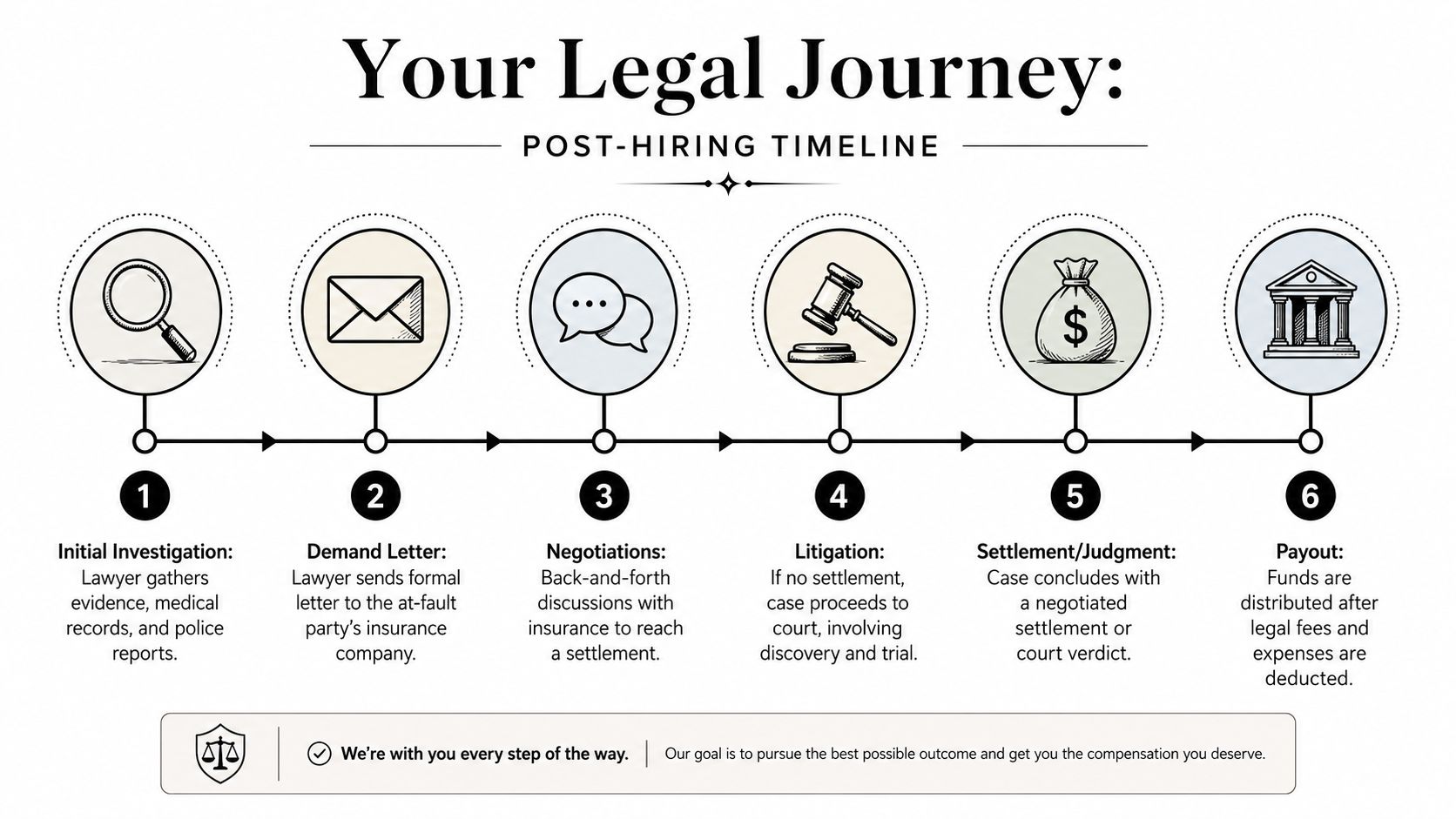
A well-run personal injury case usually unfolds in stages. The exact timeline varies, but the rhythm is familiar.
The first phase
Your lawyer and the legal team begin collecting records, securing crash materials, contacting witnesses, and identifying insurance coverage. In a truck case, this may include deeper investigation into the company, driver, maintenance issues, and available evidence.
You'll also usually be asked to keep treating, update the firm about symptoms, and avoid doing anything that could hurt the claim, such as posting carelessly about the accident online.
The demand and negotiation phase
After enough evidence and medical documentation are in place, the lawyer typically prepares a demand package for the insurer. That package should explain liability, injuries, treatment, losses, and why the claim deserves payment at a certain level.
Then the back-and-forth begins. Offers, counteroffers, requests for more records, arguments about fault, arguments about treatment. This part tests whether the lawyer can hold the line when the insurer tries to discount the case.
Some insurers negotiate differently when they believe the lawyer across from them is willing and able to file suit.
If the case has to be filed
Not every case settles early. Some require litigation before the defense takes the claim seriously. According to Victims Lawyer's step-by-step guide after hiring a California personal injury lawyer, about 95% of personal injury cases settle during the litigation phase after a lawsuit is filed, while only a small minority go to a jury trial. That's exactly why trial readiness matters. A lawyer doesn't need to try every case. They do need to be prepared to litigate credibly.
In litigation, expect written discovery, document exchange, depositions, defense medical requests in some cases, court deadlines, and continuing settlement discussions. The case often becomes more demanding, but it also becomes harder for an insurer to dismiss casually.
What your role looks like
You are still important after hiring counsel. You'll likely need to:
- Stay engaged with treatment
- Respond promptly to requests for information
- Tell your lawyer about new providers or new symptoms
- Be candid about old injuries, prior claims, and difficult facts
- Prepare for deposition or mediation if the case reaches that stage
The best attorney-client relationships are collaborative. Your lawyer handles the legal work. You provide the facts, the follow-through, and the honesty needed to present the case well.
By this point, the question is no longer just how to hire a personal injury lawyer. It's whether you hired one who can carry the case when it gets contested. That's the difference between feeling represented and being protected.
If you were hurt in a Colorado crash, truck wreck, or traumatic brain injury incident and want clear answers about your options, Nares Law Group LLC offers free consultations focused on strategy, transparency, and trial-ready advocacy. If you want a firm that takes your injuries seriously, explains the fee structure plainly, and prepares every case as though it may need to be proved, reach out to discuss your situation.