You've got a stack of papers, a letter from the insurance company, and maybe a court deadline that seems to move faster than your recovery. Then your lawyer says they may “file a motion,” and it can feel like the case just turned into a language you weren't taught. In a Colorado personal injury claim, motion practice is one of the main ways a lawsuit gets managed before trial, and it can affect both the pressure on the other side and the path your case takes in court.
For an injured person, that matters. A motion can push the defense to hand over evidence, narrow a weak argument, or ask the judge to make a ruling that changes settlement negotiations. It's not background noise, it's part of how your case moves forward in a rule-based system that rewards preparation and punishes delay.
Your Case Is More Than Just One Big Trial
A lawsuit often feels like it's headed toward one dramatic courtroom day, but most cases are shaped long before anyone picks a jury. A client may hear about a “motion” and assume it's just another filing. In reality, it's a formal request asking the judge to do something specific, and those requests can affect how much evidence gets exchanged, what issues stay alive, and whether a case gets stronger or weaker before trial.
Think of it this way. Your injury claim is more like a series of checkpoints than one giant leap. One filing may ask the court to require the other side to answer discovery. Another may ask the judge to dismiss a defense argument that doesn't hold up. Motion practice is the part of the case where lawyers use written requests to shape the road ahead, not just react to what the defense is doing.
That's why understanding this process can bring real peace of mind. When you know your case is moving through smaller legal decisions, the wait feels less mysterious. You're not stuck in limbo, you're in a process with steps, deadlines, and purpose, which is exactly why motion practice matters so much in injury litigation.
Practical rule: A motion usually means your lawyer is trying to solve a problem, narrow an issue, or force a decision before trial, not creating drama for its own sake.
If you're also trying to understand how evidence gets exchanged first, this plain-language guide to discovery in litigation helps connect the dots.
The Strategic Requests That Shape Your Lawsuit
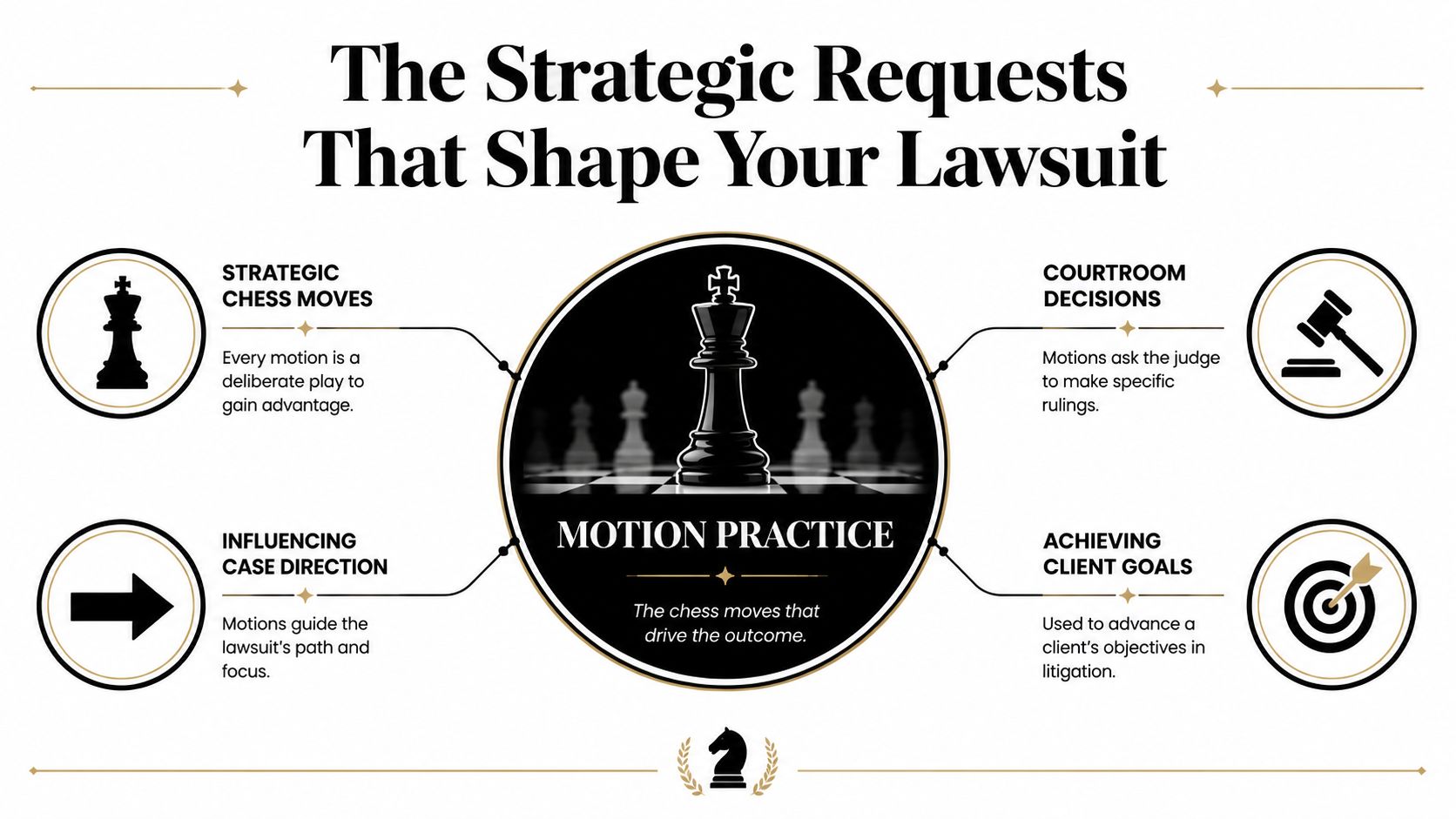
A Colorado injury case rarely turns on one dramatic courtroom day. It moves through a series of written requests, and each one can change what evidence comes in, what issues stay in dispute, and how much pressure each side feels before trial. Motion practice is the part of the case where lawyers ask the judge to make a ruling that keeps the lawsuit moving in a direction that helps their client.
That is why motions matter so much for a personal injury client. A request that seems technical on paper can decide whether your lawyer gets needed records, whether a defense theory survives, or whether a weak claim gets trimmed away before a jury ever hears it. The ABA motion practice guidance describes motions as tools that can seek procedural relief, ask for rulings on the merits, and push a case toward a narrower, clearer path.
Procedural motions
Procedural motions deal with how the case is being handled. A motion to compel discovery is a common example, and it matters when the other side will not turn over records, photographs, or other materials your lawyer needs to see. If a trucking company, insurer, or property owner keeps evidence boxed up, your attorney can ask the court to order production, which may quickly move information from hidden to usable. If you want a plain-language explanation of how that exchange process works first, this guide to discovery in litigation helps connect the steps.
Substantive motions
Substantive motions target the legal merits of the claim. A motion to dismiss or a motion for summary judgment asks the judge to end all or part of the case because the law, or the facts developed so far, supposedly favor one side. In a Colorado personal injury case, those motions can pressure the defense to show its hand, narrow the claims that remain, or reveal weaknesses that matter later in settlement talks.
The difference is simple. Procedural motions control how the case moves. Substantive motions ask whether the case should keep moving at all.
| Common Motions in a Personal Injury Case | |||
|---|---|---|---|
| Motion Type | Purpose | Example Scenario | Potential Outcome |
| Motion to Compel Discovery | Force the other side to produce requested evidence | A driver's insurer won't turn over key claim documents | The judge orders disclosure |
| Motion to Dismiss | Attack the legal basis of a claim or defense | The defense says the complaint doesn't state a valid claim | Part of the case may end early |
| Motion for Summary Judgment | Ask for a ruling without trial based on the record | The defense says the facts, as developed, don't support liability | The judge may narrow or end the case |
Every motion serves a strategic purpose. One ruling can push a case closer to settlement, clear away a weak issue, or leave only the dispute that really matters.
HyperWhisper's brief-writing tips are a useful read for understanding why clear, organized writing matters in court filings.
Key Motions You Might See in Your Injury Claim
A Colorado injury claim can feel like a single track headed toward settlement or trial, but motions break that track into smaller decisions. A defense lawyer might use one motion to challenge the legal foundation of a claim, while your lawyer might use another to force out missing evidence. For an injured client, those filings can shape how much pressure the other side feels and how much confidence you have in the case.
Motion to dismiss
A motion to dismiss argues that the complaint, or a specific part of it, does not legally hold up. In a car crash case, the defense may say the allegations do not meet the legal requirements for recovery. In a premises liability case, the defense may argue the facts alleged do not connect the property owner to the harm in a way the law recognizes. If the judge agrees, part of the case can end before discovery gets fully underway.
Motion for summary judgment
A motion for summary judgment asks the judge to rule on a claim without a trial because the facts that matter are supposedly not in real dispute. In a Colorado injury case, that usually becomes important after discovery, when both sides have gathered testimony, records, and other evidence. A motion like this can change the settlement conversation because it tells each side where the judge may be leaning, even before a jury hears anything.
Motion to compel discovery
A motion to compel is what your lawyer files when the other side is holding back information that should have been produced. If a trucking company, insurer, or property owner will not turn over records, video, or other materials, this motion asks the court to order compliance. The motion practice guidance from the ABA motion practice guidance explains why these requests often matter in real disputes, because they can force disclosure and shift how both sides evaluate the case.
A simple way to keep them straight is this. A motion about getting evidence is usually about the case process. A motion about ending a claim, or shrinking it, is usually about whether the lawsuit can continue in its current form. Clear writing also matters in these filings, which is why it can help to find HyperWhisper's legal brief tips when you want to understand how lawyers present these arguments.
How a Motion Actually Works From Filing to Ruling
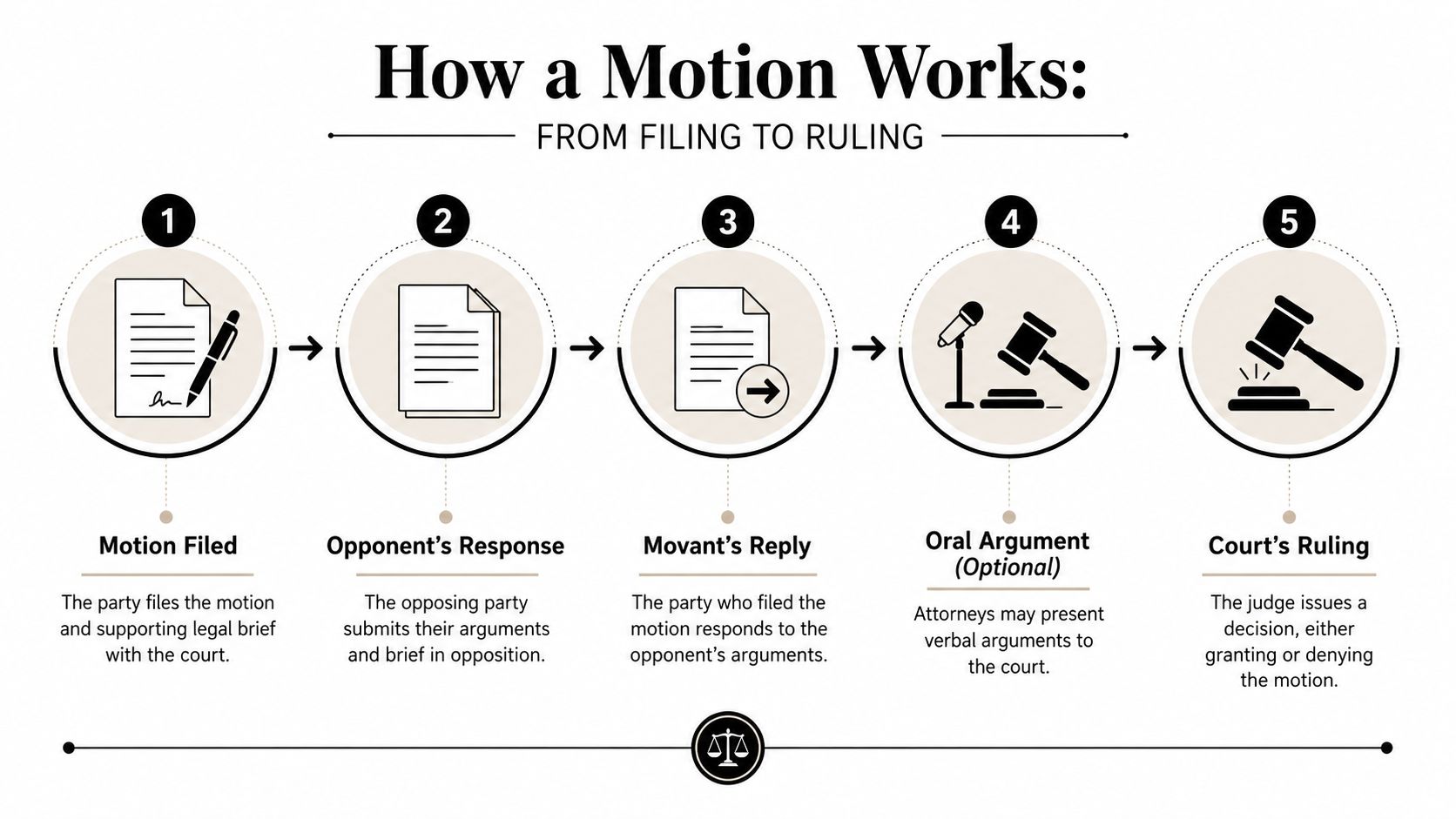
A motion can feel abstract until you see the path it follows. A lawyer does not just drop a request into the court file and wait. The process moves in stages, and each stage gives the other side a chance to answer, narrow the issue, or push back. In federal court, many discovery motions also require a good-faith effort to resolve the dispute without court action under Federal Rule 37(a)(1), which is one reason motion practice and negotiation are so closely connected SDNY motions guide.
The basic path
- Motion filed. Your lawyer submits the motion and the supporting brief.
- Response filed. The other side files a written opposition.
- Reply filed. Your lawyer can answer the defense arguments.
- Oral argument, sometimes. The judge may hear from both sides in court.
- Order issued. The judge rules in writing, granting, denying, or partly granting the request.
Each step matters because the judge is not filling in blanks. The court reads the papers, checks the rules, and decides whether the request fits the law and the local procedure. For a Colorado personal injury client, that means a motion can shape more than paperwork. It can shape what evidence comes in, what claims stay alive, and how much pressure the defense feels while settlement is still on the table.
Local rules matter too. Colorado motion practice follows state procedural rules in state court, while federal cases follow the Federal Rules of Civil Procedure. A motion can sound persuasive and still fail if the filing, service, or deadline rules are wrong. For a client, that is a reminder that motion practice depends on writing, timing, and rule compliance working together Colorado and federal motion practice overview.
When a motion is prepared well, it often shows the court that the lawyer is organized, credible, and ready to litigate. That can matter just as much as the argument itself.
A well-timed motion can do more than win a ruling. It can tell the other side that delay will not work.
When a motion relies on expert testimony to establish facts, the expert's report becomes part of the record. For readers who want to understand how experts build sworn factual support, this explainer on forensic pathology for legal cases is a useful example of how expert evidence supports the court file.
Using Motions to Strengthen Your Position for Settlement
Motion practice isn't just about courtroom mechanics. It can change the settlement conversation in a very real way. When a motion narrows a defense theory, the insurance company has fewer places to hide. When a motion to compel forces out records, video, or other evidence, the defense loses control over information that may have been helping it stall. That shift in pressure can be enough to move a case off the sidelines and into serious negotiation.
Colorado injury clients often feel the settlement process is a waiting game. Motion practice changes that because it creates decisions. A judge's ruling can weaken a denial, expose a gap in the defense, or show that the case is moving toward a place where trial risk is becoming real. That's why motions and settlement strategy are linked so closely.
A good motion doesn't just ask for a ruling. It sends a message. It tells the other side that the file is being developed carefully, deadlines are being watched, and the facts are being pushed into a format the court can use. That matters when an insurer is deciding whether to hold firm or make a better offer.
For a closer look at how settlement pressure is built on the front end of a claim, this guide to a settlement demand letter shows how the evidence and legal arguments start shaping negotiation long before a trial date is set.
Your Role and What Your Attorney Is Handling
Most of motion practice happens behind the scenes. Your lawyer researches the law, drafts the brief, checks the court rules, and decides whether the motion is worth filing. If there's a hearing, your attorney argues the issue to the judge. Your job is different. You help by giving complete information, signing requested documents on time, and answering questions quickly when the facts need clarification.
That division of labor protects you from being buried in procedure while your case is active. It also means you can stay focused on treatment, work, and family, while your legal team handles the filings and deadlines. If a motion depends on medical records, accident photos, or a timeline of symptoms, your lawyer may ask for details to make the record accurate and persuasive.
The best motion practice also depends on the right experts and supporting records. In serious injury and wrongful death cases, that can include medical evidence, liability documents, and a clear factual story tied to the legal issue. If you're trying to understand how that kind of factual support gets built, this resource on depositions in a lawsuit helps explain how sworn testimony fits into the larger case.
Your lawyer should keep you updated at the important points, especially when a motion could affect settlement advantage or trial timing. You shouldn't have to guess what just happened in court. Clear communication is part of good representation, and motion practice is one of those places where timing and explanation matter just as much as the filing itself.
Your Motion Practice Questions Answered
A Colorado injury case can feel slow until a motion changes the pace. One filing can force the other side to explain its position, or it can give the judge a clean way to sort out a legal dispute before trial. That matters because each decision can affect how much pressure the defense feels, how much risk both sides see, and how your settlement talks unfold.
Does filing a motion mean my case will take longer? Sometimes it does, because a motion adds a response period and then a ruling from the judge. In a case built around medical treatment, fault, and damages, that extra time can still serve a purpose if it exposes weaknesses in the defense, narrows the issues, or improves your bargaining position. Sometimes a little delay creates more clarity.
Will motion practice increase the cost of my case? It can, because lawyers have to draft briefs, review the rules, research the issue, and sometimes appear in court. The key question is whether that work helps your claim or prevents a bigger setback later. In many injury matters, a focused motion is not wasted effort, it is part of building pressure in the case and protecting the value of your claim.
Is motion practice different in federal court and Colorado state court? Yes. The timing, formatting, and response rules can change depending on where the case is filed. Federal cases follow the Federal Rules of Civil Procedure, while Colorado state courts follow the Colorado Rules of Civil Procedure. For a general motion practice rules overview, the basic idea is the same, but the details have to match the court's own requirements for filing, service, and deadlines.
If you are injured and trying to understand what all this means for your own case, motion practice is often where the legal pressure becomes visible. A well-chosen motion can protect your claim, improve your position, and show the other side that the case carries real risk if it does not settle on fair terms.