The first minutes after a truck wreck don't feel organized. They feel loud, fast, and unreal.
You may be sitting on the shoulder of I-70 or I-25, hearing metal tick as it cools, watching traffic keep moving while your own life has suddenly stopped. Your child may be crying in the back seat. Your spouse may keep saying they're fine, even though you can see they aren't. You may already have a call from an insurer before you've even had time to process what happened.
That is the reality many Colorado families face after a collision with a semi-truck. These crashes are different from ordinary car wrecks in one basic way. The harm is often much more severe, and the legal issues are usually much more complicated. In the United States, large truck crashes caused 5,837 deaths in 2022, and 83% of those killed were occupants of other vehicles, not the truck itself. Large trucks were involved in 9% of all fatal crashes that year, which helps explain why these cases often involve devastating injuries and layered liability, according to this truck crash statistics summary citing NHTSA data.
If you're looking for an 18 Wheeler Accident Lawyer in Colorado, you probably don't need slogans right now. You need calm direction. You need to know what to do today, what mistakes to avoid, and how to protect your family before evidence disappears and the trucking company shapes the story first.
The Moments After a Truck Crash
The scene after a truck collision rarely looks like a normal accident. Lanes are blocked. Cargo may be scattered. Fire crews and state patrol officers move quickly because they know these wrecks can involve fuel, hazardous conditions, crushed passenger compartments, and multiple vehicles.
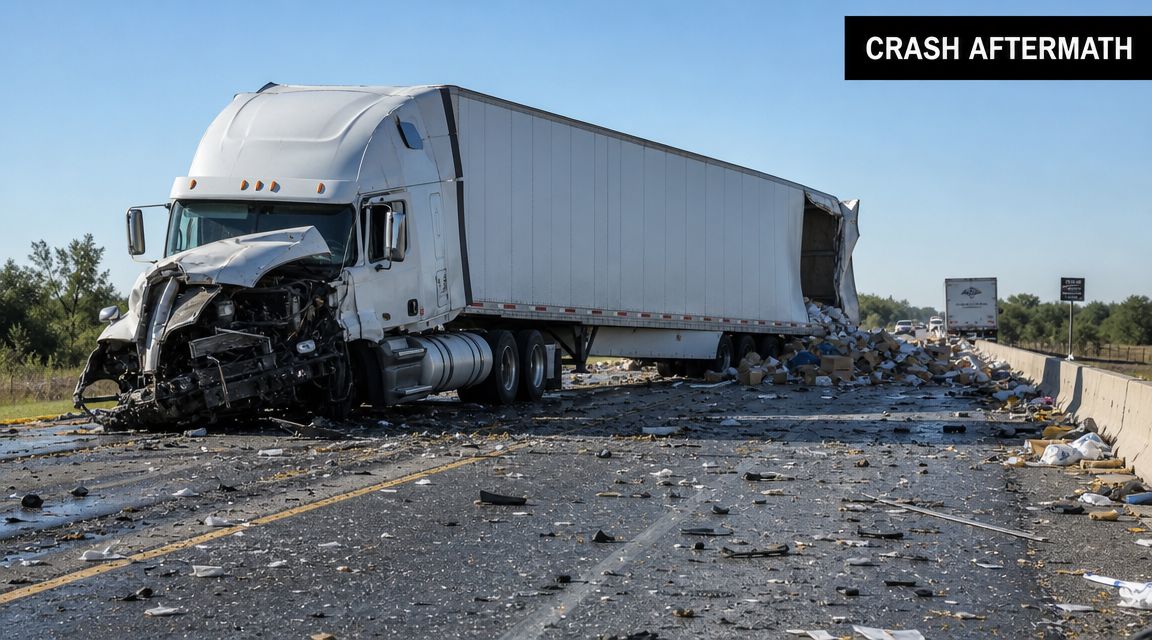
Families often remember fragments. The impact. Airbags. The smell of coolant or smoke. A truck cab towering over a crushed sedan. Then comes confusion. Who was at fault? Was the truck driver exhausted? Did the trailer drift? Was the truck even properly maintained?
That uncertainty matters because a truck wreck usually isn't investigated like a fender bender. The facts may sit in a police report, witness statements, dispatch records, dashcam footage, electronic logs, and vehicle data. If you've never dealt with a serious crash before, even getting oriented can feel impossible. Reviewing how to read a police accident report can help you understand the basic record, but it won't tell the whole story in a trucking case.
Why these cases feel different
A collision with a commercial truck often leaves a family dealing with several crises at once:
- Medical shock: Someone may say they're okay and then worsen hours later.
- Financial fear: You may already be thinking about missed work, hospital bills, and vehicle loss.
- Pressure from insurers: Calls start early, sometimes before you even know the diagnosis.
- Unanswered questions: There may be more than one responsible party, and that changes everything.
Trucking cases are often won or lost in the first days, not because the law changes, but because evidence does.
What families need most
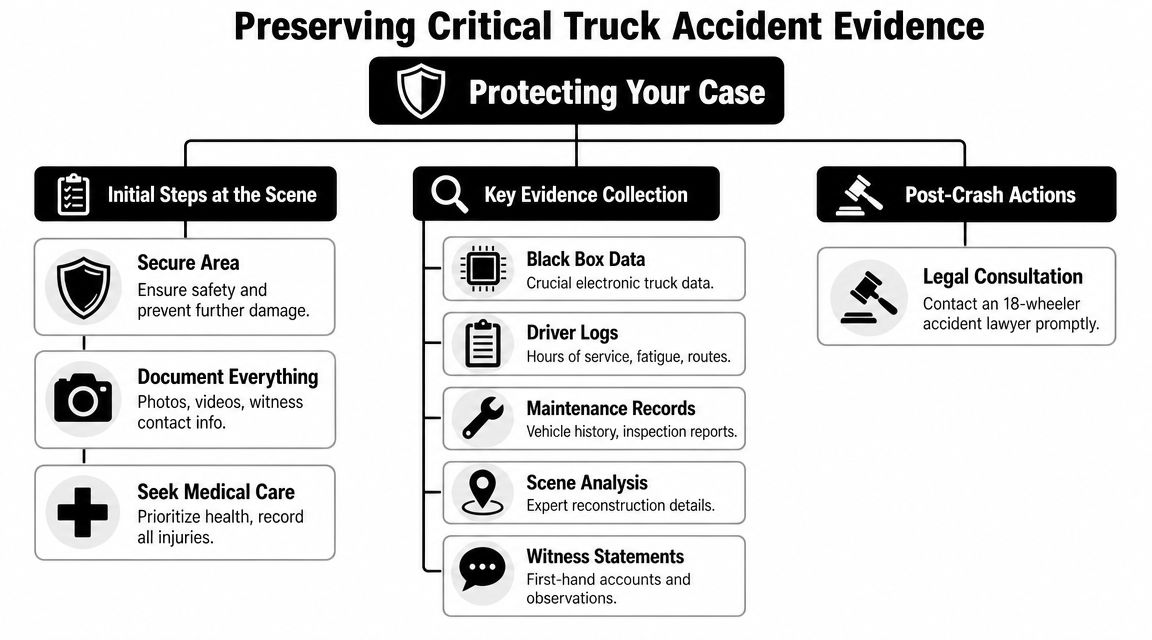
You don't need to solve the whole case at the roadside. You need a short list of priorities. Safety first. Medical care next. Then documentation and protection. A strong 18 wheeler accident lawyer steps in to preserve evidence and take pressure off your family, but the first moves still matter.
Your First Priorities for Safety and Health
In the hours after a truck crash, individuals make decisions while they're scared, hurting, and exhausted. That's why simple priorities matter.
Start with your body, not the claim
Get medical attention right away. If paramedics recommend transport, take it seriously. If you aren't taken from the scene, get evaluated the same day or as soon as you can. Truck crashes can cause injuries that aren't obvious at first, especially head injuries, internal injuries, soft-tissue trauma, and spinal problems.
Delayed treatment creates two problems. First, your condition may get worse. Second, the insurer may later argue that your injuries weren't serious or weren't caused by the wreck.
Practical rule: If something hurts, feels strange, or worries you, get it checked and make sure it is documented.
What to do at the scene if you're able
If you're physically able and it is safe to do so, focus on a few concrete tasks:
Call 911 and wait for law enforcement
A truck collision should be formally investigated. Colorado families often need the crash report later for insurance, medical coordination, and legal review.Photograph what you can
Take wide shots and close-ups. Include vehicle positions, damage, skid marks, debris, road conditions, lane markings, and any visible company names or USDOT markings on the truck.Get witness information
Independent witnesses matter. A neutral driver or bystander can make a major difference if fault is disputed later.Keep your words short and factual
Give officers the facts as you know them. If you don't know, say you don't know. It's fine to say you're shaken up and need medical care.
What not to do
This part is just as important.
Don't apologize, speculate, or guess. A simple “I never saw him” or “I may have been going too fast” can be used against you even when the full evidence shows the trucking company bears the real fault.
Avoid posting about the crash on social media. Don't share photos with commentary about fault. Don't let an adjuster pull you into a “quick recorded statement” while you're medicated, sleep-deprived, or still learning the extent of your injuries.
When the trucking insurer calls
They often call early because they know truck cases turn on early evidence and early framing. Be polite, but protect yourself.
- Confirm only basic contact information
- Decline a recorded statement
- Do not discuss your injuries in detail
- Do not accept blame percentages or theories
- Do not sign broad medical releases
You can say, “I'm still receiving medical care. I won't give a recorded statement at this time.”
In the first day or two
After the immediate emergency, gather and save:
- Medical paperwork
- Prescription receipts
- Towing and storage information
- Photos of bruising and visible injuries
- Work absence records
- A simple daily symptom journal
That journal doesn't need to be dramatic. Plain notes are better. Trouble sleeping. Dizzy getting out of bed. Back pain when lifting your child. Missed shift. Headache during screen time. Real details make later testimony more credible because they show how the injury affects ordinary life.
Preserving Critical Truck Accident Evidence
Truck cases are evidence cases. Not theory cases. Not advertising cases. Evidence decides whether the claim becomes a strong liability case or a long argument with an insurer.
The biggest mistake families make is assuming the police report captures everything. It doesn't. In a commercial truck crash, key facts may exist in electronic systems and company records that ordinary drivers never have to think about.
What evidence matters most
A strong truck case often depends on records that can show what happened before impact, during impact, and after impact.
Here are some of the most important categories:
- ELD logs: Electronic logging device records may help show hours of service, rest periods, and duty status.
- ECM or black-box data: This can help reconstruct speed, braking, throttle, and other vehicle activity.
- GPS and dispatch records: These may show route timing, movement, and communication pressure.
- Dashcam files: Sometimes the most direct evidence exists on video.
- Maintenance records: Brake work, inspections, tire condition, and repair history can matter.
- Driver qualification and hiring files: These can point to training issues, prior problems, or poor supervision.
- Cargo and loading records: Improper loading can affect braking, rollover risk, and control.
If your case requires technical analysis, an accident reconstruction specialist can help connect physical evidence, scene measurements, and electronic data into a clear explanation of how the crash occurred.
Why speed matters
A key legal strategy is sending immediate preservation demands to stop destruction of ELD logs, ECM or black-box downloads, GPS data, and dashcam files, because this time-sensitive electronic evidence can be overwritten and may be vital to reconstruction, as explained in this discussion of preservation demands in truck accident litigation.
That preservation demand is often called a spoliation letter. It tells the trucking company and related parties to preserve evidence, not destroy it, overwrite it, repair it away, or “lose” it in routine business handling.
What a preservation letter is supposed to do
A well-prepared preservation demand usually puts several parties on notice, not just the truck driver.
It may direct preservation of:
| Evidence category | Why it matters |
|---|---|
| Electronic logs and downloads | Helps verify driving time, speed, braking, and activity |
| Vehicle inspection and maintenance records | Helps uncover unsafe equipment issues |
| Dispatch and communication records | May reveal scheduling pressure or route instructions |
| Driver file materials | May show training, screening, or supervision problems |
| Video and scene materials | Preserves visual proof before it disappears |
What works and what doesn't
What works is immediate, targeted action. The scene is documented. Medical care is underway. Preservation demands go out quickly. The truck, trailer, and data are identified before records vanish into corporate systems.
What doesn't work is waiting until treatment is nearly done and then trying to “look into the truck stuff.” By then, the strongest advantage may be gone.
In a serious truck case, evidence preservation isn't paperwork. It's damage control.
How to Choose the Right 18 Wheeler Accident Lawyer
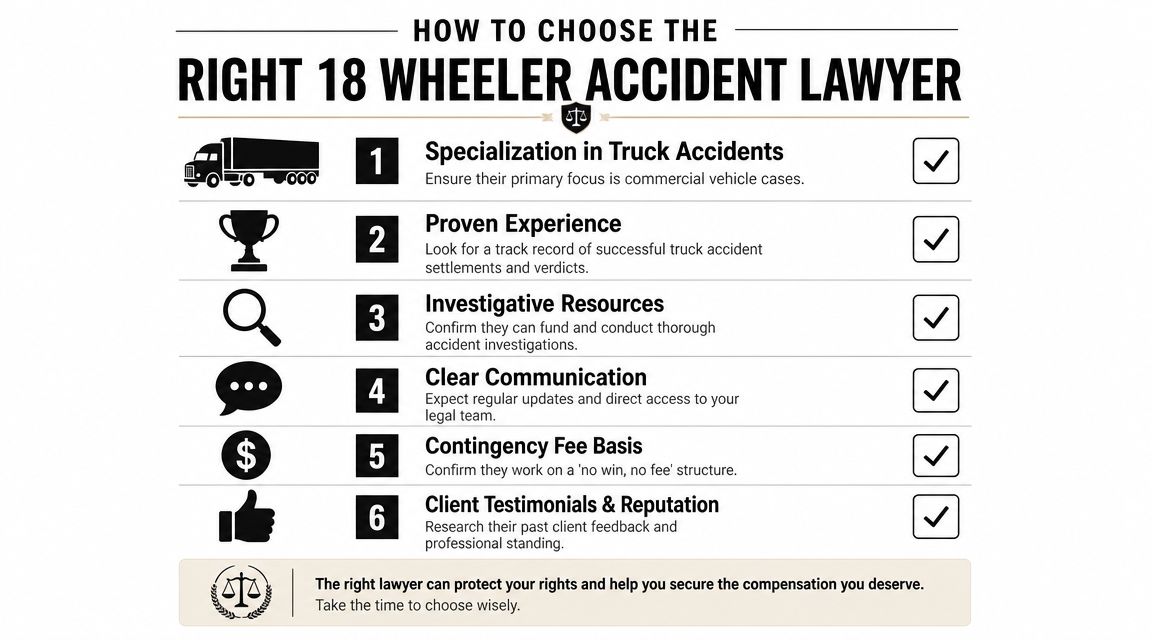
Choosing an 18 wheeler accident lawyer isn't about finding the loudest commercial or the biggest billboard on the highway. It is about finding counsel who can handle a technically demanding case while your family is under pressure.
A general personal injury lawyer may be capable in many areas and still not be the right fit for a trucking case. Commercial truck claims often require federal regulation analysis, expert coordination, and a willingness to litigate if the defense refuses to deal fairly.
Start with capability, not marketing
Truck injury lawyers commonly work on a contingency fee, often around 33% of the recovery. The better indicator of value is not the fee percentage. It is whether the lawyer can use accident reconstruction, medical experts, and federal trucking regulation analysis to build a strong case, as explained in this review of how to evaluate a truck accident lawyer.
That means your consultation should focus on substance. Ask how the lawyer investigates these cases. Ask who they retain. Ask whether they try cases. Ask how they identify all available insurance.
Colorado families often benefit from reading more than one framework before hiring counsel. A practical outside resource is this guide for accident victims seeking counsel, which helps you think through questions about fit, communication, and case handling.
Questions worth asking in a consultation
Don't worry about sounding too demanding. This is your case and your future.
Ask things like:
How soon will you send preservation demands?
If the answer is vague, that's a problem.Who handles the investigation?
Some firms sign the case and then outsource nearly everything.Do you work with reconstruction and medical experts?
In truck cases, expert support often matters.Have you handled claims involving multiple commercial defendants?
Trucking company, maintenance vendor, broker, or another contractor may all be relevant.Who will talk to me regularly?
You need to know whether you'll speak to the lawyer, a case manager, or a call center.
For readers comparing local options, Denver truck accident lawyer resources can help you identify what experience and case focus look like in practice.
Watch for red flags
Some warning signs show up early.
The consultation turns to settlement value immediately
No honest lawyer can responsibly value a serious truck case before understanding liability, injuries, and available coverage.They talk only about the driver
That can signal a shallow investigation approach.They downplay trial readiness
Trucking defendants often negotiate differently when they believe the plaintiff's lawyer won't file suit or try the case.They can't explain federal trucking issues in plain language
You don't need a lecture, but you do need clarity.
A brief video can also help you think through what to look for in counsel before you sign anything.
The right fit feels clear
The right lawyer doesn't rush you. They explain trade-offs. They talk about evidence, deadlines, medical treatment, and communication. They don't act annoyed when you ask practical questions like who pays case costs, how often you'll get updates, or what happens if the insurer denies liability.
If you're considering several firms, compare their answers side by side. In Colorado, some families choose local counsel because the lawyer knows the courts, roads, providers, and adjusters involved. Others need a firm that can coordinate complex trucking evidence and co-counsel arrangements. For example, Nares Law Group LLC handles trucking and serious injury cases in Colorado, including investigation, treatment coordination, negotiation, and trial preparation. What matters most is whether the lawyer has the tools and discipline your case requires.
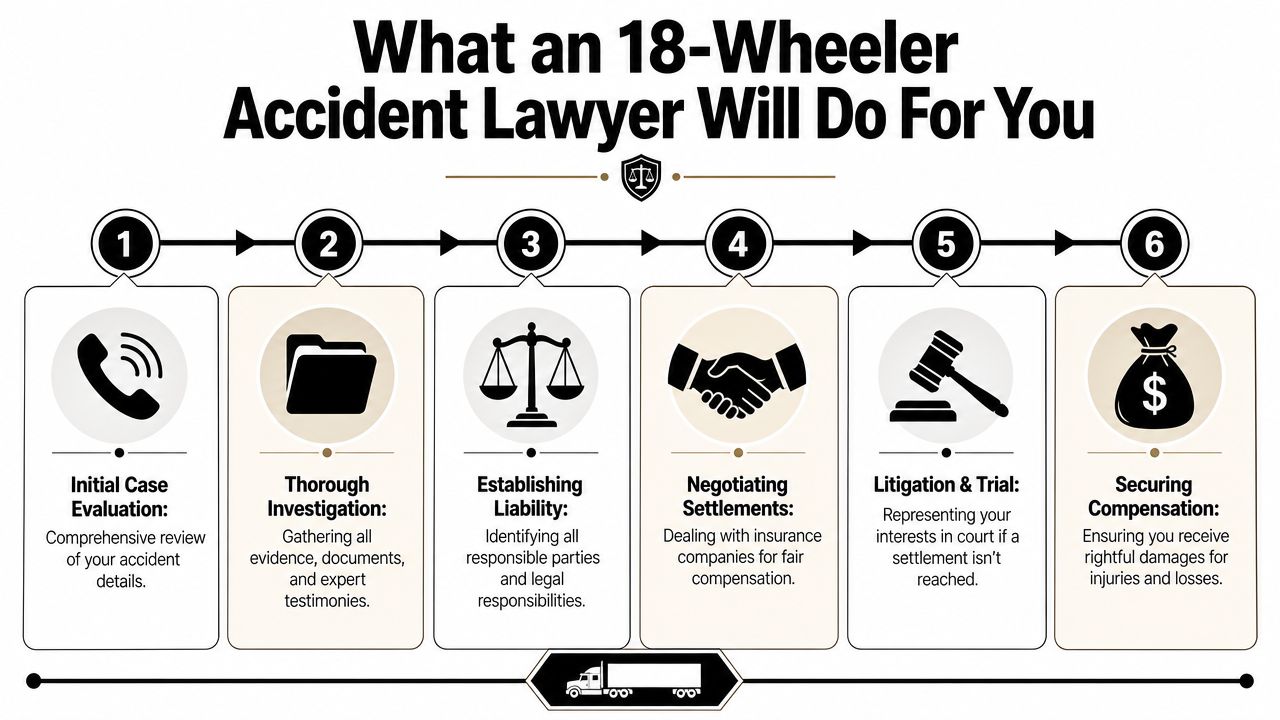
What a Truck Accident Lawyer Will Do for You
Once you hire counsel, your job should get smaller. Your lawyer's job should get much bigger.
A serious truck case involves many moving parts. Medical records need to be organized. the crash needs to be investigated. The right defendants need to be identified. Insurers need to be dealt with carefully. A family in crisis should not be trying to manage all of that alone.
The investigation goes beyond the driver
Liability in commercial truck cases can extend beyond the driver to the trucking company, maintenance contractors, and third-party hiring firms, which is why early investigation into logbooks, ELD data, and maintenance records is critical to identifying all potentially responsible parties and insurance policies, as discussed in this overview of who may be liable in a semi-truck crash.
That broader investigation matters because the driver's mistake may only be the last link in the chain. A lawyer may be looking at whether the carrier pushed unsafe schedules, whether maintenance was skipped, whether a vendor performed poor repairs, or whether another company had control over hiring or dispatch.
Your lawyer should take pressure off your family
One immediate benefit of representation is that insurers and defense representatives stop coming directly to you for the parts that matter most. That changes the tone of the case.
A good truck lawyer will usually handle:
- Insurance communication: So you don't get pushed into damaging statements.
- Record collection: Medical records, billing records, wage records, and crash materials.
- Damage development: Documenting how the injury affects work, family care, sleep, mobility, and future treatment.
- Case strategy: Deciding when to negotiate, when to wait, and when to file suit.
Once you have counsel, you shouldn't be arguing with adjusters from a hospital room or while helping your child get through trauma symptoms.
Building the claim people can actually evaluate
A demand package isn't just a stack of records. It is a case story supported by proof. The strongest demand letters connect liability evidence, medical evidence, and practical losses in a disciplined way. If you want to understand that process better, Ares' insights on demand letters give a useful overview of how lawyers frame injury claims before serious settlement discussions.
That work often includes showing not just that you were hurt, but how the injury changed your daily life. A hand injury may mean missed work for one person and the inability to care for a toddler for another. A concussion may look mild on paper and still disrupt concentration, sleep, mood, and job performance.
Negotiation is only one phase
Families sometimes think hiring a lawyer means the insurer will immediately “do the right thing.” Sometimes they don't. Trucking defendants may contest fault, dispute medical causation, or point to gaps in treatment.
That is why trial readiness matters. Even when a case resolves without a courtroom verdict, the defense usually values the case differently if plaintiff's counsel has built it like a case that can be tried.
Here is the practical sequence most families can expect:
| Stage | What your lawyer is doing |
|---|---|
| Early intake | Securing records, preserving evidence, identifying parties |
| Treatment period | Monitoring medical progress and documenting impact |
| Liability development | Analyzing truck records, scene facts, and witness evidence |
| Claim presentation | Preparing a supported demand and negotiating |
| Litigation if needed | Filing suit, conducting discovery, taking depositions |
| Resolution | Settlement, mediation, or trial |
A good lawyer also helps manage expectations. Some cases should settle earlier. Some shouldn't. Pushing for a fast number before the medical picture and liability picture are ready can leave money and accountability on the table.
Frequently Asked Questions from Colorado Families
How long do I have to file a truck accident lawsuit in Colorado
Colorado deadlines depend on the type of claim and the facts involved. Because missing a filing deadline can destroy a valid case, the safest move is to speak with a Colorado lawyer as soon as possible after the wreck. Waiting is risky, especially when truck evidence may disappear much earlier than the actual lawsuit deadline.
What if the trucking company says I was partly at fault
That doesn't end the case. It means the facts need to be developed carefully. Trucking defendants often raise blame-shifting arguments early. Let your lawyer evaluate the crash report, scene evidence, vehicle damage, and witness accounts before you accept the defense version.
What if I was the truck driver who got hurt
These cases can be more complex. An employed truck driver may have overlapping workers' compensation, employment, and third-party claims, and ongoing federal oversight shows that compliance failures by carriers remain a live issue, which is why lawyer selection matters in these cases, as discussed in this article on truck accident claims involving employed drivers and carrier compliance issues.
In plain terms, you may have rights beyond a workers' comp claim, depending on who caused the crash and who controlled the equipment, maintenance, or trip.
Will I have to pay a lawyer upfront
Usually not in a truck injury case. Most firms handling these claims work on contingency, which means the fee comes from the recovery if the case succeeds. You should still ask about litigation expenses, expert costs, and how those items are handled if the case doesn't resolve in your favor.
Should I talk to the trucking insurer if they seem helpful
No. Be courteous, but do not give a recorded statement or discuss your injuries in detail without legal advice. Early calls often sound friendly because the insurer wants information before the full medical and liability picture is clear.
How long will the case take
There isn't one honest answer for every family. A case with disputed fault, serious injuries, multiple defendants, or ongoing treatment usually takes longer than a straightforward property-damage claim. The right pace is the pace that protects the value of the case and the long-term needs of the injured person.
If your family is dealing with the aftermath of a truck wreck in Colorado, Nares Law Group LLC offers free consultations to help you understand your options, protect critical evidence, and make informed decisions about medical care, insurance pressure, and next steps.