The hours after a serious crash rarely feel organized. You may be in pain, your phone may already be buzzing with insurance calls, and every form seems to demand an answer before you've had time to think. If the injury is severe, especially in a trucking collision or a case involving a traumatic brain injury, the pressure gets worse fast.
That's when many people start searching for a lawyer and end up staring at a wall of polished websites, bold promises, and smiling headshots. Everyone seems experienced. Everyone says they fight. Everyone claims to care.
The problem is that not every personal injury lawyer handles cases the same way. Some firms build their business around quick intake, quick negotiation, and quick turnover. Others prepare a case from day one as if it may need to be tried in court. If you're trying to learn how to find a good personal injury lawyer, that difference matters more than is often realized.
The First Step After an Accident Is Finding Your Advocate
After a wreck, it's often believed that the first job is paperwork. It isn't. Your first job is protection.
That means protecting your health, your timeline, your evidence, and your rights. A good lawyer becomes the person standing between you and the machinery that starts moving right after an accident. Insurance adjusters, recorded statement requests, vehicle inspections, medical billing confusion, employer paperwork. None of that slows down just because you're overwhelmed.
For practical guidance in those early hours, this overview of steps to take after a car accident is worth reading alongside any legal consultation. If you're still sorting through immediate next moves, tools like Algomizer personal injury solutions can also help you organize information and identify useful resources while you decide who should represent you.
What people get wrong in the first week
A lot of injured people assume they have time to figure the lawyer question out later. Sometimes that works. In higher-stakes cases, it can hurt the case before it ever gets moving.
In a trucking case, the scene changes quickly. Vehicles get repaired. Data can disappear. Witness memories fade. In a brain injury case, the injury itself may not be obvious to other people at first, which makes documentation even more important. Waiting too long can turn a strong case into a harder one.
Practical rule: If the injury is serious, the vehicle damage is substantial, or a commercial vehicle is involved, treat the lawyer search as part of your medical recovery, not as a separate task.
You're not hiring a form-filler
You're hiring someone to make decisions under pressure.
A good personal injury lawyer should know when to push, when to hold, what evidence matters, and what shortcuts will cost you later. Consider the analogy of hiring a surgeon. You don't just want someone with an office and a nice website. You want someone who's handled your kind of problem before and knows what can go wrong.
That's why this choice is bigger than signing a contingency contract. You're choosing the person who will frame your case, speak for you, and decide whether the insurer sees real risk or an easy file to close.
Building Your Shortlist of Potential Lawyers
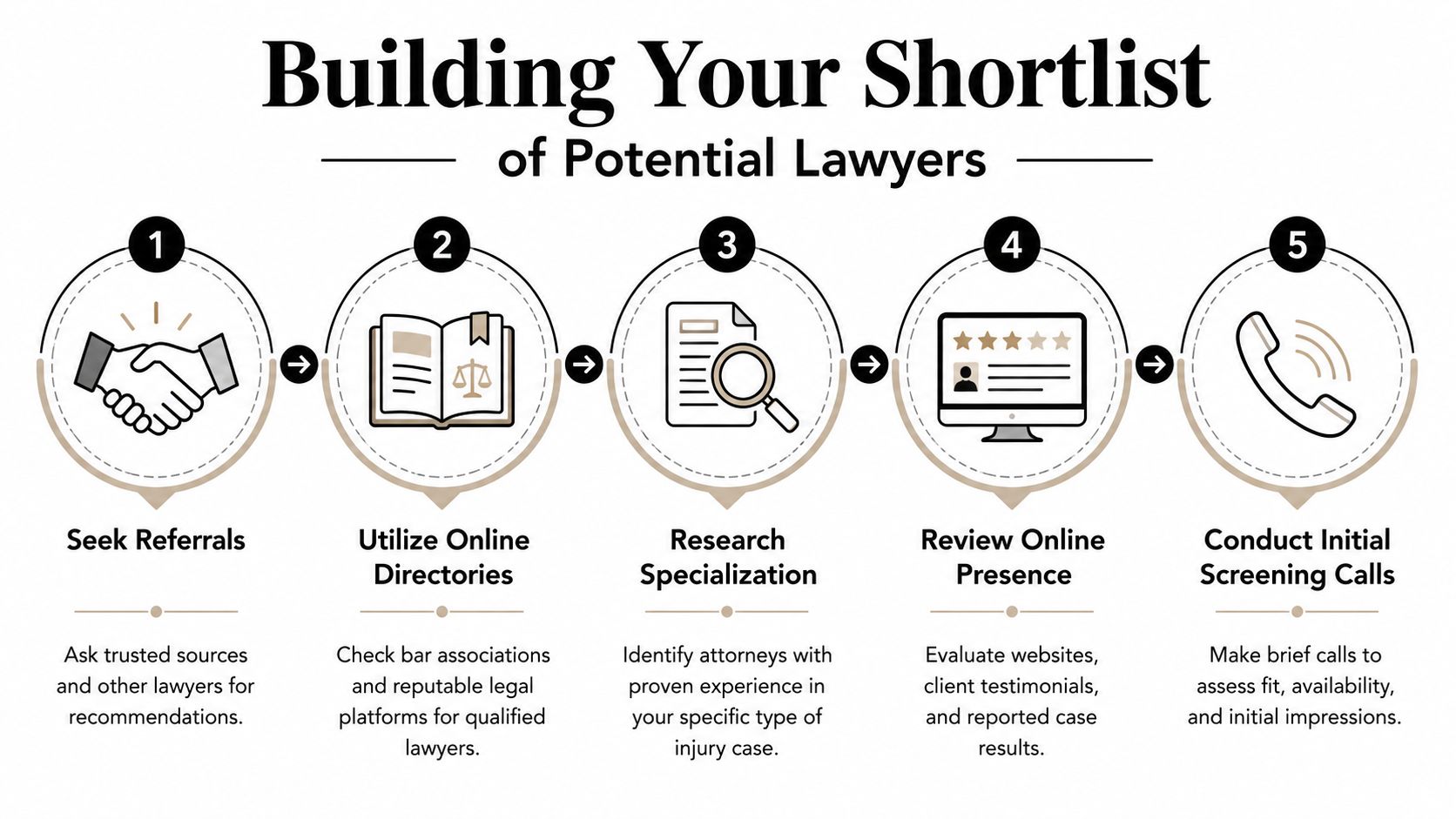
The initial search often begins online, and that's normal. Over 70% of consumers begin their search for a personal injury lawyer through online methods, including Google searches and legal directories, and nearly 60% say they rely on peer reviews from independent platforms to assess a lawyer's reputation according to Crary Buchanan's discussion of finding the best personal injury lawyer. The useful part of that same guidance is the conclusion. A multi-source vetting process works better than relying on one website, one ad, or one review page.
Start with names from more than one place
The strongest shortlist usually comes from a mix of sources, not a single search result.
- Ask people who've had a real claim: A friend, coworker, or family member who had to deal with a lawyer through treatment, negotiation, and case closure can tell you far more than an ad can.
- Ask another lawyer: Even if that lawyer doesn't handle injury cases, lawyers usually know who litigates and who mainly signs cases and moves them elsewhere.
- Use legal directories carefully: Avvo, Martindale-Hubbell, and similar platforms are helpful for identifying licensed attorneys and comparing profiles, but they should be one layer of research, not the whole process.
Verify before you trust
A good website doesn't prove competence. It proves someone invested in a website.
Use your state bar website to confirm the lawyer is licensed and to check for disciplinary issues. That step is not glamorous, but it's basic due diligence. If a lawyer's record raises questions, keep looking.
Then review the firm's own site with a skeptical eye. Look for specifics. Does the lawyer talk about the kinds of cases you have, such as trucking collisions, catastrophic injuries, or brain injury litigation? Or is the content broad and interchangeable?
Marketing visibility and legal strength are not the same thing.
Read reviews like a juror, not a shopper
Don't focus only on star ratings. Read for patterns.
A useful review often says something concrete about communication, preparation, honesty, or how the firm handled delays and stress. A less useful review only says the lawyer was “great” or “amazing” without any detail. You're trying to spot consistency in how clients were treated.
Here's a simple filter:
| What to look for | Why it matters |
|---|---|
| Comments about returned calls | Shows whether the firm communicates during long cases |
| Mentions of honesty about risks | Suggests the lawyer doesn't overpromise |
| References to staff involvement | Helps you see who actually runs the file |
| Case-type detail | Tells you whether the reviewer had a similar matter |
Keep the shortlist tight
You don't need a list of ten firms. You need a short list of credible candidates you can evaluate.
Three strong consultations usually tell you much more than hours of scrolling. By then, you should know who seems prepared, who seems polished, and who seems built for the kind of case you have.
How to Vet an Attorney's True Expertise
The hardest part of this process is separating a real trial lawyer from a settlement mill.
A settlement mill is a firm built around volume. It may sign a large number of cases, move them through a standardized process, and aim for resolution before deep litigation work begins. That approach can produce quick movement in some smaller claims. In a complex trucking case or traumatic brain injury case, it can leave value on the table because the firm never develops the case thoroughly enough to create real pressure.
By contrast, a trial lawyer treats the case like a file that may need sworn testimony, expert work, contested motions, and a courtroom. That changes how the case is investigated from the start.
The trial question matters more than most clients realize
Approximately 95% of personal injury cases settle, but only about 4% to 5% of personal injury attorneys take cases to trial, according to this Avvo discussion on finding out a personal injury attorney's trial record. That matters because the threat of trial often drives settlement value.
Insurance companies evaluate lawyers the way good chess players evaluate opponents. They don't just study the board. They study whether the person across from them will make the hard move. If the insurer believes your lawyer won't push the case into litigation, early offers tend to reflect that.
Questions that expose the difference
Ask direct questions. Then listen for direct answers.
- How many cases like mine have you handled? “Like mine” matters. A rear-end collision is not the same as an underride trucking case. A soft-tissue claim is not the same as a brain injury with cognitive symptoms.
- How many similar cases have you taken to trial in the past year? This gets past vague statements about being “trial ready.”
- Who will handle my case day to day? If the answer is unclear, that's a warning sign.
- At what point do you file suit if the insurer won't be reasonable? A lawyer with real litigation habits usually answers this with a process, not a slogan.
- What problems do you see in my case right now? Honest lawyers spot risk. Salespeople skip it.
For readers comparing firms in Colorado, this page on working with a Denver personal injury attorney gives a useful local frame for what serious representation should involve.
Don't confuse marketing strength with case strength
Some firms look dominant online because they understand lead generation, branding, and search visibility. That says something about business development. It does not, by itself, say anything about courtroom ability. If you want to understand how firms build that online presence, Netco Design LLC's marketing insights give a helpful behind-the-scenes look at how law firm visibility is created.
That's not a criticism of marketing. It's just a reminder not to mistake reach for depth.
A lawyer's homepage tells you how the firm wants to be seen. Their answers to hard questions tell you how they actually practice.
What strong expertise looks like in a high-stakes case
In trucking and brain injury cases, expertise usually shows up in habits.
A strong lawyer asks early about vehicle ownership, carrier relationships, black-box data, scene evidence, prior treatment history, and symptom progression. They understand that a brain injury case may involve subtle deficits that don't fit neatly into routine records. They know some trucking cases require immediate action to preserve key evidence.
That kind of detail is hard to fake in consultation. You'll hear it if it's there.
Preparing for the Initial Consultation
The consultation isn't an audition where you hope the lawyer picks you. It's a job interview, and you're the one hiring.
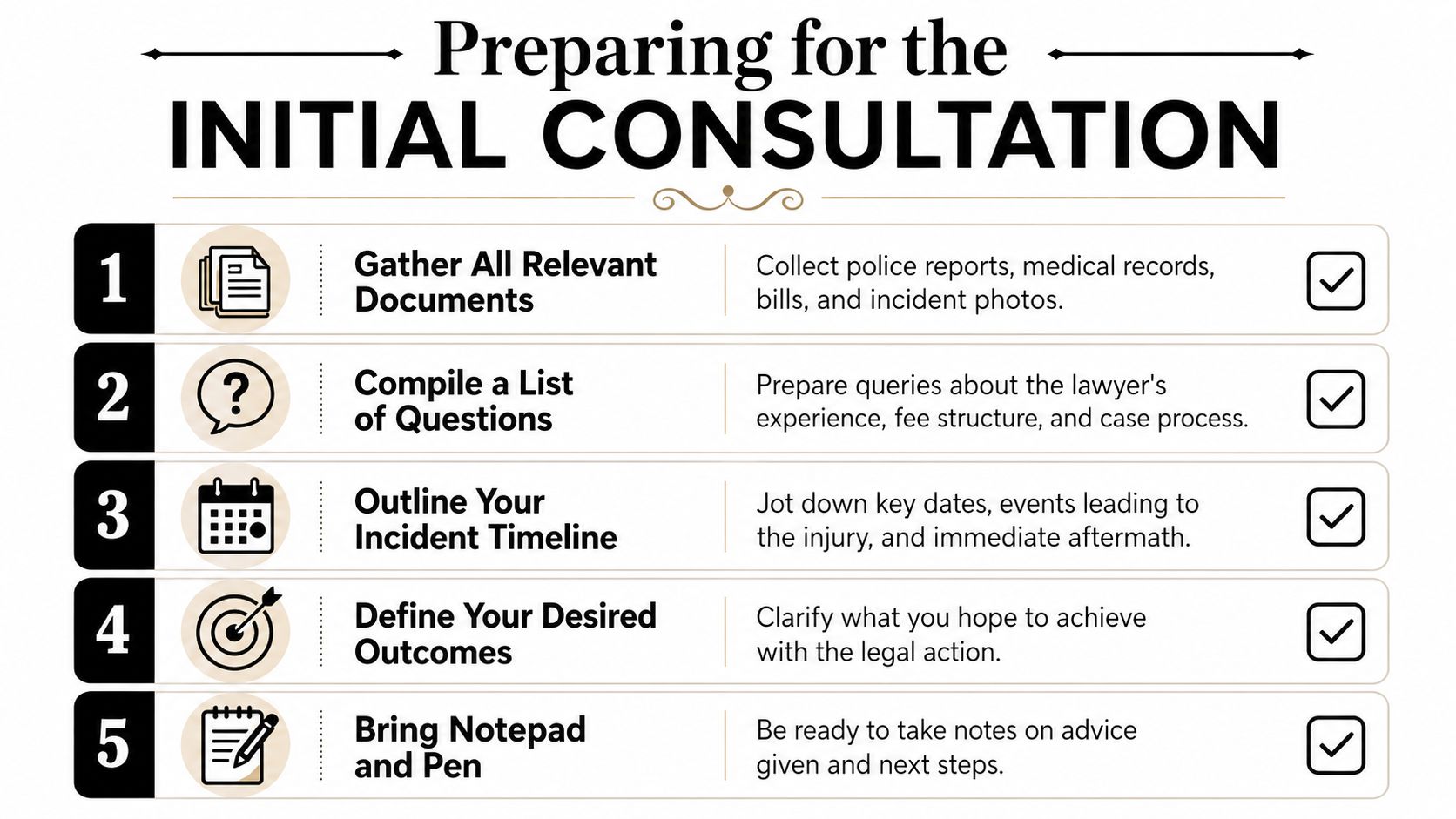
Come prepared. The better organized you are, the more useful the meeting becomes. You don't need a perfect binder. You do need the core facts in one place so the lawyer can spend time analyzing the case instead of trying to reconstruct the timeline from memory.
Bring the materials that actually help
Bring what you have. Don't delay the consultation because you're missing one record.
Useful items often include:
- Crash or incident report: If law enforcement responded, bring the report or report number.
- Photos and video: Scene photos, vehicle damage, visible injuries, road conditions, and any relevant screenshots.
- Medical information: Discharge papers, visit summaries, imaging reports, work restrictions, medication lists, and bills.
- Insurance correspondence: Letters, claim numbers, emails, and any request for a recorded statement.
- Wage information: Missed work notes, pay stubs, or employer communications if income loss is already an issue.
Prepare your story in timeline form
Lawyers assess cases through sequence. What happened first, what changed after the crash, and what happened next.
A one-page timeline is often more helpful than a stack of unsorted paperwork. Include the date of the incident, immediate symptoms, first treatment, specialist visits, missed work, and any major change in your condition. If you suspect a brain injury, note memory problems, concentration issues, headaches, sleep changes, balance trouble, and personality changes if they began after the event.
A short video may also help you think through what to ask before the meeting:
Ask questions that reveal process, not personality alone
A lawyer can be warm, confident, and still be the wrong fit. Ask about mechanics.
Consider asking:
What is your first move in a case like this?
This shows whether the lawyer thinks strategically from the beginning.Will you personally handle litigation if the case doesn't settle?
Some firms sign the case but shift serious work elsewhere.What records or evidence do you think matter most here?
You want to hear case-specific thinking.How often should I expect updates, and from whom?
Communication systems matter.What could make this case harder?
Honest answers build trust faster than polished promises.
The best consultations usually feel less like a sales pitch and more like a careful diagnosis.
Notice what happens when you ask a difficult question
This matters.
If the lawyer becomes evasive when you ask who will manage the file, or gives a fuzzy answer about litigation, believe what you're seeing. Good attorneys don't need to dodge basic process questions. They answer them plainly.
Also pay attention to whether the lawyer listens. A rushed consultation often predicts a rushed case experience. You want someone who can explain legal issues in ordinary language without talking down to you.
Decoding Fee Structures and Spotting Red Flags
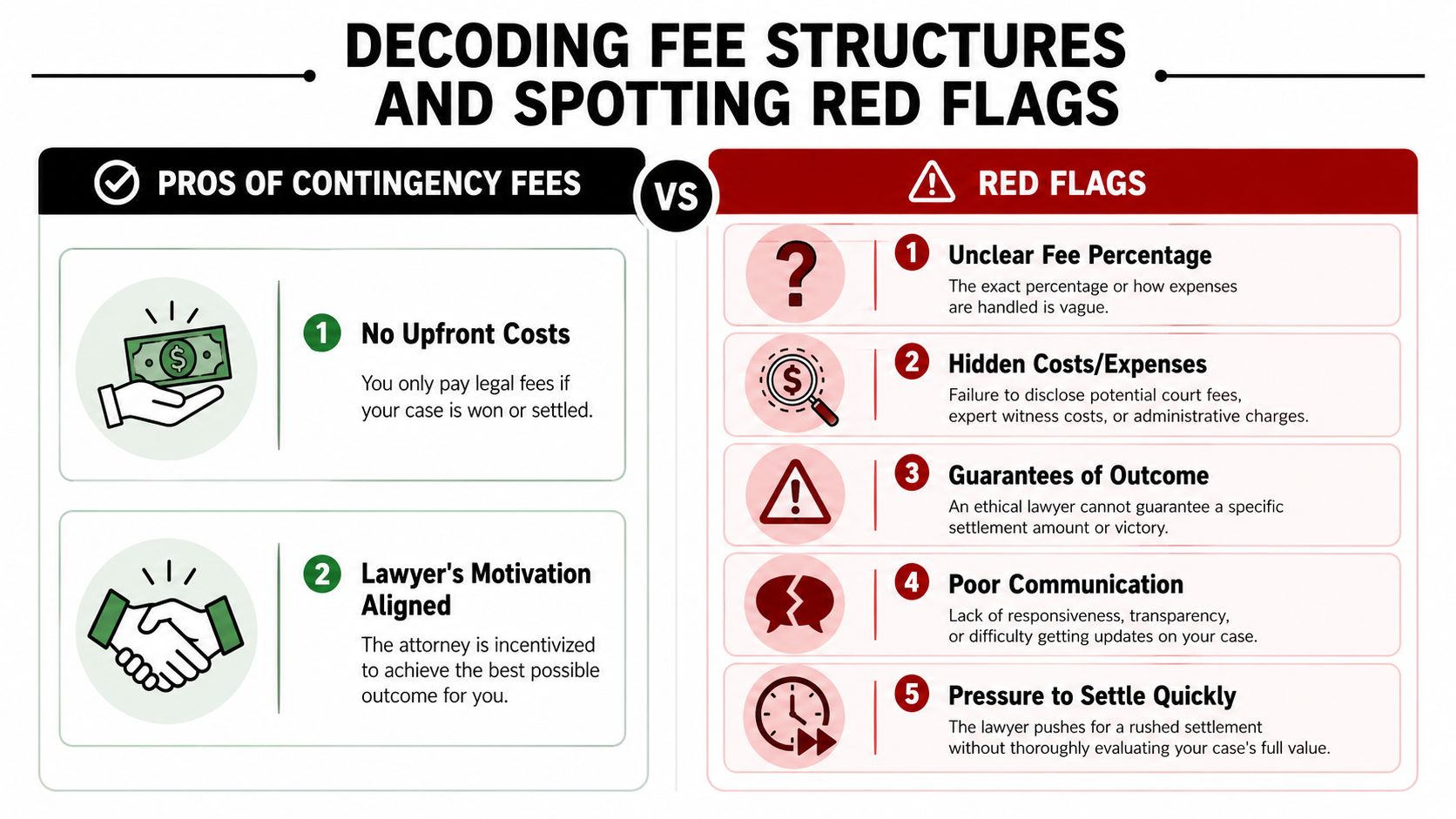
Most personal injury lawyers work on a contingency fee. That generally means the lawyer's fee is paid from a recovery rather than billed upfront. But that phrase alone doesn't tell you enough.
The key question is what the contract says about fees, costs, scope, and responsibility. Those are not small details. They define the relationship.
What to read before you sign
A written agreement should spell out what services the firm is providing, what percentage applies, and how case expenses are handled. According to Best Lawyers on how to choose a personal injury lawyer, a critical pitfall is fee structure ambiguity, and that risk is best reduced by comparing up to three professionals and reviewing all contract terms for clarity before signing.
That advice is practical because many clients focus on the headline promise and skip the fine print.
For a fuller explanation of common billing terms, this guide to personal injury lawyer fees can help you know what to look for in the contract language.
Fees and costs are not the same thing
This distinction trips people up.
A fee is the lawyer's compensation. Costs are case expenses. Those can include filing fees, record charges, investigator work, deposition expenses, expert review, and similar out-of-pocket items tied to building the case. The contract should explain whether the firm advances those costs, how they are reimbursed, and what happens if there is no recovery.
Use this quick comparison when reviewing an agreement:
| Contract term | What you should look for |
|---|---|
| Fee percentage | Clear statement of when it applies |
| Litigation costs | Who advances them and how repayment works |
| Scope of representation | Whether the agreement covers negotiation, suit, trial, appeal, or only part of the case |
| Responsible attorney | The person or team primarily handling the file |
Red flags that should slow you down
Some warning signs are obvious. Others are subtle.
- Guarantees about results: No ethical lawyer can promise a specific outcome or settlement amount.
- Pressure to sign immediately: If the firm won't give you space to read the agreement, that's a problem.
- Vagueness about who handles the case: If you can't identify the responsible lawyer, expect confusion later.
- Poor communication before you hire them: It usually doesn't improve after you sign.
- Push for a quick settlement before your treatment picture is clear: That can signal a volume model rather than a case-value model.
If the contract is hard to understand and the answers stay vague after you ask follow-up questions, keep shopping.
A good lawyer shouldn't be offended by careful questions about money. Clear fee discussions are a mark of professionalism, not distrust.
Making the Final Decision and What Comes Next
By the time you've done the research and attended the consultations, the choice usually narrows on its own. One lawyer sounds polished but generic. One feels attentive but hesitant. One gives you clear answers, sees the pressure points in the case, and explains the path forward without theatrics.
That last quality matters. You are not choosing the person who sounds the most confident in the room. You are choosing the person who combines judgment, honesty, and follow-through.
Use a simple final test
When clients are torn between two good candidates, I suggest a practical comparison. Ask yourself these questions:
- Who understood my specific case fastest?
- Who answered difficult questions directly?
- Who seemed ready for litigation, not just negotiation?
- Who explained the process in a way I could follow?
- Who made me feel informed rather than managed?
If you're dealing with a truck wreck, catastrophic injury, or traumatic brain injury, give extra weight to depth and readiness. Those cases can look manageable early and become much more complex once records, experts, and long-term effects come into focus.
What should happen after you hire the lawyer
The first phase after signing should feel organized.
A strong firm usually begins by notifying the insurance companies and relevant parties that you're represented. The team should start gathering records, preserving evidence, identifying witnesses, and mapping medical treatment. In more serious cases, the lawyer may also take steps to secure material that could disappear if nobody acts quickly.
You should also learn the communication system early. Know who your point of contact is, how updates are usually delivered, and what the firm expects from you. Good representation is a partnership. The lawyer drives legal strategy, but clients still help by sharing treatment updates, new bills, employment issues, and changes in symptoms.
What not to expect
Don't expect a trustworthy lawyer to give you an instant case value on day one. Good lawyers are cautious early because the facts are still developing.
Don't expect every week to feel dramatic, either. Personal injury cases often involve stretches of document gathering, treatment monitoring, and strategic waiting. Quiet periods do not always mean inactivity. What matters is whether the case is moving with purpose.
The right lawyer gives you two things at once. A fighter when pressure is needed, and a guide when the process feels unfamiliar.
If you take one thing from this article, let it be this: learning how to find a good personal injury lawyer is not about finding the loudest firm or the first search result. It's about finding the advocate who can prove they know your kind of case, explain their plan, and carry the matter all the way if the insurer refuses to be fair.
If you or your family are dealing with the aftermath of a serious crash, trucking collision, brain injury, or wrongful death case, Nares Law Group LLC offers compassionate, trial-tested representation focused on clarity, accountability, and full-case preparation. Reach out for a free consultation if you want to talk through your options with a team that understands both the human side of injury cases and the pressure points that matter when outcomes are critical.