The jolt of impact is terrifying enough. But watching the taillights of the other car disappear down the street adds a profound sense of injustice and helplessness. A hit and run in Colorado isn’t just a traffic ticket—it’s a serious crime. Unfortunately, it’s a reality that plays out on our roads with alarming frequency.
The Growing Danger on Colorado Roads
The feeling of being left behind after a hit and run is hard to describe. One minute you’re just living your life—driving, walking, or biking—and the next, you’re injured and alone, watching the person responsible simply drive away. This isn't some rare, freak occurrence; it's a crisis that has been escalating across our state.
This is especially true in Colorado's bigger cities. Think about navigating the busy streets of Denver, only to have your life changed in an instant by a driver who flees the scene. The data is sobering. Fatal hit-and-runs in Colorado actually doubled between 2012 and 2013, a shocking spike that experts quickly labeled a 'hit-and-run epidemic.' During that time, Denver alone saw an average of 17 hit-and-run accidents reported every single day. You can find more data and facts about this alarming trend and what it means for victims.
When a hit and run involves serious injury, the consequences are often catastrophic. About 1 in every 13 hit-and-runs—around 8%—results in devastating trauma that can lead to permanent disability or even death.
Understanding the Real-World Risk
These aren't just statistics. They represent real people—friends, family, and neighbors—whose lives are thrown into chaos. A hit and run turns a simple trip into a nightmare of physical pain, emotional trauma, and overwhelming financial stress.
The risk isn't shared equally, either. Pedestrians and cyclists are by far the most vulnerable. Without the protection of a two-ton steel frame, they suffer the most severe injuries. When a driver flees, they aren't just dodging a ticket. They are delaying the arrival of paramedics and police, turning a serious injury into a potentially fatal one.
The core of a hit and run is the cowardly decision to abandon someone who needs help. A driver who flees is choosing self-preservation over another person’s life and well-being. That’s why the law takes it so seriously.
Why You Need to Be Prepared
With these incidents on the rise, knowing your rights and having a plan is no longer optional. It’s essential for any driver, cyclist, or pedestrian in Colorado. Being prepared can make all the difference in what happens next.
- Your Health and Safety: Knowing what to do immediately after the crash ensures you get the medical care you need, as fast as possible.
- The Search for Justice: The details you remember and the evidence you gather can give law enforcement the crucial leads they need to find the driver.
- Your Financial Recovery: Properly documenting everything from the very beginning is the foundation for getting the compensation you deserve for medical bills, lost income, and repairs.
We've created this guide to help you understand every step of the process, from the initial shock of the crash to the resolution of your case.
What Is Legally Considered a Hit and Run in Colorado?
When you hear "hit and run," you probably picture a car speeding away from a crash. While that’s part of it, the legal definition in Colorado is much more specific. It isn’t just about driving off—it's about failing to complete a very clear set of duties every driver owes after an accident.
Think of it less as a single action and more as a failure to follow a legally required script. Under Colorado law, if you're involved in a collision, you have an immediate responsibility to stop as safely and as close to the scene as you can.
The core of a hit and run in Colorado is the choice to flee without performing these duties. This framework exists for a critical reason: to make sure injured people get help and that everyone involved can exchange the information needed for insurance claims and accountability. Even a minor tap in a parking lot triggers these legal obligations.
A Driver's Post-Accident Legal Checklist
Colorado statutes—specifically C.R.S. § 42-4-1601 and § 42-4-1603—don't leave room for interpretation. They spell out exactly what you must do. Skipping these steps is what turns a simple accident into a criminal offense.
The law requires you to:
- Provide Information: You must give your name, address, and vehicle registration number to the other people involved.
- Show Your License: If asked, you are required to present your driver’s license to the other driver or to any police officer on the scene.
- Render Reasonable Assistance: This is a huge one. You have a legal duty to provide "reasonable assistance" to anyone who is hurt. That often means calling 911 or making sure they have a way to get to a hospital.
Leaving the scene before completing these steps is a hit and run. The law doesn't care if you were in a hurry, panicked, or thought the damage wasn't a big deal. The duty is absolute.
Property Damage vs. Injury: A Critical Distinction
The law draws a razor-sharp line between accidents causing only property damage and those resulting in injury or death. This single factor dramatically changes the severity of the criminal charges a fleeing driver faces.
Picture a driver scraping another car in a tight parking garage. If they just drive away without leaving a note, they've committed a crime. But now imagine that same driver hits a cyclist, who falls and breaks an arm. If the driver speeds off, the legal consequences escalate exponentially.
A hit and run involving only property damage is a Class 2 misdemeanor traffic offense. If the crash causes an injury, it becomes a Class 1 misdemeanor. If someone suffers a serious bodily injury, it’s a Class 4 felony. A hit and run that results in death is a Class 3 felony, which comes with mandatory prison time.
The penalties climb so steeply to reflect the human cost of leaving an injured person behind. Fleeing denies a victim the chance for immediate medical care and makes it incredibly difficult for them to get the compensation they deserve. This is why understanding the specific facts of your case is so important—it will define both the criminal prosecution and your path to a civil recovery. Navigating these claims often starts with knowing the state’s insurance rules; you can learn more about how Colorado’s fault-based system impacts accident claims in our guide.
This table breaks down how quickly the legal stakes can change based on the outcome of the crash.
Colorado Hit and Run Classifications and Penalties
| Type of Accident | Legal Duty | Criminal Classification | Potential Penalties |
|---|---|---|---|
| Property Damage Only | Stop, provide info, report if owner isn't present. | Class 2 Misdemeanor | Fines and potential jail time. |
| Non-Serious Injury | Stop, provide info, render reasonable aid. | Class 1 Misdemeanor | Significant fines and jail time. |
| Serious Bodily Injury | Stop, provide info, render reasonable aid. | Class 4 Felony | Substantial fines and prison time. |
| Death | Stop, provide info, render reasonable aid. | Class 3 Felony | Major fines and mandatory prison time. |
Ultimately, a driver’s decisions in the moments right after an accident will determine their legal fate. Choosing to stay and fulfill your duties is the law; choosing to flee is a crime with consequences that can alter lives forever.
Your Action Plan Immediately After a Hit and Run
The sound of screeching tires fades, replaced by the pounding in your chest. The other car is gone. You’re left stunned, angry, and trying to process what just happened.
In those chaotic first moments, it’s easy to feel helpless. But what you do right now matters immensely. Your actions can protect your health, secure crucial evidence, and start the process of holding the responsible driver accountable. Even with your hands shaking, you need a plan. This is it.
Prioritize Safety Above All Else
Forget the fleeing car. Your first job is to get yourself and anyone with you out of harm's way. If you can, steer your vehicle to the shoulder or into a nearby parking lot, away from moving traffic.
Flip on your hazard lights. If you think you might be hurt, try to stay still and wait for help. Whatever you do, do not chase the other driver. It’s incredibly dangerous, rarely works, and can put you in even more jeopardy.
Call 911 Immediately
Once you are in a safer spot, call 911. This is the single most important step you can take. It gets police and paramedics heading your way and creates the official record you will absolutely need.
Tell the dispatcher you were the victim of a hit and run. Give them your exact location and mention any injuries, no matter how minor they seem at the moment. Adrenaline can mask serious pain.
The driver who fled broke the law by leaving. Their legal duties escalate dramatically depending on the crash's severity, as this flowchart shows.
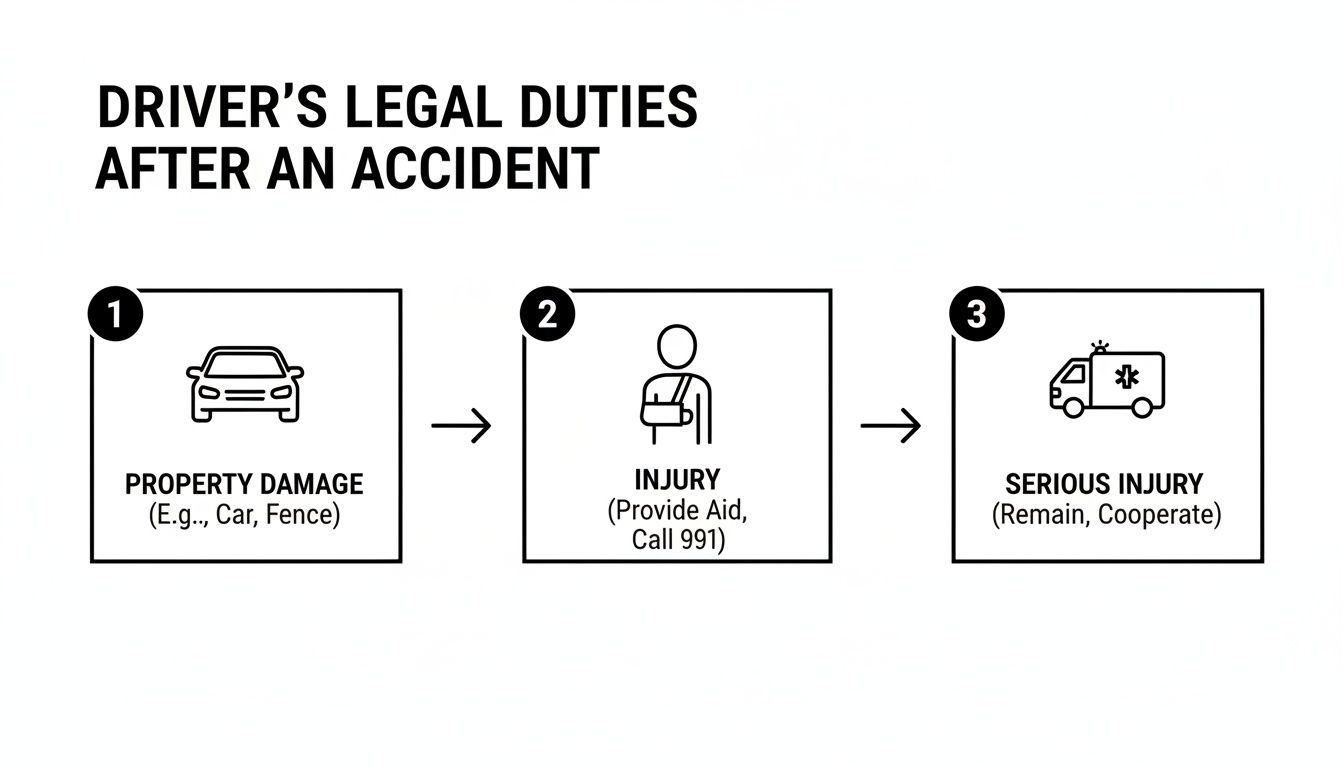
You can see why the law treats fleeing the scene so seriously. A driver’s responsibility skyrockets the second an injury is involved, which is exactly why so many choose to run.
Gather Every Detail You Can Remember
Your memory is now a critical piece of evidence. Before the details start to fade, grab your phone and type or record everything you can recall about the other car and driver. Even a partial piece of information could be the key that helps police find them.
- Vehicle Details: The license plate is gold, but even a partial plate helps. What was the make, model, and color?
- Distinctive Features: Think about bumper stickers, a dented fender, a roof rack, or custom wheels. Anything that made it stand out.
- Driver Description: Did you get a glimpse of the person behind the wheel? Gender, approximate age, hair color—anything helps.
- Direction of Travel: Which way did they go? What street did they turn on last?
Identify and Speak with Witnesses
Quickly scan the area. Did anyone else see what happened? Pedestrians, other drivers, or even someone looking out of a nearby shop window could be a key witness.
In the shock of a crash, victims often miss important details. A witness might have seen the full license plate or gotten a clear look at the driver. Getting their contact info before they leave is absolutely vital.
Ask for their name and phone number. A bystander’s account provides an objective, third-party story that gives your police report and insurance claim incredible weight. Their testimony can make all the difference.
Document Everything with Photos and Videos
Your smartphone is your best investigative tool. Use it to take pictures and videos of everything before the scene is cleaned up or your car is towed.
- Your Vehicle: Get photos of the damage from every angle. Take wide shots to show where it was hit and close-ups to detail the impact.
- Your Injuries: Photograph any visible cuts, bruises, or scrapes. These can be important later.
- The Scene: Capture the whole environment. Get wide shots of the intersection, traffic lights, skid marks on the road, and any debris from the crash.
This visual proof tells a story that’s hard to argue with. It also provides essential backup when you request a copy of the official police report and start dealing with insurance adjusters.
How to Get Compensation After a Hit and Run
After a hit and run in Colorado, many victims make a devastating assumption: if the driver is gone, so is any hope of compensation. This is a dangerous and costly myth. The person who hit you might be a ghost, but your path to financial recovery is very real. It starts with your own insurance policy.
The key is a specific part of your car insurance called Uninsured Motorist (UM) coverage. Think of your UM coverage as a financial stand-in. It essentially steps into the shoes of the phantom driver's insurance company to pay for your damages.
Because the fleeing driver is, from a legal perspective, "uninsured" since they can’t be identified, your own insurer is contractually obligated to cover your losses up to your policy limits. This isn't just for car repairs—it includes medical bills, lost wages, and even pain and suffering.
Filing an Uninsured Motorist Claim
To get the ball rolling, you have to notify your insurance company about the hit-and-run right away. You’ll need to open a claim under your UM coverage, not your collision coverage. This is a critical distinction. Collision coverage is typically for vehicle repairs and usually comes with a deductible you have to pay.
Your UM claim is different. It’s designed to cover your bodily injuries, operating much like the personal injury claim you would have filed against the at-fault driver if you knew who they were.
To be successful with a UM claim, you have to prove two main things: that another, unknown driver was at fault for the crash, and the full extent of your damages. This is exactly why the evidence you gathered at the scene—the police report, witness contacts, and photos—is so incredibly valuable.
Unfortunately, even when you’re dealing with your own insurance company, the process can feel surprisingly adversarial. Their goal is to minimize what they pay out, and adjusters often use common tactics to devalue or deny a legitimate claim. For those injured in these preventable tragedies—facing insurance denials, TBI recovery, or wrongful death grief—Nares Law Group LLC offers Denver-rooted expertise. Specializing in vehicle crashes and trucking, they coordinate care, negotiate fiercely, and trial-test cases for maximum recovery of medical costs and lost income. Serving Colorado clients with national co-counsel reach, their transparent approach and free resources guide families toward justice and financial stability in this high-stakes environment. You can find more about this dedicated support on AutoInsurance.com.
What Happens If the Driver Is Found?
Sometimes, things go your way. A police investigation turns up a suspect, a witness comes forward with a plate number, or the driver’s own guilt makes them confess. If the at-fault driver is found, your options for getting compensation expand, and the situation splits into two separate legal tracks.
The Criminal Case: The District Attorney, on behalf of the state, will prosecute the driver for leaving the scene of an accident. The goal here is punishment—fines, jail time, and a criminal record. A judge might order the driver to pay you restitution for some out-of-pocket costs, but this process is not designed to make you financially whole.
The Civil Case: This is your personal injury lawsuit against the driver. The goal here is compensation. You file a claim against their auto insurance policy to recover the full cost of your medical bills, lost income, future care needs, and pain and suffering.
It’s crucial to understand that these two cases are completely separate. A guilty verdict in the criminal case is powerful evidence for your civil claim, but pursuing that civil claim is your responsibility. You can learn more in our detailed article about what Underinsured Motorist insurance coverage includes and how it can help you.
Whether the driver is ever found or remains a ghost, you have clear avenues to get the financial resources you need to recover. You are not out of options.
Why Pedestrians and Cyclists Are Most at Risk
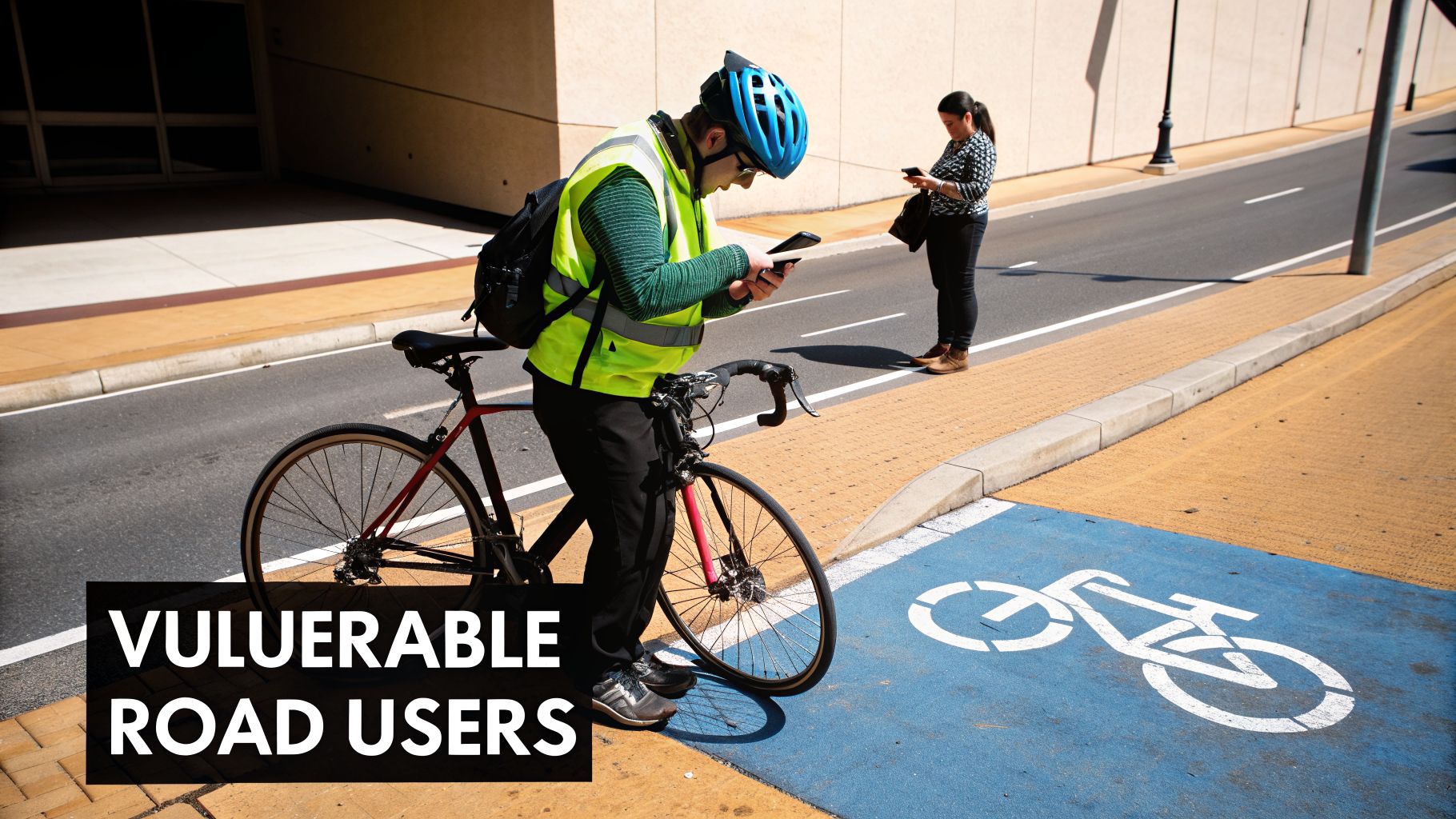
Any hit and run in Colorado is a terrifying ordeal, but for those with the least protection, the stakes are so much higher. A person on a bike or on foot doesn't have a two-ton steel frame to absorb an impact. They don't have airbags or crumple zones.
The human body becomes the crumple zone. It's a brutal reality of physics that explains why these collisions are so often catastrophic.
The numbers tell a grim story. In Colorado, two-thirds of all hit-and-run victims are pedestrians and cyclists. In Denver alone, there was an average of 17 hit-and-run crashes every single day, creating a constant sense of risk for anyone not inside a car. The data reveals a clear and disturbing pattern across the state, which you can explore further to discover more about Colorado's car accident trends and statistics.
The Damage Done in an Instant
The injuries we see in these cases are life-altering. When a driver strikes a person and flees, they aren't just leaving behind an accident scene; they are abandoning a human being who is likely in shock, bleeding, and desperately needing help.
The trauma is often profound and permanent.
- Traumatic Brain Injuries (TBI): The force of hitting a vehicle or the pavement can cause devastating brain injuries, leading to a lifetime of cognitive, emotional, and physical struggles.
- Spinal Cord Injuries: Damage to the spine can mean partial or total paralysis, robbing a person of their mobility and independence in a split second.
- Multiple Fractures: It's common to see shattered bones in the legs, arms, and pelvis, which often require multiple, complex surgeries and grueling rehabilitation.
- Internal Organ Damage: The blunt force of a car can cause severe internal bleeding and organ damage. This is a life-threatening emergency.
By driving away, the at-fault driver steals the "golden hour"—that critical window of time where immediate medical care can mean the difference between life, death, or permanent disability.
The Long, Complicated Road to Recovery
Beyond the devastating physical harm, pedestrian and cyclist victims face a much harder fight for recovery. Their claims are almost always more complex, and the financial damages are exponentially higher simply because their injuries are so severe.
For a pedestrian or cyclist, a hit and run isn't just about a damaged bike or a few scrapes. It's about facing a future that may look completely different, with a long road of medical treatments, lost income, and a struggle to regain a sense of normalcy.
The financial pressure is immense. Victims are buried under bills for emergency responders, hospital stays, surgeries, physical therapy, and sometimes, the need for lifelong medical equipment or in-home care.
This is why a successful Uninsured Motorist claim isn't just helpful—it's absolutely critical for their survival and their family's future.
Finding the Right Legal Partner for Your Case
Trying to handle the aftermath of a hit and run feels like trying to solve a puzzle when the most important piece—the other driver—is gone. You're left with injuries, a damaged car, and a mountain of questions. Facing that alone is overwhelming. That’s why finding the right legal partner isn't just a good idea; it’s the most important move you can make.
A good personal injury firm does so much more than file paperwork. They become your investigator, your advocate, and your negotiator, all rolled into one. Their first task is to launch their own investigation, completely separate from what the police are doing, with one goal: find the driver who left you behind.
Your Advocate and Investigator
This isn't a passive search. A skilled legal team knows exactly where to look for the clues that can crack a case wide open.
- Canvassing for Witnesses: They'll go back to the scene, talking to people the police might have missed—residents, local business owners, or even delivery drivers who saw something critical.
- Locating Surveillance Footage: They move fast to identify and get copies of video from traffic lights, doorbell cameras, and business security systems before that footage is erased forever.
- Working with Experts: They might bring in accident reconstruction specialists who can analyze skid marks and debris to prove exactly how the crash unfolded.
Every single piece of evidence they find strengthens your case, whether you end up making a claim against your own insurance or holding the at-fault driver accountable once they’re found.
Think of a personal injury lawyer as the general contractor for your recovery. They manage every single detail—from hunting down that phantom driver to coordinating with medical experts—so you can focus on the one job that matters most: healing.
This proactive work completely changes the dynamic. While the police are focused on the criminal side of the hit and run in Colorado, your legal team is focused entirely on protecting your rights and securing your financial stability.
Fighting for the Compensation You Deserve
Even if the driver is never found, the fight isn’t over. It just shifts. Now, you have to file a claim with your own insurance company under your Uninsured Motorist (UM) policy. Suddenly, the insurer you've paid for years can feel more like an adversary than an ally.
Insurance adjusters are trained to minimize what they pay out. They might question how badly you were hurt, suggest you were somehow at fault, or push you to accept a quick, lowball offer that won’t come close to covering your long-term needs. This is where having a lawyer becomes your shield.
An experienced firm knows these tactics are coming. They build a powerful demand package that documents every part of your loss, including:
- All current and future medical bills
- Lost income from the time you couldn’t work
- Any impact on your future ability to earn a living
- The costs of physical therapy and rehabilitation
- Compensation for your pain, suffering, and emotional trauma
By building an airtight case backed by solid proof, your attorney forces the insurance company to take you seriously and negotiate in good faith. They will fight for a settlement that reflects what you’ve truly lost and what you need to put your life back together. Choosing a partner like Nares Law Group means you have a team ready to carry this weight for you, making sure you get the resources you need to move forward.
Common Questions After a Colorado Hit and Run
When a driver hits you and flees, you're left with more than just damage—you’re left with a flood of questions. The uncertainty is overwhelming. Getting clear answers is the first step toward taking back control.
Here are some of the most common concerns we hear from hit-and-run victims.
What if I Don’t Have Uninsured Motorist Coverage?
This is a tough spot to be in, but it doesn't mean you're out of options. Uninsured Motorist (UM) coverage is the best tool for this situation, but other parts of your own policy can step in to help.
Your collision coverage can handle the repairs to your car, though you’ll have to cover your deductible. For your medical bills, your Medical Payments (MedPay) coverage is key. Colorado requires every policy to include MedPay unless you specifically reject it in writing. It helps pay for your initial medical care up to your limit, no matter who was at fault.
How Long Do I Have to File a Claim in Colorado?
The clock is always running. Colorado’s statute of limitations sets a firm deadline for filing a lawsuit. For most car accident injury claims, that deadline is three years from the date of the crash.
But waiting is a mistake. Evidence vanishes. Surveillance footage gets erased. Witnesses forget critical details. The best time to talk to a lawyer is right away, so you can preserve your ability to seek the compensation you deserve.
A common pitfall is waiting for the police investigation to wrap up before acting. Your civil claim and the criminal case are two separate tracks. You should never put your own rights on hold while you wait for the legal system to find the other driver.
What if the Hit and Run Only Damaged My Parked Car?
It's infuriating to walk out to your parked car and find it damaged. Even though you weren't there, the other driver had a legal duty to stop and leave their information. When they drove off, they committed a hit and run.
Here's what you should do immediately:
- Don’t move your car. First, take pictures of the damage and the position of your vehicle from several angles.
- Look for a note. Check your windshield and doors. It's a long shot, but the driver may have had a change of heart.
- Scan for cameras or witnesses. Check nearby businesses, doorbells, or apartment buildings for security cameras. Ask anyone in the area if they saw what happened.
- Call the police. An official police report is essential. It creates a record of the incident that your insurance company will require.
After you've done this, the next step is to file a claim with your own collision coverage to get your car fixed. Yes, you’ll likely have to pay your deductible, but it’s the most direct path to getting the repairs done.
Can a Passenger Be a Victim of a Hit and Run?
Absolutely. As a passenger, you have every right to seek compensation for your injuries, just like the driver of the car you were in. You’re an innocent victim caught in the middle.
Typically, you would first file a claim under the Uninsured Motorist policy of the vehicle you were riding in. If that car doesn't have UM coverage (or not enough), you can often turn to your own personal auto insurance policy if you carry one. The law provides clear avenues for passengers to get the help they need.
The aftermath of a hit and run in Colorado is a confusing and frustrating experience, but you shouldn't have to walk that road by yourself. At Nares Law Group LLC, our entire focus is helping victims navigate this process. We investigate, we handle the insurance companies, and we fight to get you the resources needed to put your life back together. If a hit-and-run driver injured you or someone you love, contact us for a free, no-pressure consultation to learn about your rights. Visit us at https://www.nareslawgroup.com and get the support you deserve.