In Colorado, truck traffic is just part of the scenery. You see commercial truck routes on I-70 climbing toward the foothills, on I-25 running past Denver and down toward Colorado Springs, and along the beltways where commuters mix with delivery routes. Most of the time, it’s background noise. But there’s always a risk of an accident when you’re sharing a lane with a truck, especially when trucking companies are moving freight all day, every day, throughout the Colorado state highway system.
But when a truck carrying hazardous material crashes, everything changes fast. Roads shut down. First responders move in. The air can smell “off.” People get told to stay back, reroute, or even shelter in place. And if you were close to the impact, you may be dealing with a serious truck incident with serious injuries that don’t look like a typical car accident or a routine auto accident.
This post is a practical guide to Colorado hazmat truck accident dangers and legal options, what makes these truck accident cases different, what you can do right away, and how to protect your family if a spill or exposure becomes part of your story. If you were injured in a truck accident or you’re worried about toxic exposure, your next action matters.
Colorado Hazmat Truck Accident Dangers and Legal Options: Why Hazmat Wrecks are a Different Kind of Emergency
A standard truck collision is dangerous. A hazmat crash adds a second emergency on top of the first, chemical risk. With hazmat trucks, the danger may not end when the crash occurred. The accident could result in exposure, contamination, and extended closures that keep you from even understanding what happened.
Hazmat cargo can include fuels, corrosives, toxic gases, industrial cleaners, agricultural chemicals, batteries, or other materials that require special handling under federal regulations and federal law. When containment fails, the harm isn’t just blunt-force trauma. It can involve exposure, cleanup, and questions about who is liable. Understanding Colorado Hazmat truck accident dangers and legal options early helps injured families respond with clarity instead of guesswork.
Here’s what makes these crashes different:
- Unpredictable exposure: You might not know what you inhaled, touched, or walked through after an accident involving a commercial vehicle carrying dangerous loads.
- Secondary injuries: Burns, respiratory irritation, and delayed symptoms can appear hours or days later after a truck accident.
- Evacuation zones and road closures: The accident scene can stay active for a long time, which impacts evidence and reporting.
- More parties involved: Beyond the truck driver, there may be a carrier, a shipper, a loader, and contractors, which is why truck accidents often turn into complex accident cases.
Colorado drivers often see heavy truck flow near familiar pinch points: the I-70 corridor, Vail Pass, the approaches to the Eisenhower-Johnson Tunnel, and busy interchanges around the Denver metro. In those areas, a hazardous situation can create widespread disruption quickly, especially with wind, snow, or slick road conditions. When commercial truck accidents often happen in these areas, the consequences can ripple through entire corridors across Colorado.
The Immediate Safety Steps That Protect Your Health and Your Case
After a hazmat truck accident, your first job is safety. Your second job is documenting what happened while details are still fresh, because documentation protects an eventual accident claim and helps your legal team understand the timeline. These early steps often shape how Colorado Hazmat truck accident dangers and legal options apply to your specific situation.
If you’re near a spill or suspect exposure after an accident in Colorado:
- Follow instructions on scene. If responders say move upwind, move upwind. If they say shelter, shelter.
- Get medical care the same day. Tell providers you were near a possible chemical release after the truck accident. That detail matters in your record and in a future personal injury case.
- Don’t “tough it out.” Headaches, throat irritation, coughing, dizziness, nausea, and skin irritation can be early signs of exposure.
- Take photos from a safe distance. Signs, road conditions, traffic backups, placards on the truck (if visible), and the general scene can help later.
- Write down what you noticed. Smells, smoke, mist, burning sensation, watery eyes, or trouble breathing. Even small details count.
If you had to leave your vehicle behind, got rerouted, or were stuck in a closure, keep receipts and notes. It can feel minor in the moment, but it helps establish the timeline. This is one of the biggest practical lessons in Colorado hazmat truck accident dangers and legal options: your experience is evidence. The body symptoms, the evacuation, the delay in care, the disruption, those are all part of the story that supports an accident claim and, in some situations, a broader accident lawsuit.
Common Injuries and “Invisible” Harm After Chemical Exposure
Delayed symptoms are one of the most misunderstood parts of Colorado Hazmat Truck Accident Dangers And Legal Options, particularly in chemical exposure cases.
Possible harm includes:
- Respiratory issues (coughing, tight chest, wheezing, shortness of breath)
- Chemical burns (skin irritation, blistering, eye burns)
- Neurological symptoms (headache, confusion, dizziness)
- Worsening of existing conditions (asthma flare-ups, migraines, anxiety)
People also underestimate the stress component. If you were told to shelter in place, couldn’t reach your kids, or had to drive around closures for hours, that emotional strain can be real. It also affects recovery and may tie into pain and suffering in a personal injury claim.
If you’re dealing with a Colorado Hazmat truck accident danger, it’s smart to ask your doctor what symptoms to watch for and when to return. Keep that guidance in writing if possible. And if the injuries are serious, this is when speaking with personal injury attorneys can help you understand how compensation for your injuries is evaluated.
Defenses Such as the Sudden Emergency Doctrine in Colorado Truck Accidents
After a truck accident, trucking companies often raise legal defenses to reduce or avoid responsibility. One common defense in Colorado is the sudden emergency doctrine. This defense argues that the truck driver faced an unexpected situation and did not have time to react differently.
What this defense usually claims:
- The danger appeared suddenly and without warning
- The driver did not cause the emergency
- The driver reacted as a reasonable person would under the same conditions
Trucking companies may use this defense to explain actions like hard braking, swerving, or lane changes. They may point to another vehicle, debris in the road, weather, or traffic conditions.
Why this defense matters:
- It can shift blame away from the driver and reduce who is liable
- It can reduce or block compensation if accepted
- It often overlooks earlier choices like speed, following distance, or fatigue
The sudden emergency doctrine does not apply if the driver helped create the danger. Poor training, unsafe schedules, distraction, or ignoring road conditions can defeat this defense. In other words, the driver may still be responsible for the accident if earlier choices set the stage.
A careful investigation looks at what happened before the emergency, not just the final seconds. That context often decides whether this defense holds up in a Colorado truck accident claim and whether negligence or a negligent decision played a role.
Colorado-Specific Regulations for Hazmat Trucking
Hazardous materials trucking in Colorado is governed by strict rules, both state and federal. These regulations exist to reduce the risk of an accident on highways, in cities, and along mountain routes, especially when a commercial truck is transporting regulated loads.
Key requirements often include:
- Compliance with federal regulations adopted and enforced through Colorado trucking laws
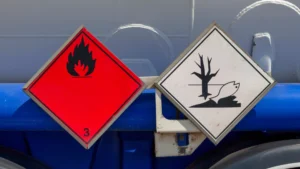
- Proper placarding, labeling, and documentation for hazardous material loads
- Required training and certification for the truck driver
- Approved routing that avoids restricted areas when possible
- Regular vehicle inspections, with added focus on tanks, valves, and seals
- Immediate reporting duties after spills, leaks, or crashes
Colorado’s terrain makes these rules critical. Routes like I-70, I-25, C-470, and US-36 combine steep grades, high winds, snow, and dense traffic. When drivers or trucking companies ignore these requirements, even a small mistake can lead to a major accident in Colorado.
Violations of Colorado hazmat trucking rules often play a central role in truck accident claims. They help show that the accident caused harm that was not unavoidable, but tied to choices made during training, loading, routing, or supervision. Those choices can point to negligence and to which parties may be liable.
No-Fault Laws and Their Impact on Colorado Hazmat Truck Claims
Colorado is not a no-fault state. Fault still matters in hazmat truck accident claims, even when hazardous materials are involved. This affects who can recover compensation, who can be held liable, and how much someone may be entitled to after an accident in Colorado.
What this means in practice:
- You must show that another party caused or contributed to the hazmat crash
- Multiple parties may share fault in the same incident
- Compensation can be reduced if you are found partly responsible under modified comparative negligence
- Being more than 50 percent at fault can block recovery
In hazmat cases, insurance companies may argue that the spill or exposure was unavoidable or caused by outside factors. They may point to traffic, weather, or emergency conditions to limit responsibility. This is why truck accident attorneys know that proving the lead-up matters, not just the final moment of the collision.
Because Colorado does not follow no-fault rules, proving fault remains central. Records like driver logs, inspection reports, cargo manifests, and hazmat paperwork help show who failed to follow safety rules. In many cases, the truck driver’s choices, the company’s supervision, or routing decisions under trucking laws become key.
Understanding that Colorado is not a no-fault state helps explain why careful investigation matters in hazmat truck accident cases. The outcome depends on clearly identifying who caused the harm, whether someone may be held liable, and how their actions led to release or exposure.
What to Avoid in The Days After A Hazmat Truck Crash
People don’t usually “mess up” a case on purpose. It happens because they’re trying to be cooperative, or they’re exhausted, or they just want the whole thing to be over.
A few common pitfalls:
- Giving a recorded statement too early. You may not know the chemical involved yet, or how your symptoms will develop.
- Settling before you understand your medical picture. Exposure-related symptoms can change over time.
- Downplaying symptoms in medical visits. Be honest and specific. “I feel weird” is real, but doctors need details.
- Assuming it’s only a car-insurance situation. Hazmat trucking claims can involve multiple policies and parties.
Your best move is steady documentation and calm steps forward. That’s what protects you, your personal injury claim, and your ability to recover compensation.
Local Colorado Details That Can Affect Hazmat Filing Deadlines
After a hazmat truck accident, Colorado law sets a firm deadline to file a claim. That deadline keeps running, even while you are dealing with medical visits, traffic disruptions, and family responsibilities. This applies across the state of Colorado and throughout Colorado, whether the crash happened near Denver, Colorado Springs, or on a mountain route.
Local timing issues that often matter:
- Road closures on I-25 or I-70 that delay access to the scene or evidence
- Cleanup operations that remove spills, placards, and containers quickly
- Evacuations or reroutes that make witnesses harder to locate later
- Transit disruptions tied to closures that may support your timeline
If driving is difficult after the crash, delays can add up fast. Appointments, paperwork, and evidence collection all take time, while the filing clock does not stop. Starting early helps protect your claim. It gives your legal team time to confirm the correct statute of limitations, gather hazmat records, and file before deadlines close.
Nares Law Group works with clients across Colorado to help make sure critical time is not lost, especially in truck accident cases where insurance companies and trucking companies move quickly behind the scenes.
A Steady Next Step If You’re Dealing With Exposure, Injuries, Or Both
Hazmat crashes can feel surreal because they aren’t just “metal and glass.” They can involve air quality concerns, cleanup, and health questions that don’t have instant answers. A truck accident in Colorado involving regulated cargo can also raise immediate questions about who is liable, what proof matters, and whether negligence played a role.
If you’re worried about what you were exposed to, dealing with symptoms, or trying to understand who’s responsible, talking to an attorney can bring clarity. The goal isn’t to add stress. It’s to reduce it by putting a plan in place. That might include an early consultation, reviewing whether you have an accident claim, and preserving evidence for possible legal representation.
At Nares Law Group, we help Colorado families understand their options after serious truck crashes, including commercial truck accidents and cases involving hazardous material. If you’re not sure what applies to your situation, start with a conversation. You’ll get a straightforward explanation to discuss your legal options, what to document, and what to do next. If you need a free consultation, we can explain the steps to take and what to expect.
That’s the real point of Colorado hazmat truck accident dangers and legal options, not fear, not hype. Just protection, information, and a path forward. If you’re searching for a truck accident lawyer, including a Colorado Springs truck accident lawyer, a truck accident lawyer can help you understand whether the driver or company was liable, whether negligence is involved, and what compensation may be available. If the situation is urgent, contact us to schedule a consultation and get clear next steps from an accident attorney and legal team that handles serious truck and hazmat-related claims.