When your loved one has a traumatic brain injury (TBI), the sheer number of medical terms and treatment options can be overwhelming. One medication you might hear about is amantadine, and it’s showing real promise as a “wake-up call” for the injured brain. It can help improve consciousness, sharpen attention, and speed up how quickly the brain processes information.
What Is Amantadine and How Does It Help Brain Injury Recovery

After a severe accident, the brain’s delicate communication network is often in disarray. Key chemical messengers that govern everything from alertness to problem-solving get thrown out of balance. This is exactly where amantadine can become a critical part of a patient's recovery plan.
Think of dopamine as the brain’s traffic grid. It’s a neurotransmitter that controls motivation, focus, and purposeful action. A severe TBI acts like a city-wide power outage, knocking out the traffic lights and causing total gridlock. Information simply can't get where it needs to go, leading to confusion, slow responses, and a general state of low arousal.
A Traffic Controller for the Injured Brain
Amantadine steps in like a skilled traffic controller trying to restore order. Its primary job is to increase the amount of available dopamine at the synapses—the critical intersections where nerve cells talk to each other. It doesn’t build new roads, but it helps manage the flow of information on the roads that are already there.
This improved signaling can bring about noticeable changes, sometimes quite quickly. You might see:
- Increased Arousal and Consciousness: A patient may seem more awake, present, and aware of their surroundings.
- Improved Attention: Their ability to focus on a person or a simple task may get better.
- Faster Processing Speed: The delay between a question and a response can start to shorten.
- Reduced Agitation: By helping restore chemical balance, amantadine can often calm the restlessness and aggression that frustrate so many families.
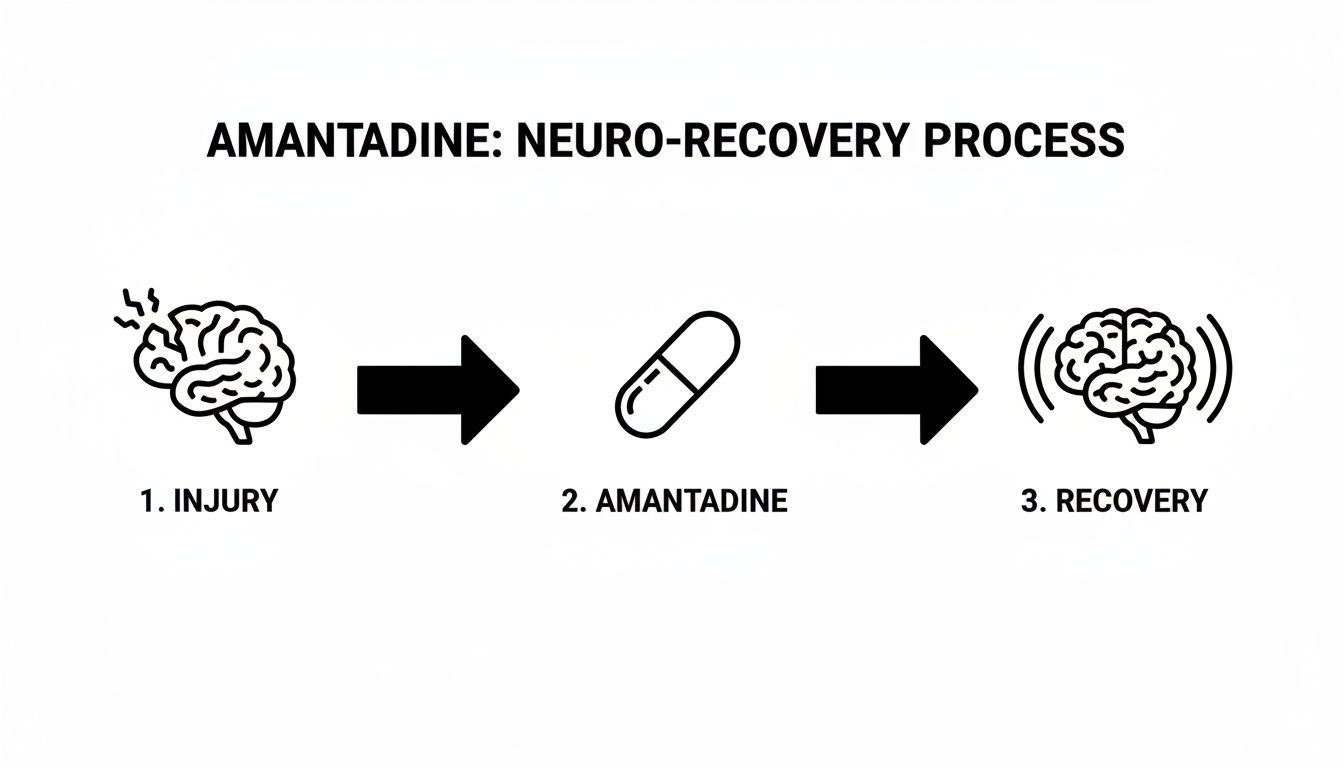
It's crucial to understand that amantadine is not a "cure." It's a tool to kickstart the brain’s own healing process. It helps create a better internal environment for recovery, which in turn makes other treatments, like physical and cognitive therapy, far more effective.
You can learn more about how this medication complements other treatments in our guide to cognitive therapy for TBI.
To help you keep track of these key details, we've put together a quick summary table.
Amantadine for TBI Recovery at a Glance
This table breaks down the essentials of amantadine treatment, giving families a straightforward reference guide.
| Aspect | Description | Relevance to Injury Victims |
|---|---|---|
| Primary Function | Increases available dopamine in the brain's frontal lobes. | Helps "wake up" the brain, improving arousal, attention, and executive function. |
| Mechanism | Acts as an NMDA antagonist and promotes dopamine release. | Like a traffic controller, it helps regulate brain signaling that was disrupted by the injury. |
| Target Symptoms | Slowed processing, low arousal, inattention, agitation, disorders of consciousness. | Directly addresses some of the most challenging and disabling symptoms after a severe TBI. |
| Typical Dosing | Usually starts at 100 mg twice a day, with potential adjustments based on response and tolerance. | The dose is carefully managed by the medical team to maximize benefits and minimize side effects. |
| Key Benefit | Accelerates the rate of functional recovery. | Patients may regain abilities faster, enabling more meaningful participation in rehab. |
| Legal Importance | Supported by clinical studies, establishing it as a standard of care. | Provides a scientific basis for demanding this treatment and including its costs in a life care plan. |
Understanding these points helps you have more informed conversations with the medical team and advocate effectively for your loved one.
Evidence Supporting Amantadine Use
This isn't just a hopeful theory; the use of amantadine is backed by solid clinical evidence. A landmark study focused on TBI survivors found that patients showed significant and faster improvements in thinking, memory, and daily function while on amantadine compared to when they received a placebo. This strongly suggests the medication was the driving force behind their accelerated recovery.
This kind of research is vital for families and their legal advocates. It provides the scientific foundation needed to justify the treatment and prove its medical necessity when building a personal injury claim. When you understand how amantadine works and why it’s prescribed, you are in a much stronger position to fight for your loved one’s care. You can ensure they have access to every possible tool that can help them get better, faster.
How Amantadine "Wakes Up" the Injured Brain
To understand why a doctor might recommend amantadine for a brain injury, you first have to picture what’s happening inside the brain after a severe impact. A traumatic brain injury (TBI) isn't a single event; it’s the start of a massive chemical disruption.
Imagine the brain's frontal lobes are the CEO of a company—in charge of focus, motivation, and making decisions. This entire executive suite runs on a critical chemical messenger: dopamine. After a severe TBI, the systems that produce and use dopamine often get damaged or simply go dark. The result is a brain stuck in low-power mode, leading to the profound slowness, apathy, and lack of awareness we often see.
Turning the Lights Back On
Amantadine’s main job is to address this dopamine shortage. It doesn't create new dopamine. Instead, it works with what’s already there, making the brain’s existing supply more available and effective.
Think of it as turning up the dimmer switch. The lights were on, but they were too low to see. Amantadine helps brighten the circuits in the frontal lobes, "waking up" the brain’s executive functions. It's not a shot of caffeine or a harsh stimulant; it’s a targeted way to restore a specific messenger needed for higher-level thinking.
By making dopamine more available, amantadine helps the brain regain its ability to start a task, hold a thought, and pay attention. This provides the fundamental alertness a person needs to begin participating in their own recovery.
This isn’t just a theory. The drug’s effects are well-documented. Clinical trials have shown that specific doses lead to real, measurable improvements in cognitive function. The evidence supports its use for fixing the core dopamine problem that follows a TBI. You can dive deeper into the research behind these neurological findings to see how its effects have been documented.
Shielding the Brain from More Damage
Amantadine does more than just wake the brain up. It also plays a vital protective role. The initial injury is only the beginning. In the hours and days that follow, a second wave of damage can ripple through the brain as injured cells release toxic chemicals, creating a domino effect of cell death.
Amantadine has what we call neuroprotective properties. It helps shield healthy brain cells from this toxic flood.
Here's how it works:
- Panic Signals: After a TBI, damaged neurons send out frantic, excessive signals (a chemical called glutamate).
- Overload: Healthy nearby cells get bombarded by these panic signals, causing them to get overexcited, burn out, and die.
- The Shield: Amantadine acts like noise-canceling headphones. It partially blocks the receptors that receive these toxic signals, quieting the chaos so surrounding cells can survive.
This two-for-one action is what makes amantadine such a powerful tool. It helps activate dormant parts of the brain while also protecting other areas from the secondary damage that unfolds after the injury.
For families and legal teams, understanding this science is crucial. It shows that amantadine isn't a shot in the dark—it's a targeted, evidence-based therapy designed to address the specific chemical imbalances caused by trauma and help the brain heal itself.
Finding the Right Fit: Amantadine Dosage and Monitoring
Figuring out the right dose of amantadine for a brain injury isn’t a one-size-fits-all formula. It’s a careful, highly personal process guided by the medical team. Think of it like getting a new pair of glasses—the prescription has to be dialed in perfectly for that specific person to bring the world back into focus.
In the same way, the amantadine dose is meticulously adjusted for each patient. Doctors weigh several key factors to find that “sweet spot” where the drug offers the most benefit with the fewest side effects.
Tailoring the Dose to the Patient
A person’s age, weight, kidney function, and the unique details of their injury all help determine the right starting point. The goal is always to maximize the potential for cognitive gains while keeping a close eye on any risks.
For most adults, treatment might start with a dose like 100 mg twice a day. From there, the clinical team watches closely. They’re looking for signs of response. If needed, they may slowly increase the dose over time to see if they can achieve a better effect.
This targeted approach helps bridge the gap between the initial injury and the slow work of recovery.
With children, the calculations are even more precise and are usually based on the child's weight (mg/kg). Dosing must be managed with extreme care to account for their developing body and brain.
Clinical studies give us a clearer picture of what to expect. For adults with severe TBI, daily doses can fall anywhere between 25 mg and 400 mg. In one study on children with disorders of consciousness, the daily dose ranged from 0.7 to 13.5 mg/kg, with a cap of 400 mg. The good news? Side effects in that pediatric group were minimal, with only 16% experiencing non-serious issues like agitation or an upset stomach.
The Critical Role of Patient Monitoring
Once amantadine is started, the real work begins. This is not a "set it and forget it" medication. The medical team essentially becomes a group of detectives, constantly searching for clues that the drug is working and being well-tolerated.
Monitoring is a team sport between the hospital staff and the family. Your observations from the bedside are priceless. You often see the small, subtle shifts that signal progress or a potential problem before anyone else.
The team will be tracking a mix of concrete measurements and firsthand observations.
What Does Progress Look Like?
- More Alertness: Is the person’s eyes open more? Do they seem more "present" and aware of what’s happening in the room?
- Following Commands: Are they starting to respond to simple requests, like “squeeze my hand” or “look toward the window?”
- Purposeful Movement: Are they reaching for things, even clumsily, or trying to adjust their position in bed? These small, intentional acts are a huge step forward.
- Less Agitation: A drop in restlessness or combativeness is a great sign that the brain’s chemistry is starting to find a better balance.
- Better Test Scores: Clinicians will use formal tools like the Coma Recovery Scale-Revised (CRS-R) to put a number on the functional improvements they see over time.
Watching for and Managing Side Effects
While many patients handle amantadine well, side effects are always a possibility. Most are mild and can be managed. The most common things to watch for include increased agitation, confusion, seeing things that aren't there (hallucinations), nausea, or dizziness.
If these side effects pop up, the team has options. They might try giving the medicine at a different time of day—for example, avoiding an evening dose that could disrupt sleep. Sometimes, simply lowering the dose is enough to solve the problem without having to stop the medication altogether.
This careful balancing act is exactly why having the right specialists on your team is so important. Their experience is the key to navigating both the potential benefits and the risks. For more on this, check out our guide on how to vet neurologists for TBI assessment and treatment.
Weighing the Benefits of Amantadine Against the Risks
Deciding whether to use a medication like amantadine for a brain injury is a major decision. It’s not just about medical charts; it’s about hope, progress, and finding the best path for someone you love. Like any treatment, there are trade-offs. Having an honest conversation about both the potential gains and the known risks is the only way to feel confident in the choice you make.
The main reason doctors turn to amantadine is its ability to speed up the recovery process. This isn’t just a theory—major studies have shown that patients on amantadine often emerge from low-consciousness states faster than those who aren't.
For families, this isn't just about faster recovery times on a chart. It’s the hope of seeing a flicker of recognition sooner. It’s the chance for your loved one to start participating in their own therapy, giving them a critical head start on the long road of healing.
The Upside of Amantadine
When amantadine works, the changes are often tangible. Families can see and feel a difference at the bedside as the brain begins to "wake up" and reconnect.
These improvements can show up in several key ways:
- Faster Return of Consciousness: Patients may become more alert and aware of their surroundings much more quickly.
- Clearer Thinking: This can mean better attention, an easier time concentrating, and improved executive function—the brain's CEO in charge of planning and organizing.
- Less Agitation and Aggression: Brain injuries often cause distressing behaviors. By helping to rebalance brain chemistry, amantadine can sometimes calm this internal storm.
- More Engagement: You might see more motivation to engage in therapy or interact with family, which is fuel for long-term recovery.
The goal is to give the brain a gentle nudge—the chemical boost it needs to kickstart its own natural repair work. This makes every other therapy more effective.
Understanding the Potential Side Effects
Of course, these benefits have to be weighed against the risks. The good news is that most side effects are well-known, usually mild, and can often be managed by the medical team without stopping the medication.
The most common side effects include:
- Restlessness or Agitation: Sometimes, the activating effect is a little too strong, making the patient feel restless or confused.
- Hallucinations: In some cases, a patient may see or hear things that aren't there. This is a serious side effect that needs immediate medical attention.
- Nausea or Dizziness: Like many medications, amantadine can cause an upset stomach or lightheadedness, which can often be managed.
- Trouble Sleeping: Because it helps "wake up" the brain, amantadine can sometimes disrupt sleep, especially if a dose is given too late in the day.
Your medical team is very familiar with these issues. If a side effect appears, they can try things like adjusting the dose or changing the timing to ease the problem while continuing the treatment.
Amantadine Treatment Benefits vs Potential Risks
To make this clearer, let's put the trade-offs side-by-side. This table gives you a balanced look at what you’re weighing when considering amantadine for TBI recovery.
| Potential Benefits | Potential Risks & Side Effects |
|---|---|
| Accelerated Recovery Rate | Agitation or increased confusion |
| Improved Attention & Concentration | Sleep disturbances or insomnia |
| Increased Arousal & Awareness | Hallucinations (requires medical attention) |
| Reduced Agitation & Irritability | Dizziness, lightheadedness, or nausea |
| Faster Processing & Response Times | Dry mouth or constipation |
Seeing the pros and cons laid out like this helps clarify the decision-making process.
Ultimately, the choice to use amantadine is a partnership. It brings together the medical team's clinical expertise with the family's deep, personal understanding of the patient. By openly discussing the real promise and the manageable risks, you can work together to make a decision that truly aligns with your goals for recovery.
Amantadine and Your Injury Case: Why Documentation Is Critical

When doctors prescribe amantadine after a brain injury, it’s a significant moment. It tells you something important not just about the medical plan, but about the injury itself. For families navigating a personal injury claim, that prescription becomes a crucial piece of the story.
Think of it as a bright, clear signal to an insurance adjuster or a jury. The use of amantadine shows that this wasn't a mild injury with a simple recovery. It proves that the brain was so profoundly affected that it required a specialized medication just to jump-start the healing process.
This is why tracking every detail isn't just a task to check off a list. It's how you connect the dots between the accident and the long, difficult road to recovery your family now faces.
What Your Documentation Needs to Prove
Your legal team will handle the strategy, but you are the expert on your family’s day-to-day reality. The notes you take and the records you keep provide the human context that a stack of medical bills never can. They transform a clinical diagnosis into a real-life story of struggle and resilience.
The goal is to build an undeniable record that proves two key things: that amantadine was medically necessary, and that it had a tangible impact—for better or worse—on your loved one’s daily life. This kind of detailed record-keeping is a vital part of every personal injury treatment stage.
Proactive, advanced medical care, when documented correctly, serves as indisputable proof of the injury’s severity. It helps a judge, jury, or insurance adjuster understand the profound level of intervention needed to give your loved one a chance at recovery.
Every note you take, every receipt you save, helps build a stronger claim for the resources needed to cover a lifetime of care.
The Key Records to Keep
To build the strongest possible case, you and your attorney need to gather specific documents that tell the complete story of the amantadine treatment. Each one serves a purpose, from establishing the timeline to proving the financial costs.
Here’s what to collect for your file:
- The Prescription Itself: Keep copies of every prescription slip from the doctor and the receipts from the pharmacy. This creates a clean, simple timeline of when the treatment started, the dosage, and how long it continued.
- The Doctor’s Orders: Ask for the official physician’s orders that prescribe amantadine. Even better are the clinical notes, which explain why the doctor made that decision. This is powerful evidence of medical necessity.
- All Related Bills: Save every invoice and billing statement that lists amantadine. This provides direct, black-and-white proof of the financial costs associated with this specialized care.
- Your Personal Journal: This may be your most important tool. Start a log and record daily observations. What was your loved one like before the medication? What changed after they started it? Note any new alertness, responsiveness, side effects, or changes in function.
By working with your legal team to organize this evidence, you’re doing more than just managing paperwork. You are methodically building the foundation for a legal strategy designed to secure the future your family deserves.
Your Questions About Amantadine and TBI, Answered
When a loved one is in the hospital with a severe brain injury, you're flooded with questions. Below are straightforward answers to the things families ask us most about amantadine, helping you navigate conversations with the medical team.
How Soon After an Injury Should Amantadine Be Started?
Timing is a big piece of the puzzle. Most of the compelling research points to a window of 4 to 16 weeks after the injury. Starting it during this period seems to give the best chance of speeding up the brain's natural recovery process.
Of course, the final call belongs to the doctors. They’ll decide on the right start date based on your loved one’s medical stability and the specific details of their injury.
Is Amantadine Safe for Children with Brain Injuries?
Yes, amantadine has been used in children with traumatic brain injuries, and the results have been encouraging. Dosing is the critical factor here; it's calculated very carefully based on the child's weight to keep it safe.
Studies on pediatric use show that side effects are usually mild and don't happen often. A pediatric neurologist or rehabilitation doctor should always be in charge of the treatment, keeping a close eye on progress and managing any issues that come up.
Will Insurance Cover Amantadine for a TBI?
This is often one of the biggest and most frustrating fights for families. Because amantadine is technically being used "off-label" for brain injury—meaning it wasn't originally FDA-approved for this specific purpose—insurance companies frequently deny coverage at first.
This is where having a strong advocate in your corner becomes crucial. An experienced personal injury attorney can challenge these denials head-on. We use the large body of clinical evidence to build a powerful case for why the treatment is medically necessary, working to make sure the cost is included in your damages claim.
What Improvements Should I Look For During Treatment?
The changes can be small, especially at the beginning, but they are incredibly meaningful. As the person at the bedside, you are in the best position to notice them first.
It helps to keep a small journal. Watch for little shifts, such as:
- More Alertness: Longer, more consistent periods with their eyes open.
- Making Eye Contact: Starting to track you with their eyes or focus on your face.
- Following Commands: A more reliable response to a simple direction like, "squeeze my hand."
- Purposeful Movement: The first signs of trying to do something intentionally, like reaching for a blanket.
Writing these things down gives the medical team invaluable feedback. It also creates a clear, powerful record of the recovery journey for your legal case.
If your family is trying to navigate the aftermath of a traumatic brain injury, you aren't in this alone. The team at Nares Law Group LLC is here to offer the compassionate support and skilled legal help you need to secure the future for your loved one. Contact us for a free consultation to protect your rights.