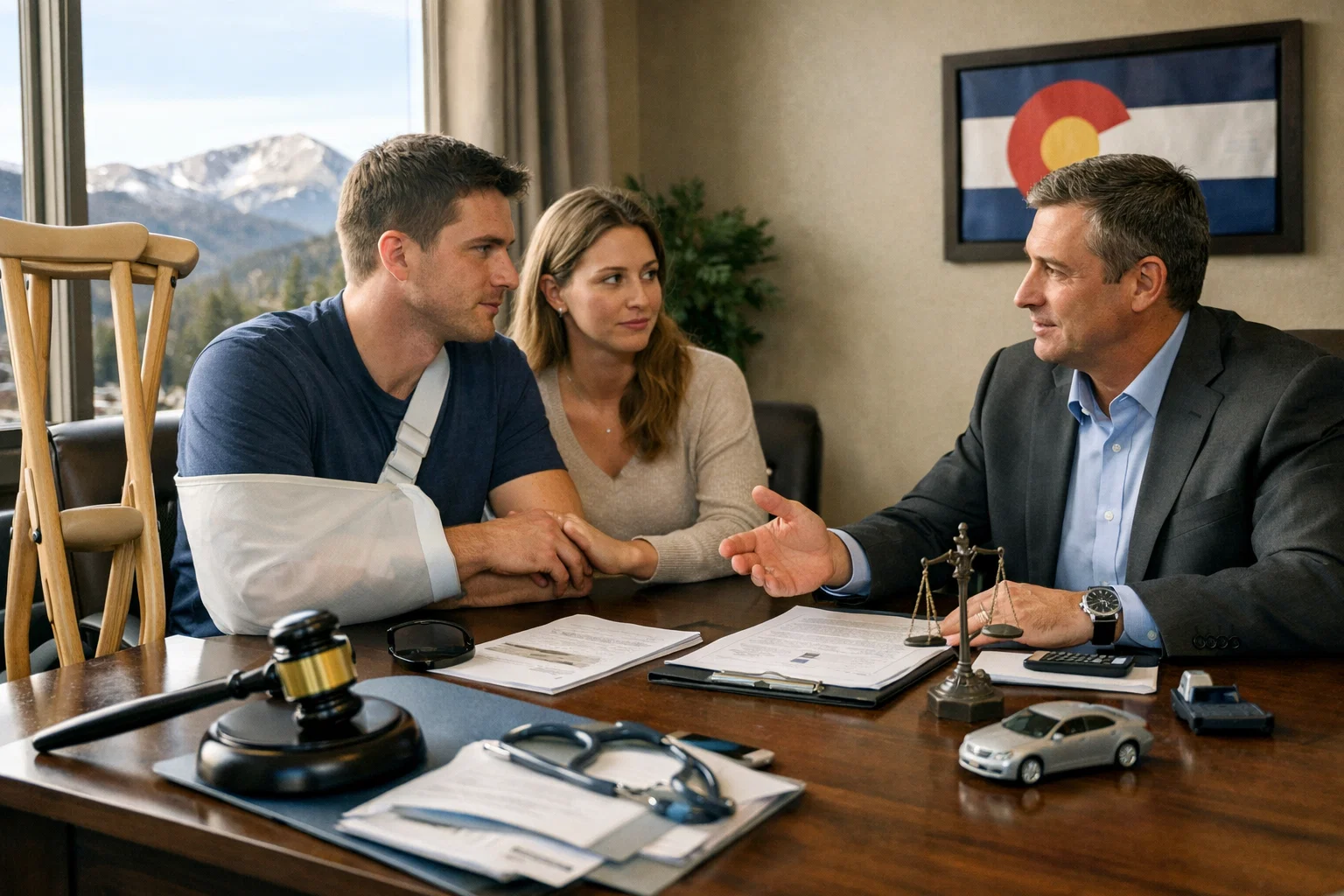
Denver moves fast. Morning traffic on I-25, a quick merge near Speer, a delivery truck cutting across lanes downtown. Most days, you barely notice it. Then an accident or a fall happens and your world gets smaller. You start measuring days in doctor visits, pain levels, and missed work after an injury.
In that moment, knowing your Personal Injury Victim Rights is not about being aggressive. It is about staying steady. You deserve clear answers, fair treatment, and the ability to protect your future while you heal from personal injuries.
This guide is written for Denver families dealing with motor vehicle accidents, truck wrecks, brain injury, wrongful death, and serious personal injury matters. It is not a sales pitch. It is a practical explanation of what you can do next, what to avoid, and how to keep your rights and responsibilities clear while you move through the legal process.
Personal Injury Victim Rights In Denver
After an injury, you have the right to pursue a claim when another party’s negligence caused harm. That may include another driver, a trucking company, a business owner, or another party tied to an unsafe situation. Many personal injuries start the same way: someone was injured in an accident and suddenly the paperwork begins.
Most people do not realize how quickly a personal injury case can be shaped by early decisions. Insurance companies and their adjusters often sound friendly. They may even act helpful. But their goal is usually to reduce what gets paid, not to build your case or prioritize your recovery.
Here is a simple way to think about Personal Injury Victim Rights in real life: you have the right to get medical attention, to document what happened, to decline pressure tactics, and to seek compensation that reflects your full losses, not just the first bill that arrives. You also have the right to privacy while you handle an injury claim, and the right to seek compensation without being rushed into decisions that do not match your reality.
Wrongful Death vs. Personal Injury Claims
Not every case follows the same legal path. The type of claim depends on whether the injured person survived or passed away from the incident. This is part of understanding your rights and your family’s rights and options.
Personal Injury Claims
A personal injury claim is filed by the injured person. The goal is to recover compensation for the harm they are living with. This is a core part of personal injury law, and it exists to help people who suffered an injury due to someone else’s carelessness. Understanding how a claim works is an important part of protecting your Personal injury victim rights.
You may be able to recover compensation for your injuries, including:
- Medical treatment and follow-up care (medical expenses can add up fast)
- Future medical needs if recovery will take time
- Lost wages from missed work
- Reduced earning ability if your career changes
- Pain and suffering and day-to-day limits
- Out-of-pocket expenses related to the injury
If the injury involves a traumatic brain injury, the claim may also include cognitive therapy, occupational therapy, and long-term support needs. In more serious situations, including severe injuries, strong documentation helps show how the injury changed your routines and your future.
Wrongful Death Claims
A wrongful death claim is filed by certain family members when a person dies because of negligence or wrongful conduct. The focus shifts from the injured person’s recovery to the losses suffered by the family and victims and their families.
Damages may include:
- Funeral and burial expenses
- Loss of financial support
- Loss of companionship and guidance
- Grief and emotional impact on close family members
The legal rules, deadlines, and eligible claimants differ between personal injury and wrongful death cases. Understanding which claim applies is the first step in protecting your rights are protected and your family’s future.
The First Week Matters More Than People Think
Most people are doing their best just to get through the week after an accident. That is normal. Still, the first few steps you take can protect your legal rights later and can strengthen your personal injury case.
A practical first-week checklist:
- Get medical attention and schedule follow-up care
- Take photos of injury changes and property damage as they evolve
- Save crash documents, towing receipts, prescriptions, and medical expenses paperwork
- Write down what you remember while it is still clear
- Avoid recorded statements until you understand what is being asked
- Keep detailed records of symptoms, missed work, and appointments
This is also where victim’s rights matter in a very simple way. You do not owe an insurer a perfect narrative on day two. You owe yourself time to breathe, seek medical attention, get care, and make informed choices that protect your rights.
Evidence That Makes A Claim Stronger
Insurance companies pay attention to proof, not just pain. If you are building a solid case, focus on evidence that is easy to preserve and hard to dispute. This is part of navigating the legal side without letting it take over your life.
The most useful types of documentation often include:
- Police or incident reports
- Photos and videos from the scene
- Witness names and contact information
- Medical records showing symptoms and restrictions
- A clear timeline of missed work and limitations, including lost wages
For truck wreck cases, evidence can be more complex and time-sensitive. Driver logs, maintenance records, dispatch notes, and black box data may exist, but they are not always offered voluntarily. A personal injury lawyer or attorney who specializes in these cases can help you preserve what matters and support your claim early.
In brain injury cases, consistent symptom reporting matters. Headaches, dizziness, sleep disruption, memory issues, and mood changes can be life-altering, even when imaging looks normal early on. This is one reason people seek legal representation sooner than later.
Common Mistakes That Reduce Settlements
A lot of people do not lose money because their case is weak. They lose money because the process is confusing and they are dealing with it while injured and stressed. Knowing your Personal Injury Victim Rights helps you avoid avoidable mistakes.
Here are common pitfalls to avoid:
- Waiting too long to get medical attention
- Skipping follow-up visits because life is busy
- Posting accident details online
- Signing broad medical releases without limits
- Settling before you understand future treatment needs
You have the right to understand the long-term picture before closing the case. If you settle early, you usually cannot reopen the claim later, even if symptoms get worse. That is why many people speak with injury lawyers, injury attorneys, or a personal injury attorney for a calm review of eligibility and next steps.
How Fault Works In Colorado Claims
Colorado cases are often shaped by fault rules. If the other side can argue you were partly responsible, they may try to reduce what they pay. That is where the details of negligence and the evidence trail become a big part of the legal system.
A few situations where fault arguments show up:
- Rear-end crashes where the insurer claims sudden braking
- Left-turn collisions where visibility is disputed
- Pedestrian incidents where crossing location becomes the focus
- Multi-car pileups on I-70 or I-25 where stories conflict
This is why documentation matters. Photos, witness statements, and consistent medical notes often do more than emotional arguments. They help show results in injury because of due to the negligence of someone else, and they limit opportunities for the insurer to rewrite the story.
Workplace Injury and Medical Malpractice
Not every accident victim is hurt on the road. A workplace injury can trigger different reporting steps and different coverage rules, and mistakes early can affect your right to file a claim.
And in medical malpractice, the issue is often whether the provider met the standard of care. For victims of medical malpractice, the proof is more technical, but the same principle applies: preserve records, track symptoms, and get guidance early.
Denver Practical Tips For Recovery And Logistics
Denver is not always easy to navigate when you are injured. The city’s pace, parking, and appointment locations can add stress, and stress can make an injury feel louder.
A few local logistics that often help:
- If you are heading to appointments near Downtown, LoDo, Capitol Hill, or Cherry Creek, plan for paid parking and extra walking time.
- If you are in Lakewood, Aurora, or the Tech Center, account for traffic swings during commute hours.
- If you cannot drive, ask your provider about documentation for transportation needs and missed visits.
- If weather disrupts your care, keep a record of reschedules so treatment gaps do not get used against you.
This is also where a good team can help you navigate the legal side without adding pressure. For many personal injury victims, the goal is simple: keep care consistent and keep the paper trail clean.
How Nares Law Group Supports Personal Injury Victim Rights
Nares Law Group helps injured people across Colorado with serious cases, including motor vehicle accidents, truck wrecks, brain injuries, wrongful death, and other personal injury matters. Their focus is practical: clarify your legal rights, protect your timeline, and push for fair compensation that reflects what you are actually living with.
If you want to explore related information on the firm site, here are useful starting points:
- Read about personal injury representation
- Learn more about car accident claims
- Review how the firm approaches truck accident cases
The right next step is not always a lawsuit. Sometimes it is a coverage review, a plan to preserve evidence, and a strategy for timing that fits your medical recovery. That is the kind of legal representation that can make the process feel human again.
A Strong Next Step For Denver Families
If you are dealing with pain, missed work, or symptoms that are not improving, it helps to talk with a team that understands how these cases are evaluated in the real world. You have the right to get answers and the right to make decisions without being rushed.
If you want a clear plan, call Nares Law Group and ask for a case review focused on Personal Injury Victim Rights. A conversation like that can help you understand your rights and options, map out your rights and options, and identify what evidence should be preserved next. In many cases, an attorney can help by taking insurer communications off your plate and building a strong case on your behalf.
If you are not sure where to start, here is the simplest move: file a claim only when you understand what is being requested, keep your records organized, and do not sign away your future for speed. Your rights ensure you can pursue the support you need, including the right to compensation and the right to a fair trial if a dispute cannot be resolved fairly.
And if the injury involves a commercial truck, a brain injury, or a fatality, getting guidance early can make a real difference in how the case is built and how the insurers respond.