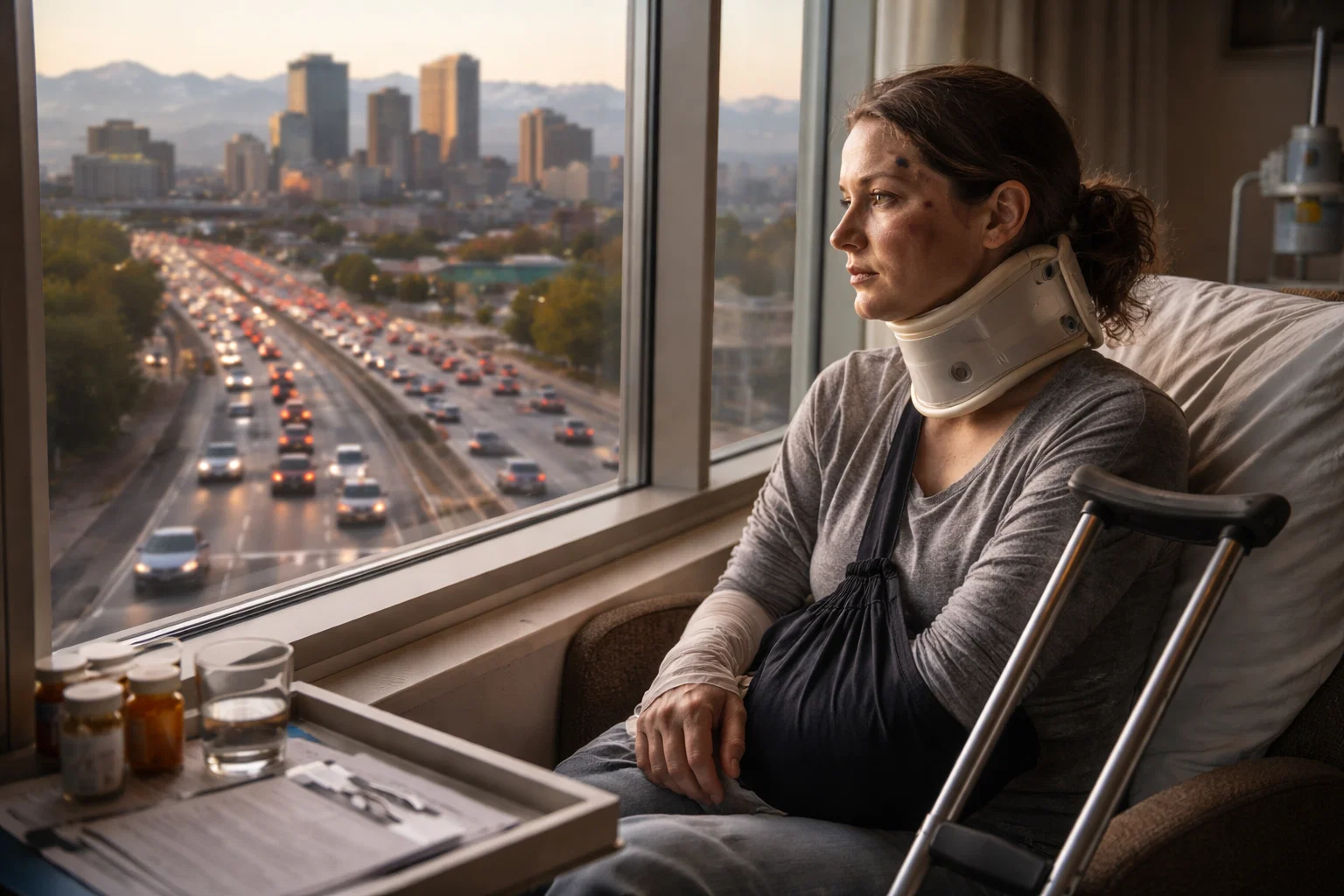
Denver can feel bright and busy on an ordinary day. The skyline pops behind Union Station. Traffic hums on I-25 and I-70. People cross Speer Boulevard, grab coffee in LoDo, and think about the next hour.
Then a crash takes someone you love, and the city keeps moving while your world stops.
In the first days, nothing feels simple. You may be talking with a coroner’s office, a funeral home, and an insurance adjuster who asks for details you do not have. You may be trying to keep kids on a school routine, cover rent or a mortgage, and show up at work when you barely slept.
This guide explains wrongful death compensation in practical terms, what families can do early, and what usually shapes a Denver case.
Denver Wrongful Death Compensation And Who Can Bring A Claim
Colorado law limits who can file a wrongful death claim. Those rules can surprise families. The person who should file is not always the person who feels ready.
Eligibility often depends on:
- The relationship to the person who died
- Whether there is a surviving spouse, children, or other heirs
- Whether an estate claim may also apply
- Timing rules that can change who may file as time passes
Families also face a second issue. Bills and paperwork do not wait for the family to agree. Getting legal guidance early can help you decide who files, how the case will be handled, and how communications will flow so everyone is not receiving separate calls.
If your family is not sure who has standing, talk with counsel early. Sorting that out now can prevent delays and prevent the insurer from using family confusion to stall the case.
What A Wrongful Death Claim Can Cover In Denver
A wrongful death claim is not limited to funeral costs. It is also about the financial gap and the loss of day-to-day support.
Common damages can include:
- Funeral and burial or cremation costs
- Medical bills tied to emergency care before death
- Lost income the person would have earned
- Lost benefits, like health insurance or retirement contributions
- Lost household services, like childcare, cooking, cleaning, and home maintenance
- Loss of companionship, guidance, and support
Families sometimes forget practical expenses that hit right away:
- Travel costs for relatives coming to Denver
- Time off work for planning and paperwork
- Childcare needs while the family attends appointments and services
- Costs to replace tasks the person handled, such as rides, errands, and home upkeep
This is where financial recovery after wrongful death becomes real. It is not about “winning.” It is about keeping a household stable when a provider or caregiver is gone.
What Shapes Value And Timeline In Wrongful Death Payouts
People often search for wrongful death payouts in Denver because they want a number. Value depends on proof, coverage, and the facts of the crash.
Factors that often shape value include:
- How clear fault is, including speed, distraction, impairment, or unsafe lane changes
- The strength of the crash investigation and witness accounts
- Earnings history, career path, and expected future income
- The value of benefits and household contributions
- The age and health history of the person who died
- Available insurance coverage and whether multiple policies apply
A key part of value is documentation. If the person was the main earner, you will likely need proof such as W-2s, pay stubs, or tax returns. If the person handled most caregiving, you may need to document the time and scope of those services, like school drop-offs, medical appointments, meal planning, and household management.
Timing often depends on the insurer’s approach. Some carriers engage and move. Others delay, deny, or offer early money that does not match the loss. The faster you collect records, the less room the insurer has to minimize the claim.
Truck Wrecks And Commercial Crashes On Denver Roads
Denver sits on major freight routes. Commercial traffic flows through the I-25 corridor, across I-70, and around industrial areas near Elyria-Swansea and Globeville. When a fatal crash involves a semi, delivery truck, or work vehicle, the investigation usually expands.
Truck cases may require:
- Preserving electronic data that can be overwritten
- Reviewing driver logs, hours-of-service records, and training files
- Examining maintenance and inspection records
- Identifying every responsible party, not only the driver
- Securing camera footage from nearby businesses or roadway systems when available
These cases can also involve multiple insurance carriers and layered coverage. That can create more negotiation steps and more paperwork, yet it can also increase available funds when a single policy would not cover the full loss.
This work matters because evidence can vanish fast, and Denver wrongful death compensation often depends on what you can prove, not what you believe happened.
Steps Families Can Take In The First Two Weeks
You do not need to do everything at once. You do need to protect your family from common paperwork traps.
Practical steps that help:
- Save every invoice and receipt, including travel, lodging, parking, and meals related to the death
- Keep a list of everyone who contacts you, including insurers and investigators
- Collect pay stubs, tax returns, and benefit statements if you can access them
- Write down the person’s role at home, such as school pickups, caregiving, budgeting, or home projects
- Avoid signing releases or settlement papers without legal review
- Do not give recorded statements while you are still processing details
If you have the bandwidth, gather these documents into one folder:
- Any crash report number or reference information you received
- Health insurance and auto insurance policy information
- Employment information, including job title and typical work schedule
- A list of household bills the person paid or managed
If an insurer offers to “help with funeral costs,” ask what they want in return. Some payments come with releases that can cut off later claims.
Denver Details That Can Support The Case
Local context can help explain how the crash happened and why it was preventable.
Examples that often matter in Denver:
- Heavy merges and short ramps near major interchanges
- Construction that changes lane patterns with limited warning
- Night visibility issues on busy corridors
- Pedestrian traffic near Union Station, LoDo, and event areas
- Weather shifts that change road conditions quickly
If your family needs to meet in person, reduce friction:
- Ask for parking directions before the appointment
- Choose mid-morning times when traffic is often calmer
- Consider RTD if driving feels overwhelming, but avoid peak crowds on hard days
- Bring a trusted person to take notes so you do not have to remember everything
If you are coming from outside Denver, plan extra time. A simple delay on I-25 can turn a short drive into a stressful one. Many families prefer weekday mornings when schedules are more predictable.
How The Claim Process Usually Works
Most families want to know what happens after the first call.
A typical process looks like this:
- Investigation begins and evidence is preserved
- Records get gathered, including crash reports, medical bills, and employment documents
- Damages are calculated, including income loss and household services
- A demand package is sent to the insurer with supporting proof
- Negotiations begin, and mediation may be scheduled
- A lawsuit may be filed if the insurer refuses fair value
If a lawsuit is filed, the case usually enters a discovery phase. That can include document requests, written questions, and depositions. Families often worry about depositions. A good legal team prepares you, keeps the process focused, and limits unnecessary stress.
To protect Denver wrongful death compensation, your case needs a clean record trail. That includes proof of costs, proof of income, and proof of how the person contributed to the home.
Common Insurance Pressure Points
Insurers know families are under strain. Adjusters may sound kind while still aiming to reduce payouts.
Common tactics include:
- Asking for broad medical and employment releases
- Pushing for quick settlement before the family has full documentation
- Suggesting the person was partly at fault without strong evidence
- Minimizing earnings by ignoring career growth or benefits
- Treating household services as “non-financial” and leaving them out
If you receive forms that feel urgent, slow down. Ask what the document allows the insurer to collect. Ask whether you can provide specific records instead of signing a wide release.
A fair Denver wrongful death compensation case accounts for what the person provided, both in paychecks and in daily labor that now falls on someone else.
A Clear Next Step For Denver Families
You do not have to make final decisions while you are still in shock. You do need to protect options while records are fresh.
If your family has questions about Denver wrongful death compensation, call Nares Law Group for a consultation. Bring what you have, even if it is only a few documents and a rough timeline. You should leave that conversation with clarity, a list of next steps, and fewer calls landing on your phone.
To know how long you have to file a claim, contact Nares Law Group today by filling out the online form or calling us at 720-637-7786. We will schedule a Free Consultation with our wrongful death lawyers so that you can get the legal advice and representation you need.